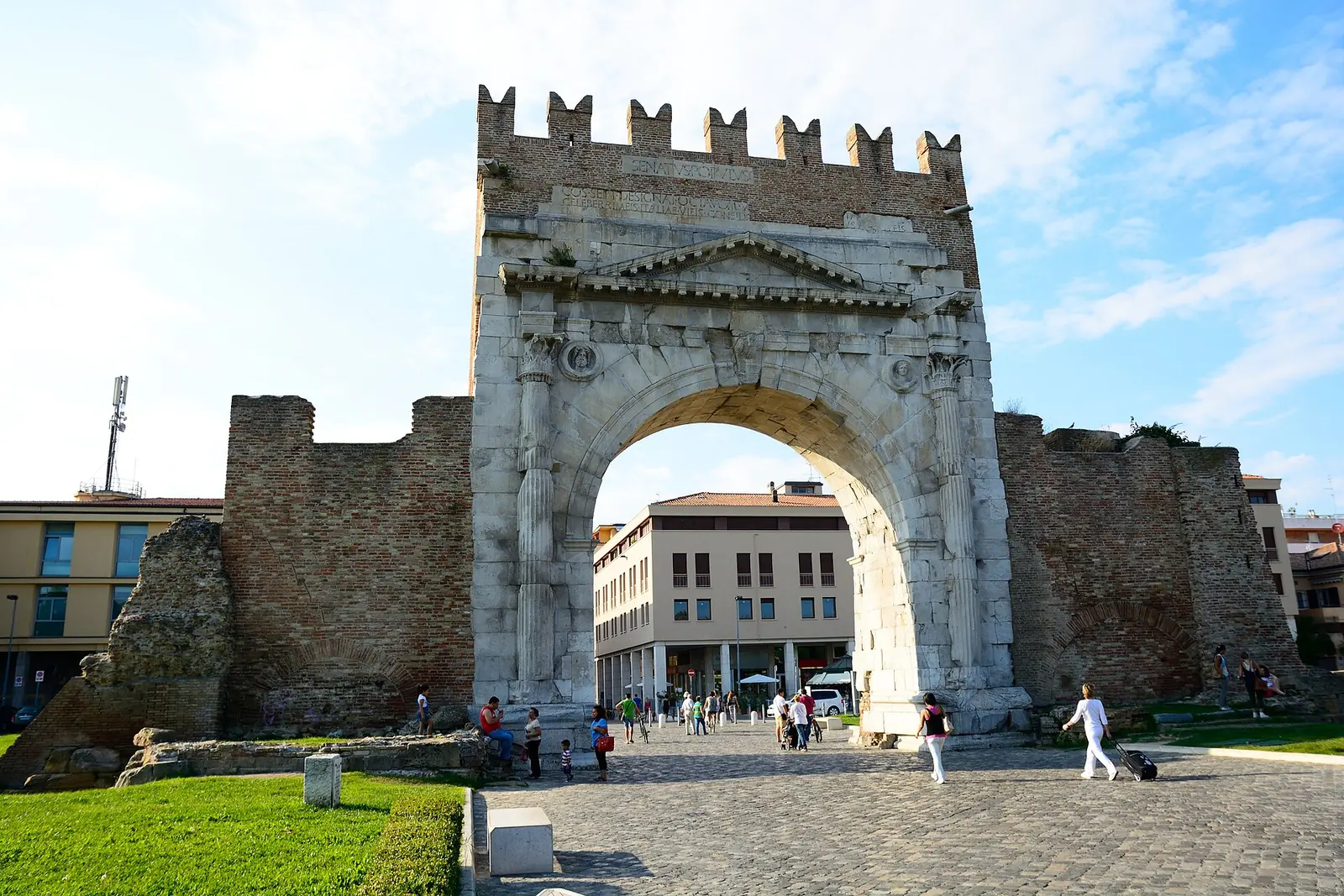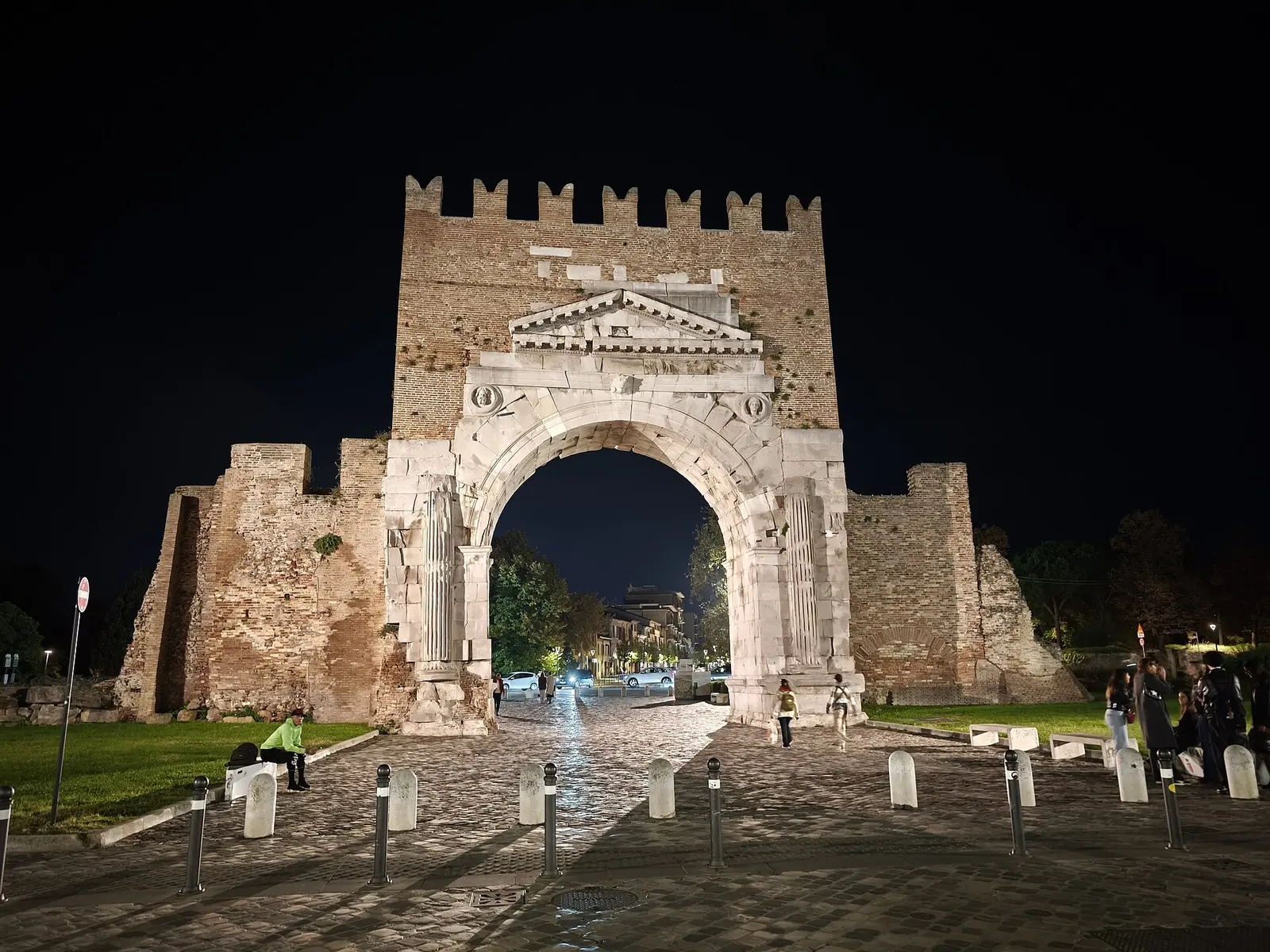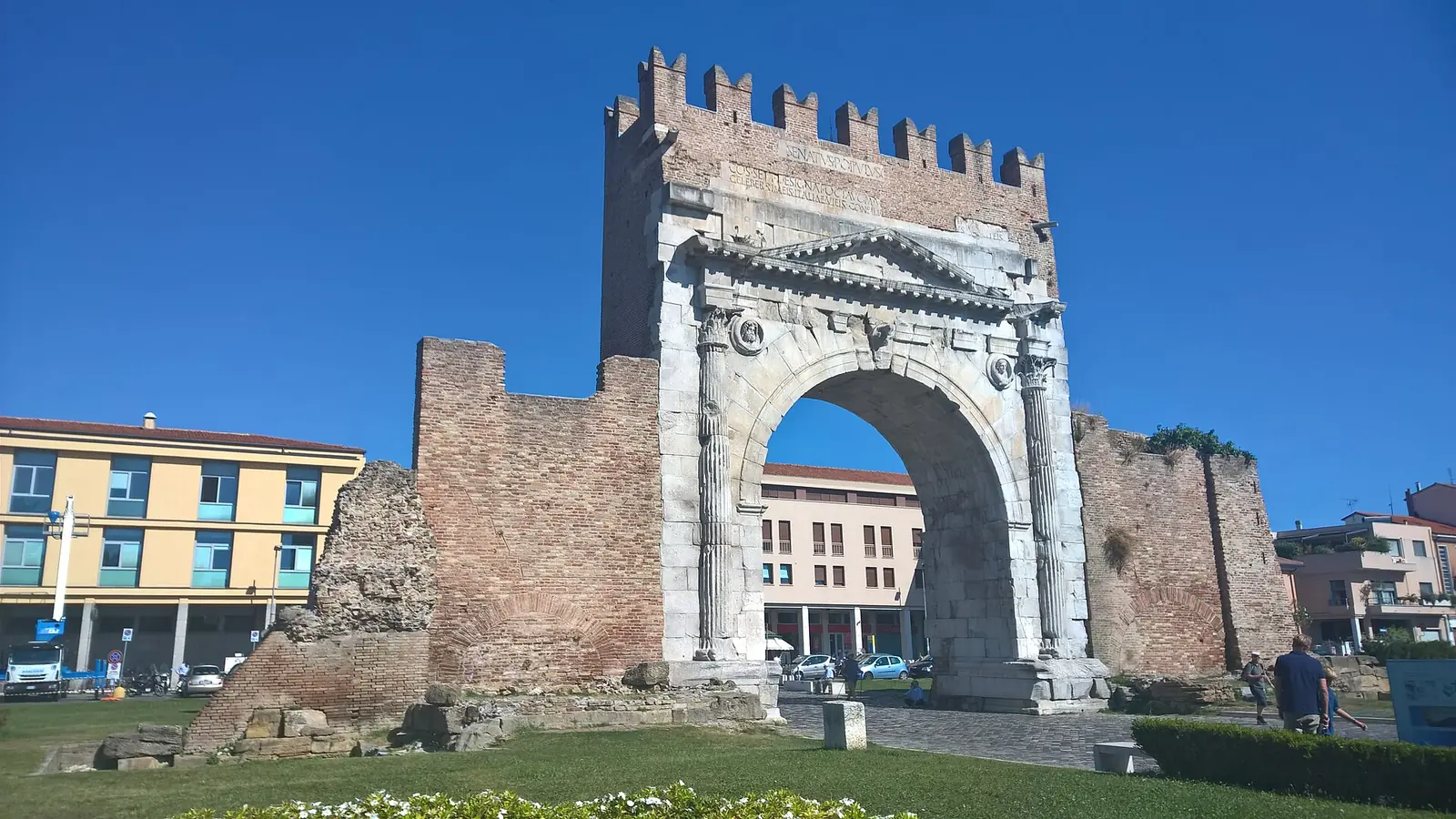
Arco di Augusto marks the southern entrance to Rimini's historic centre, on Largo Giulio Cesare. Erected in 27 BC where Via Flaminia reached Ariminum, it is identified by the Comune as the oldest surviving Roman arch in northern Italy. The monument stands in the open and can be viewed without a ticket, at the start of Corso d'Augusto towards Piazza Tre Martiri.
The two gateway façades
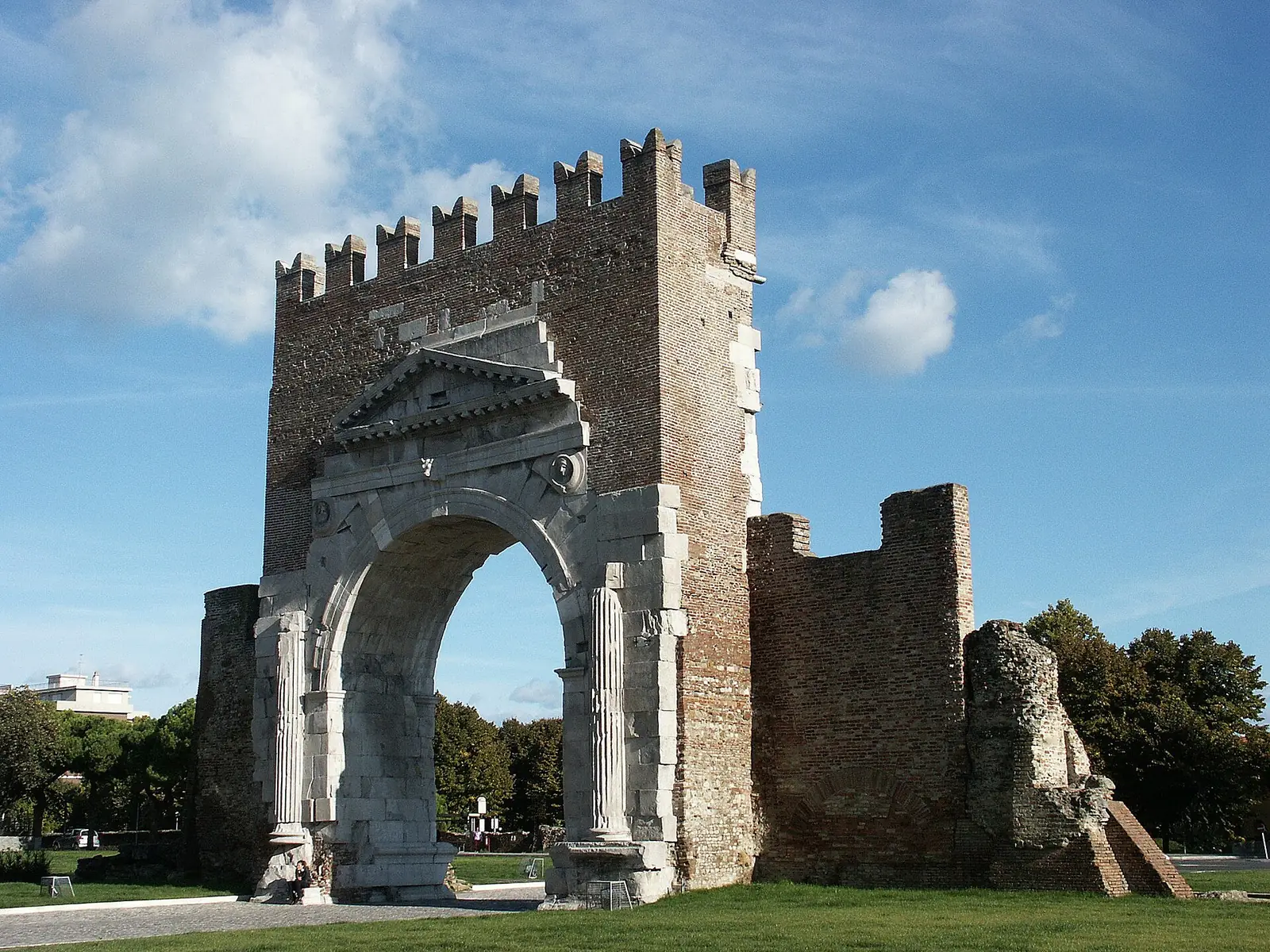
The masonry is clad in Istrian stone. Four medallions depict deities: Giove and Apollo outside, Nettuno and Roma facing the city. Attributes, from thunderbolts to trident, help identify the figures. Traces of the ancient city walls survive on either side.
The battlemented top belongs to the Middle Ages rather than the Roman design. Adjoining buildings were demolished in the 1930s, leaving the arch isolated as it appears today.
An open entrance
The passage was too wide to close with doors. In the Comune's interpretation, this feature recalled peace after the civil wars. Its commemorative role thus accompanied its function as an entrance to the city.
The route along Corso d'Augusto reaches the ancient forum in Piazza Tre Martiri and then Ponte di Tiberio. On the seaward side, Parco Cervi offers a walking and cycling link towards the arch area.
Images