A walk through Rimini's historic centre crosses two thousand years of history: Arco di Augusto and Ponte di Tiberio mark the Roman city, while Tempio Malatestiano and Castel Sismondo tell the story of Malatesta rule. Squares link these monuments to city life today. Arch, bridge, squares and fountain can be seen outdoors without a ticket; the Tempio can be visited freely outside services, while Domus del Chirurgo, Museo della Città and Fellini Museum at Castel Sismondo close on non-holiday Mondays.
Monuments along the route
| Place | Period | Things to observe |
|---|---|---|
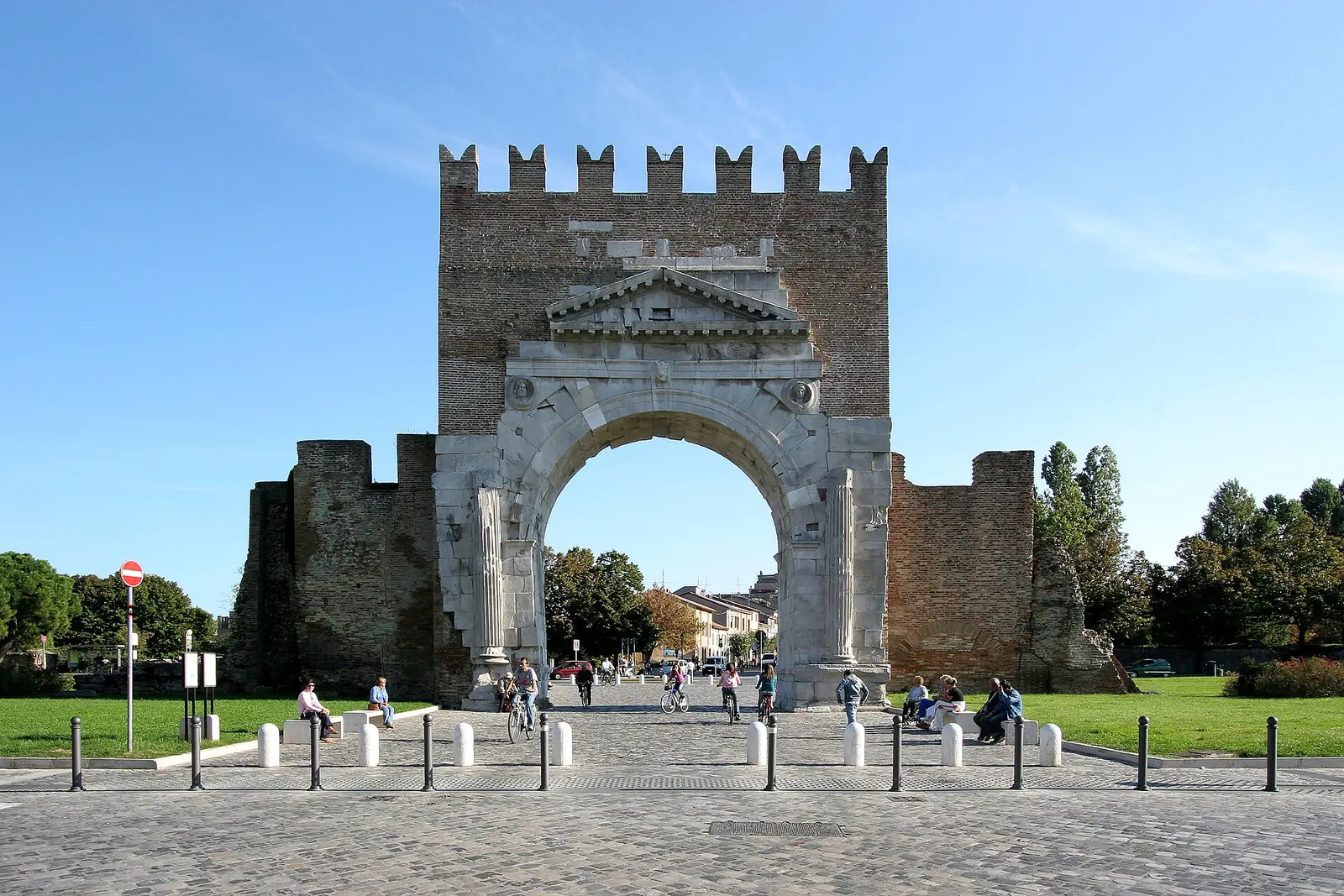
| Arco di Augusto | 27 BC | The Roman gateway at the end of Via Flaminia, with battlements added in the Middle Ages |
| Piazza Tre Martiri | Roman era | The ancient forum space, transformed over the centuries |
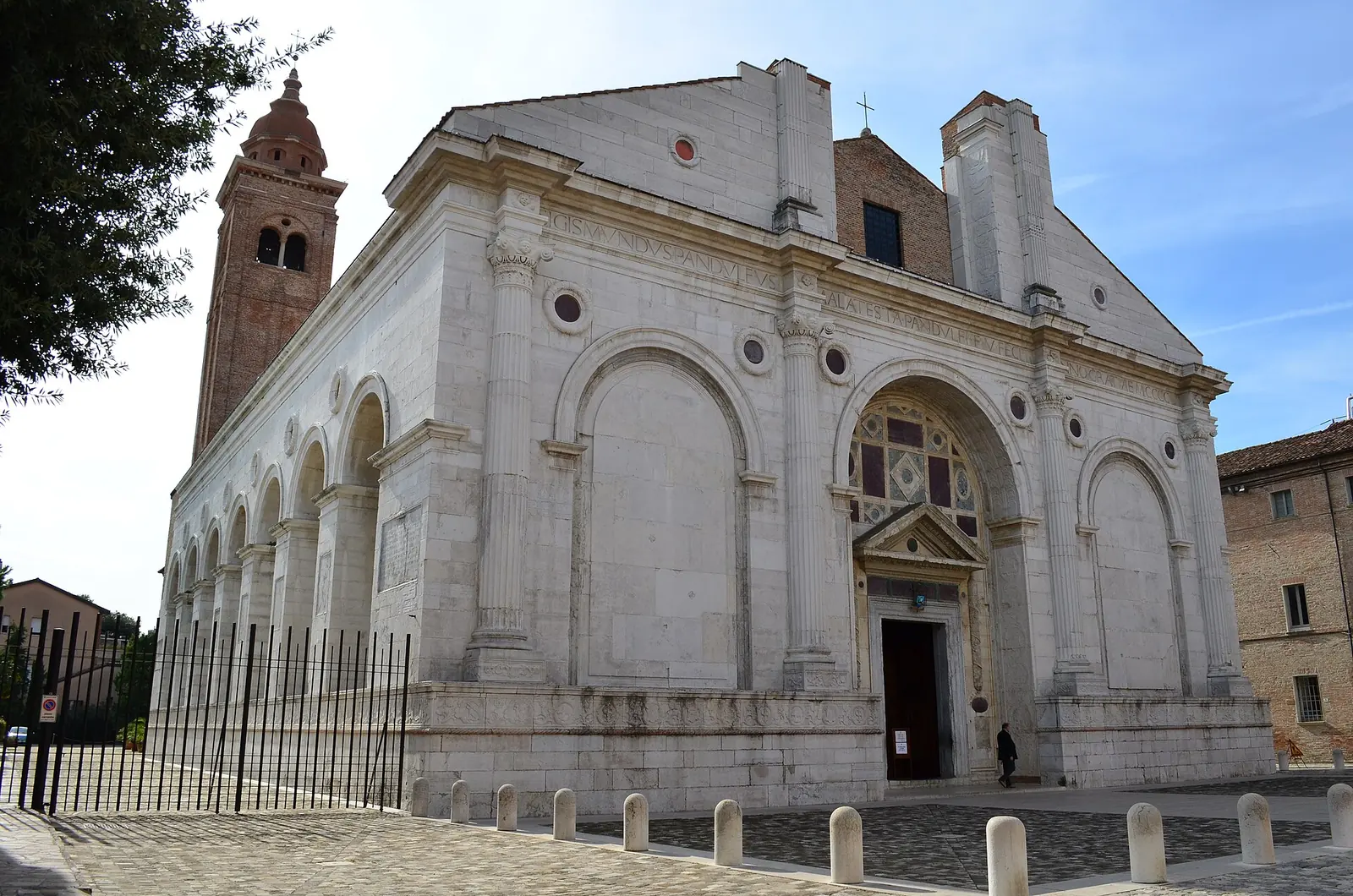
| Tempio Malatestiano | 1450-1460 | Leon Battista Alberti's unfinished façade and works preserved in the cathedral |
| Domus del Chirurgo | 3rd century AD | The remains of a Roman doctor's house and surgery, with the Orpheus mosaic |
| Chiesa di Santa Maria dei Servi | 14th century, refurbished in 1774-1777 | The medieval side facing Corso d'Augusto and the 18th-century interior |
| Piazza Cavour | 1543 fountain, 1614 statue, 1747 fish market | Civic palaces, Fontana della Pigna, Paolo V statue, Vecchia Pescheria and Teatro Galli |
| Castel Sismondo | 1437-1446 | Sigismondo Pandolfo Malatesta's fortified residence |
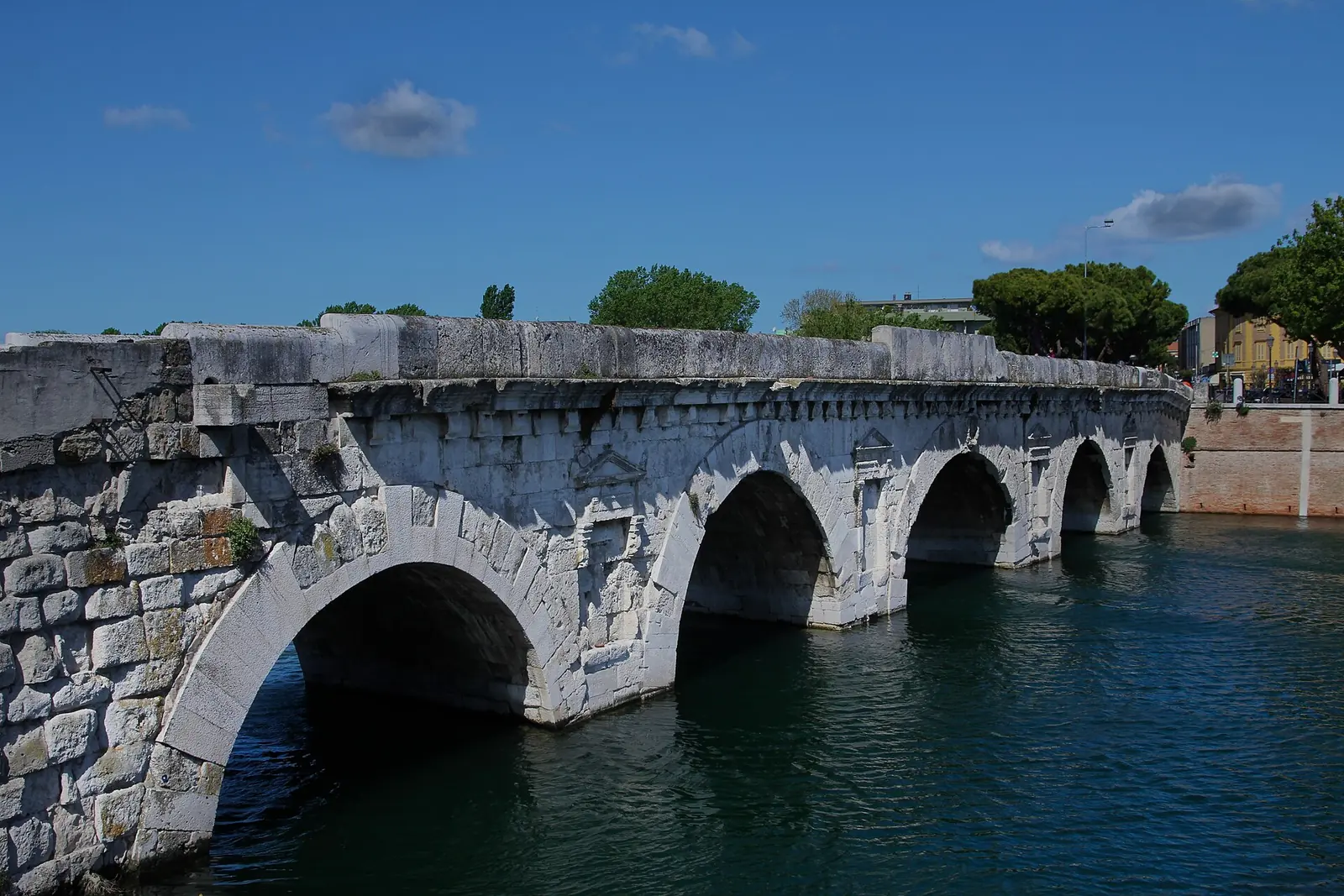
| Ponte di Tiberio | AD 14-21 | The five stone arches over the canal harbour |
| Borgo San Giuliano | Streets and murals beyond the bridge |
From Arco di Augusto to the Roman city
Arco di Augusto is a convenient starting point for arrivals from south of the centre. The large central passage belongs to the Roman construction; the upper battlements were added in medieval times. Corso d'Augusto follows the axis crossing the ancient city and leads to Piazza Tre Martiri, where the forum stood.
Domus del Chirurgo is on Piazza Ferrari, at the northern edge of ancient Ariminum. The house's heart is the surgery of a doctor who lived in the 3rd century, buried by fire alongside mosaics, plasterwork and furnishings; surgical instruments are displayed at nearby Museo della Città.
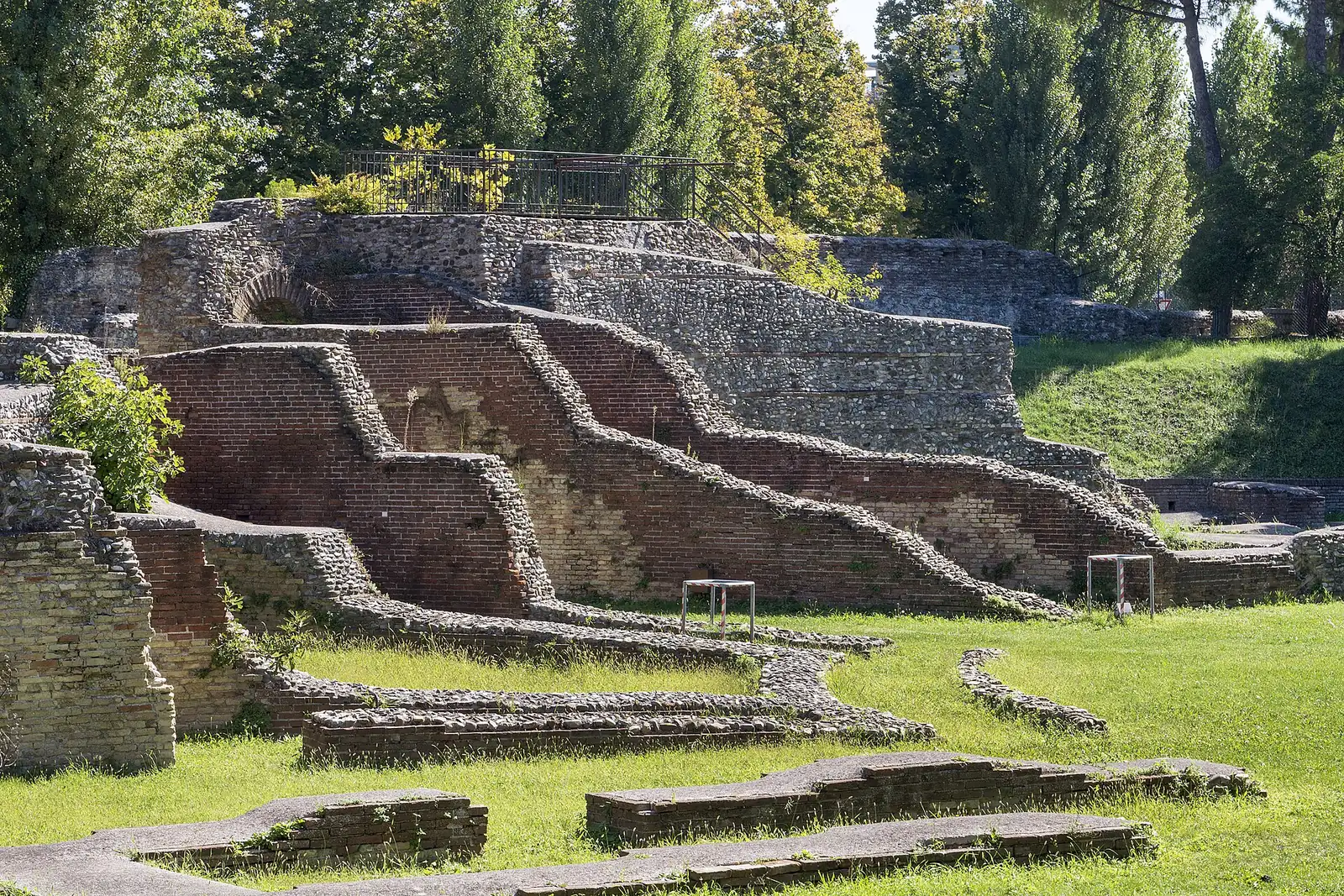
Anfiteatro romano is off this axis, towards the railway. Only portions remain, so the stop's interest lies in understanding the remains and their position in the ancient city rather than viewing a complete building.
The Malatesta Tempio and castle
Tempio Malatestiano arose from the transformation of Chiesa di San Francesco commissioned by Sigismondo Pandolfo Malatesta. Alberti's exterior cladding, made between 1450 and 1460, remained unfinished. Inside are Giotto's Crucifix and Piero della Francesca's fresco of Sigismondo before San Sigismondo.
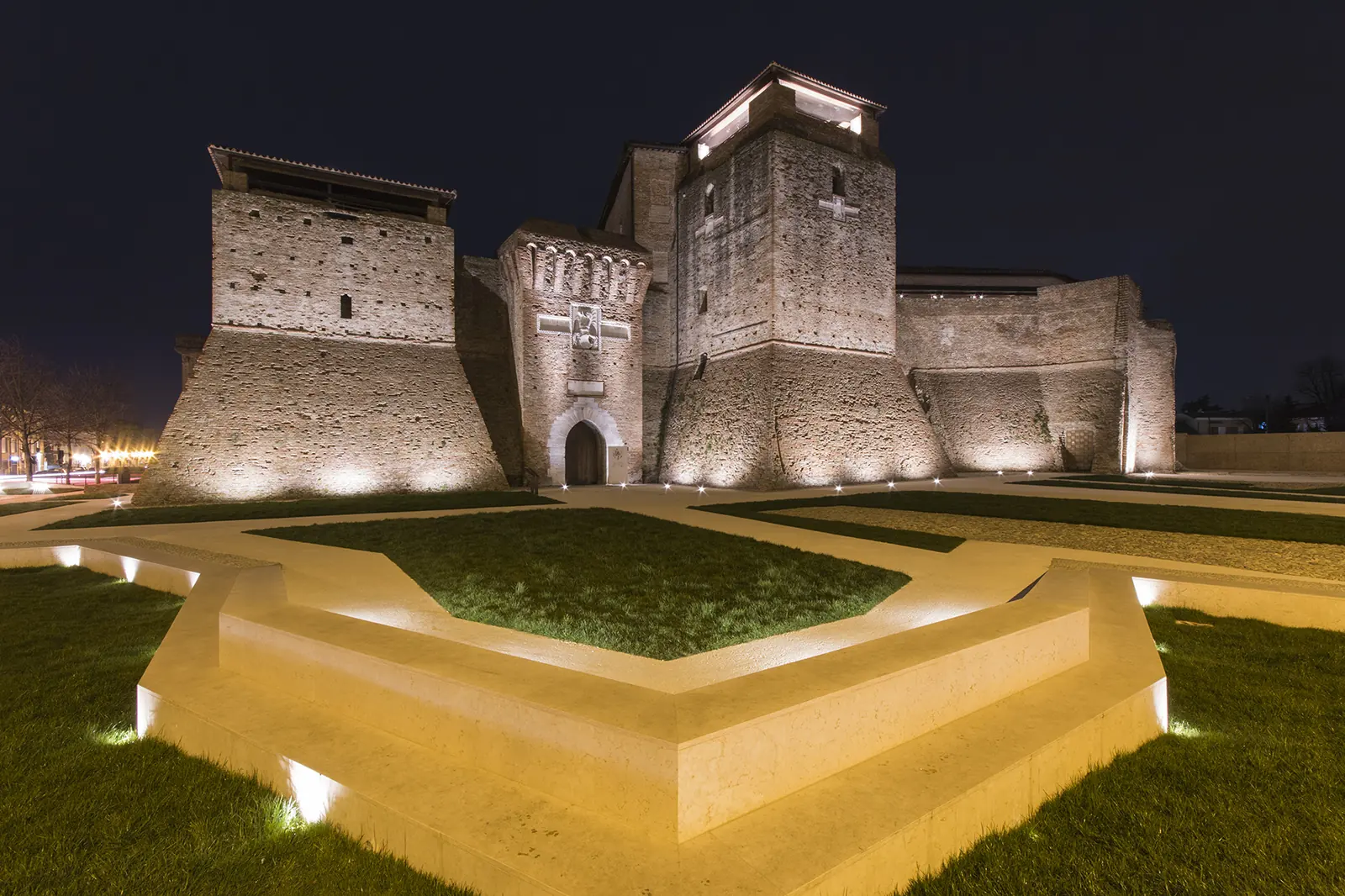
The cathedral is also a place of worship: visits are suspended from half an hour before services until their end. Castel Sismondo, begun by Sigismondo on 20 March 1437 and declared complete in 1446, houses part of Fellini Museum; towers and walls are also visible from Piazza Malatesta without entering.
The squares and Ponte di Tiberio
Piazza Cavour brings together Palazzo dell'Arengo, Palazzo del Podestà and Palazzo Garampi, alongside the fountain and Teatro Galli. At the centre, the bronze Paolo V statue, cast in 1613 and inaugurated in 1614, was transformed into a San Gaudenzio in 1797 to save it from French orders and returned to its original appearance in 1936.
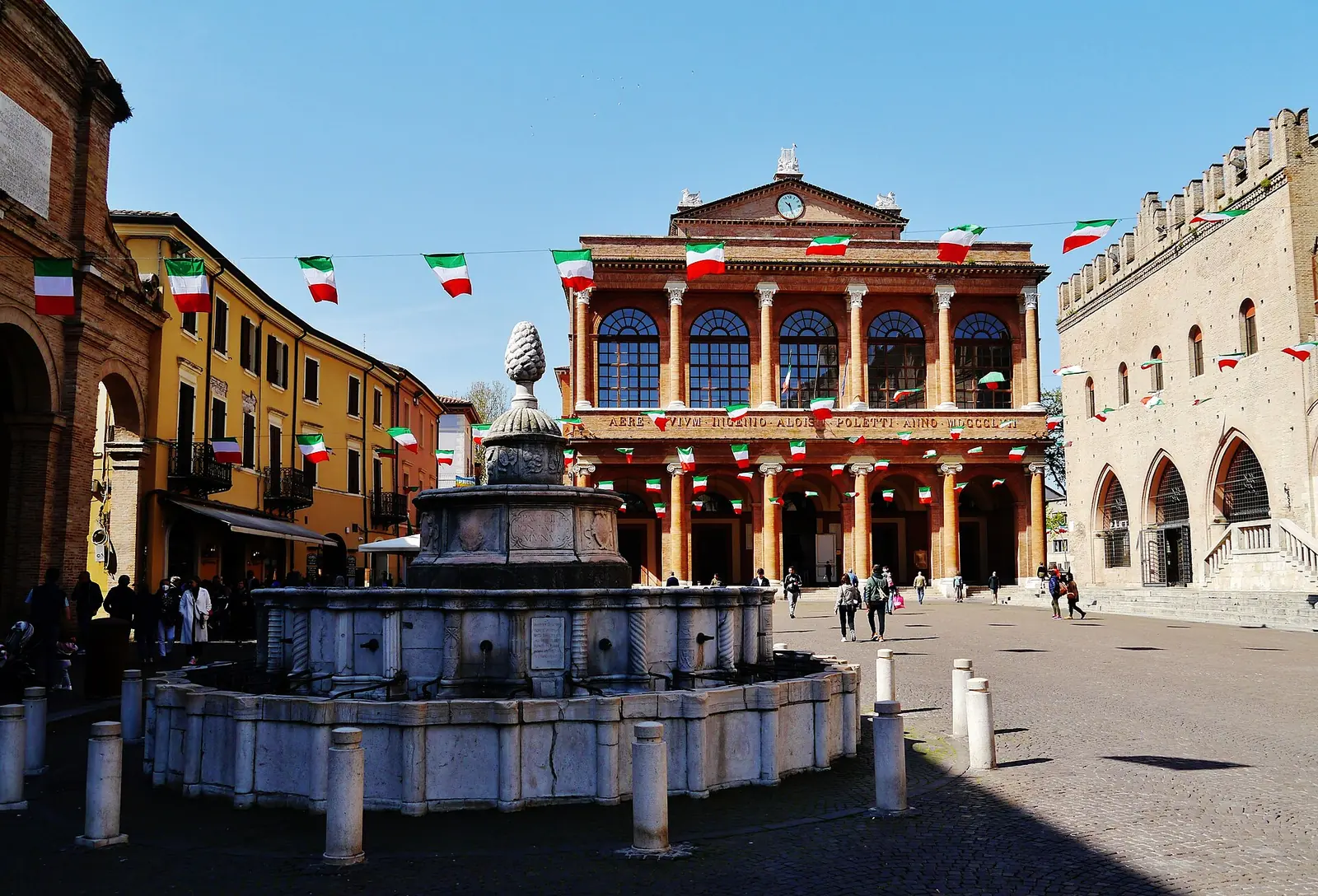
Fontana della Pigna, beside the statue, was built in 1543 on a Roman-era drum; in 1809, the pine cone replaced a small San Paolo statue now at Museo della Città. Leonardo da Vinci, in Rimini serving Cesare Borgia, noted the harmony of its falling water. Approaching from Corso d'Augusto, the left side of the square leads into the 1747 Vecchia Pescheria, a loggia with long Istrian stone counters where fish was sold.
Along Corso d'Augusto, between Piazza Tre Martiri and the bridge, Chiesa di Santa Maria dei Servi shows the side of its 14th-century church; the interior was refurbished between 1774 and 1777. Continuing leads to Ponte di Tiberio, begun under Augusto and completed under Tiberio in AD 21. Its five arches link the centre to Borgo San Giuliano. The walkway and waterside areas also offer side views of the bridge.
Planning the walk
Arch, squares and bridge form a continuous walking route. Tempio, Domus and castle add stops and detours: with entry, the outing takes longer than the walk alone. From the station, Viale Dante leads to Piazza Tre Martiri; from there, Corso d'Augusto goes right towards Piazza Cavour and the bridge, left towards the arch. Start Romagna route 9 stops at Arco d'Augusto.
Domus del Chirurgo and Museo della Città open Tuesday to Sunday and on public holidays; in July, August and the first week of September, also on Wednesday evenings. Fellini Museum, at Castel Sismondo and Palazzo del Fulgor, opens Tuesday to Sunday. Outside the centre on Covignano hill, Santuario di Santa Maria delle Grazie starts a walking loop described in excursions from Rimini. For more stops, the Rimini guide links centre, sea and districts.