Photo by Giorgio Galeotti, Wikimedia Commons, CC BY 4.0
Milano Marittima
Excursions from Milano Marittima
From Milano Marittima, outings can enter the historic pinewood, follow the Canalino or walk along the sea among dunes and traces of the Second World War. To the north, Bevano and Pineta di Classe offer a longer nature excursion. Ravenna is a separate destination, planned around monuments and the return journey.
The pinewood behind the town
The Cervia and Milano Marittima pinewood preserves a trail network between the built-up area and hinterland. Access points listed by the Comune include Via Stazzone, Via Jelenia Gora, Stadio dei Pini on Viale Ravenna and the Viale Forlanini area towards the Terme. The entry point can be chosen according to the intended stretch, so that a short walk need not cross the entire woodland.
The municipal itinerary from the stadium follows Sentiero delle Terme and Sentiero dello Storno, reaching the canal and then Via Jelenia Gora. A map helps define the return and distinguish woodland trails from roads linking access points.
The tornado of 24 August 2025 damaged the north-eastern Milano Marittima pinewood, between the 4th and 11th side streets. The Comune project provides for fallen tree removal, planting 1,600 new trees and restoring paths: sections undergoing work are closed and cordoned off on site.
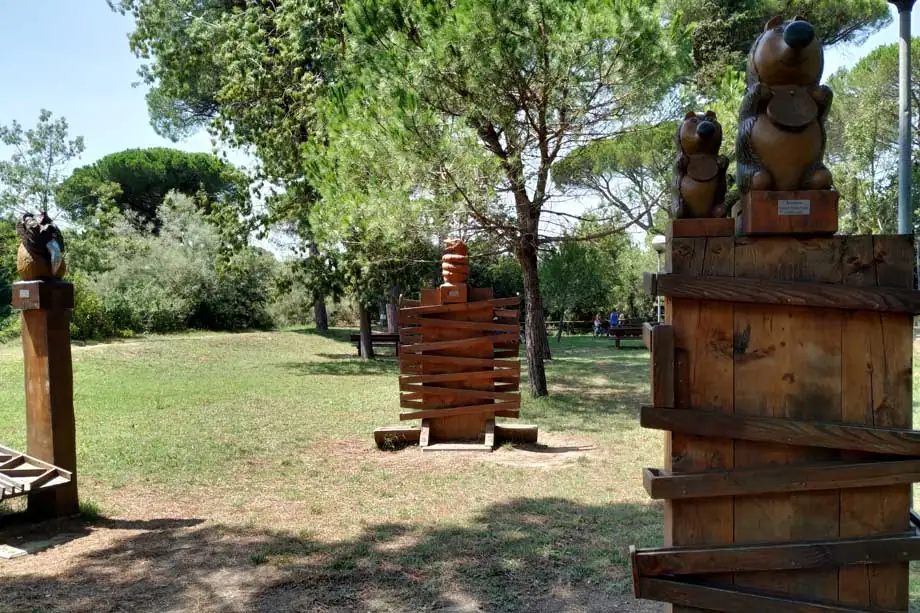
Parco Naturale, on Viale Forlanini, is a possible stop in the Terme area, with paths among trees and an animal area. It has its own opening calendar. The activities for children in Milano Marittima page explores destinations for a family day.
The Canalino from pinewood to sea
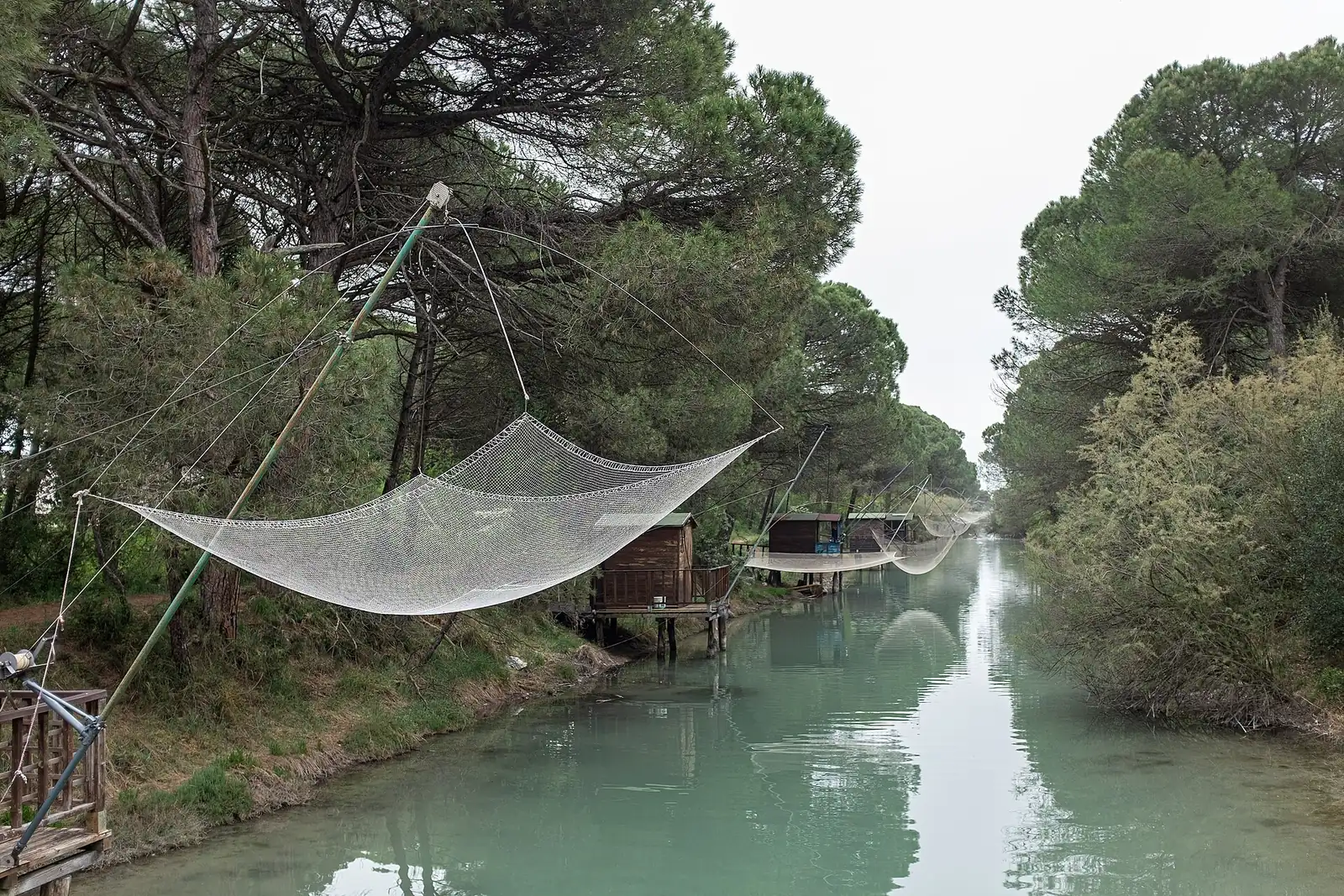
Canale del Pino, known as Canalino, was built in 1925 to bring seawater towards the salt pan. Its banks and fishing huts offer a walk different from the seafront: the landscape follows water through greenery, with nets suspended beside wooden structures.
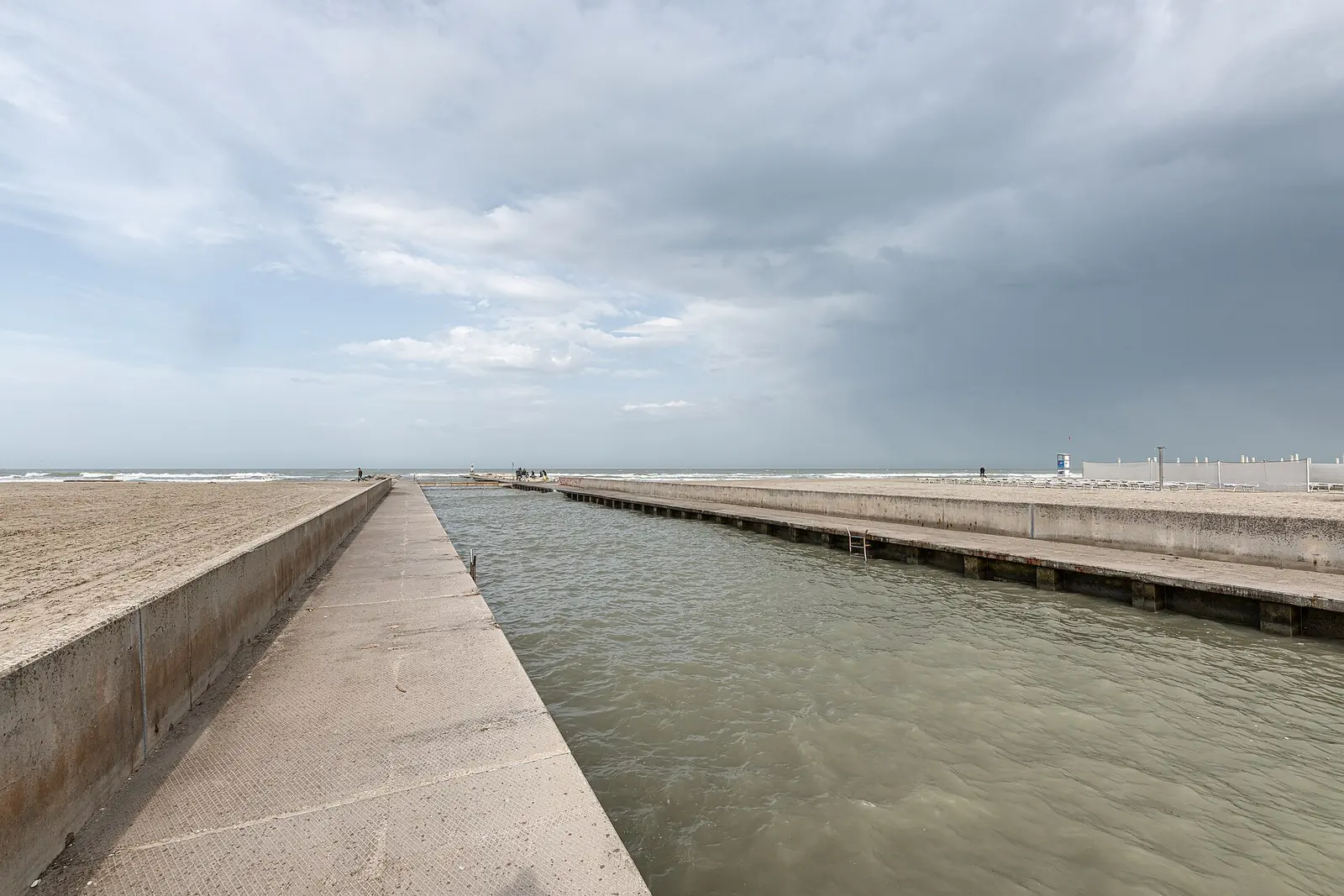
The sea outlet is around Prima Traversa, near Madonna del Mare. Urban and pinewood stretches can be visited separately; fishing huts can be seen from the bank.
On summer evenings at Prima Traversa, Vialetto degli Artisti brings craft, design and art exhibitors along the Canalino: in 2026, its tenth year, every evening from 31 July to 31 August and at weekends in June and July. The Canalino carries seawater towards the salt pan, where entry requires the guided visits described in excursions from Cervia.
Seafront, dunes and bunkers
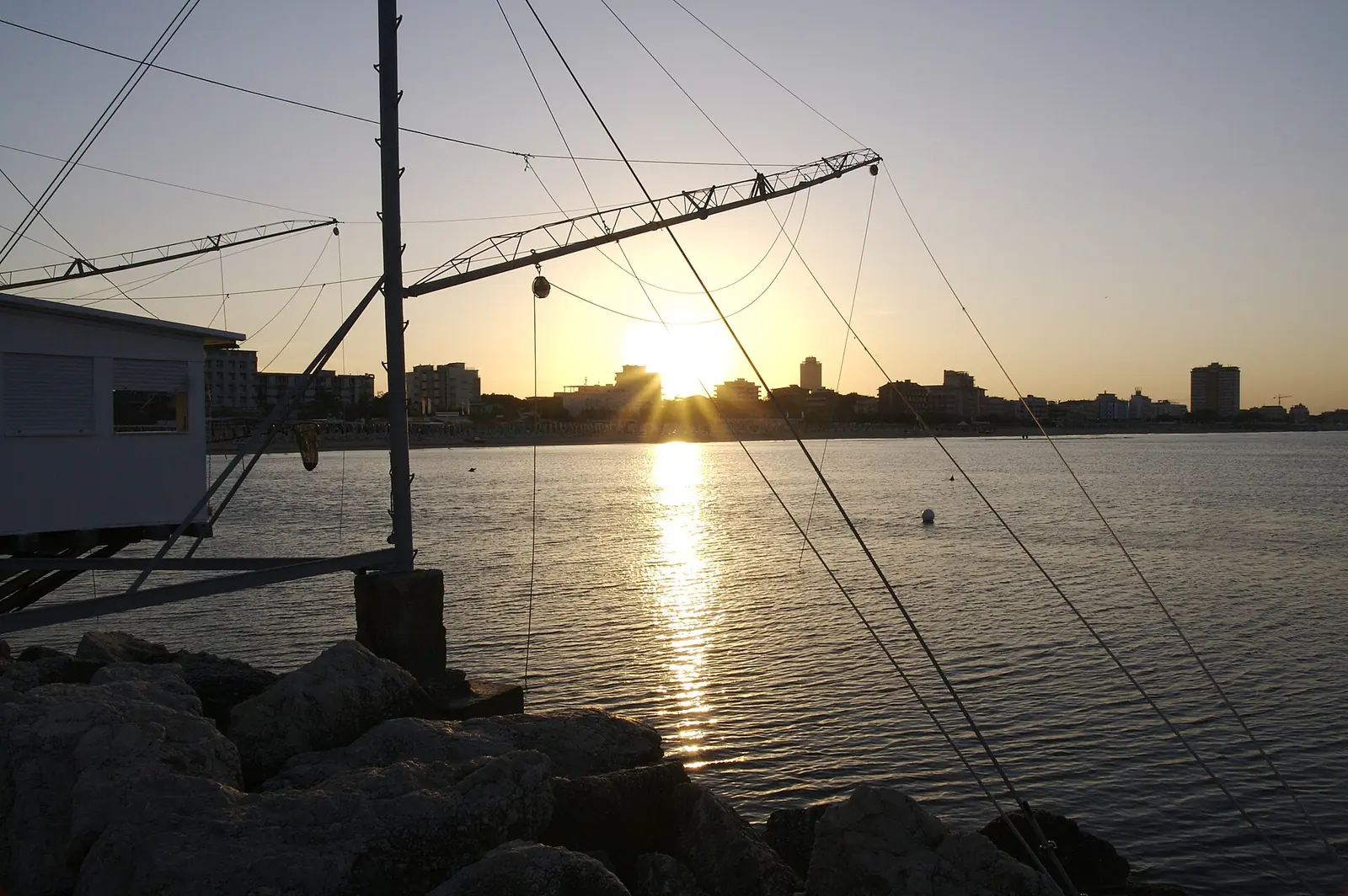
The seafront offers a route between harbour, beach and side streets, with distance chosen according to available time. In some sections, walkways cross the dune environment: walking on dunes is permitted only on walkways, respecting fenced areas.
Bunkers and dragon's teeth recall the Second World War defence system. Interiors are visited on the volunteers' guided tour, lasting around an hour: Saturday mornings from October to May, Friday evenings from June to September. The meeting point is on Viale Oriani at the corner of Viale 2 Giugno; booking is online until the day before or at the Torre San Michele tourist office in Cervia.
From the sea, the route can return towards Rotonda Primo Maggio and Viale Gramsci. The garden city, founded in 1912 to Giuseppe Palanti's design, is recognisable through the relationship between avenues, greenery and villas. This urban section completes a short outing.
Bevano and Pineta di Classe pinewood
North of Milano Marittima are Lido di Savio and Lido di Classe; beyond the settlements, the Bevano mouth preserves a landscape of dunes, pinewoods and wetlands. Ortazzo and Ortazzino belong to this natural system, suited to birdwatching.
Access to the Bevano mouth is permitted only at certain times and points; accompanied visits depart from Centro Visite Bevanella.
For cycling, Ente Parco offers Pedalando nelle Pinete di Ravenna, a 25.1-kilometre route starting from Milano Marittima. It alternates cycle paths and dirt tracks, requiring a bicycle suited to the surface.
A day in Ravenna
Ravenna offers a trip devoted to mosaics and early Christian and Byzantine monuments. Sant'Apollinare in Classe is outside the city centre: combining it with other monuments requires additional travel, to be allowed for alongside entry times.
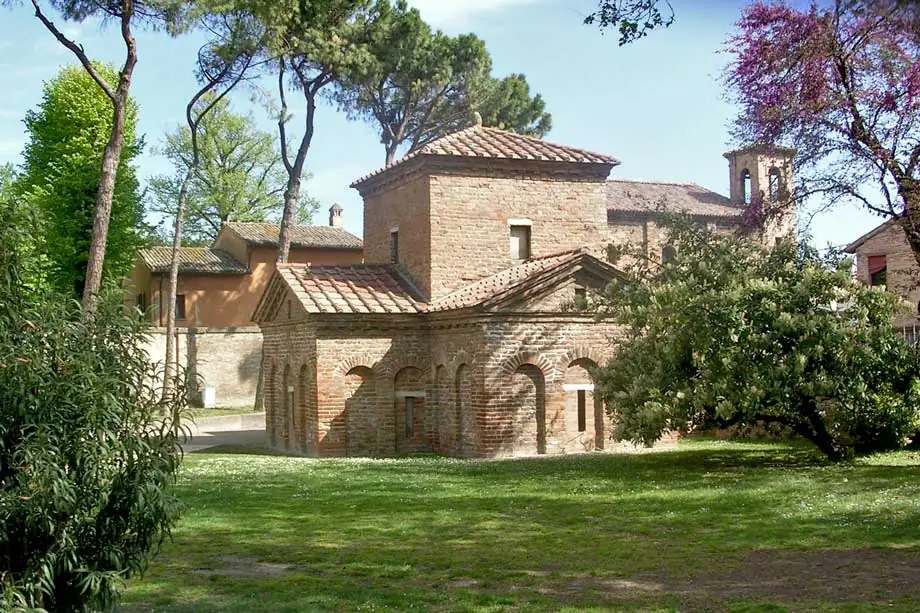
The Ravenna from Cervia page helps with choosing stops. Route 176 is a connection from Milano Marittima; alternatively, Cervia-Milano Marittima station offers train options. Start Romagna timetables distinguish services and operating periods.
Comacchio and its lagoons are more distant Po Delta destinations, warranting another day.
The Milano Marittima guide gathers the stops for a stay; Riviera Romagnola itineraries allow the pinewood outing to be compared with other coastal excursions.