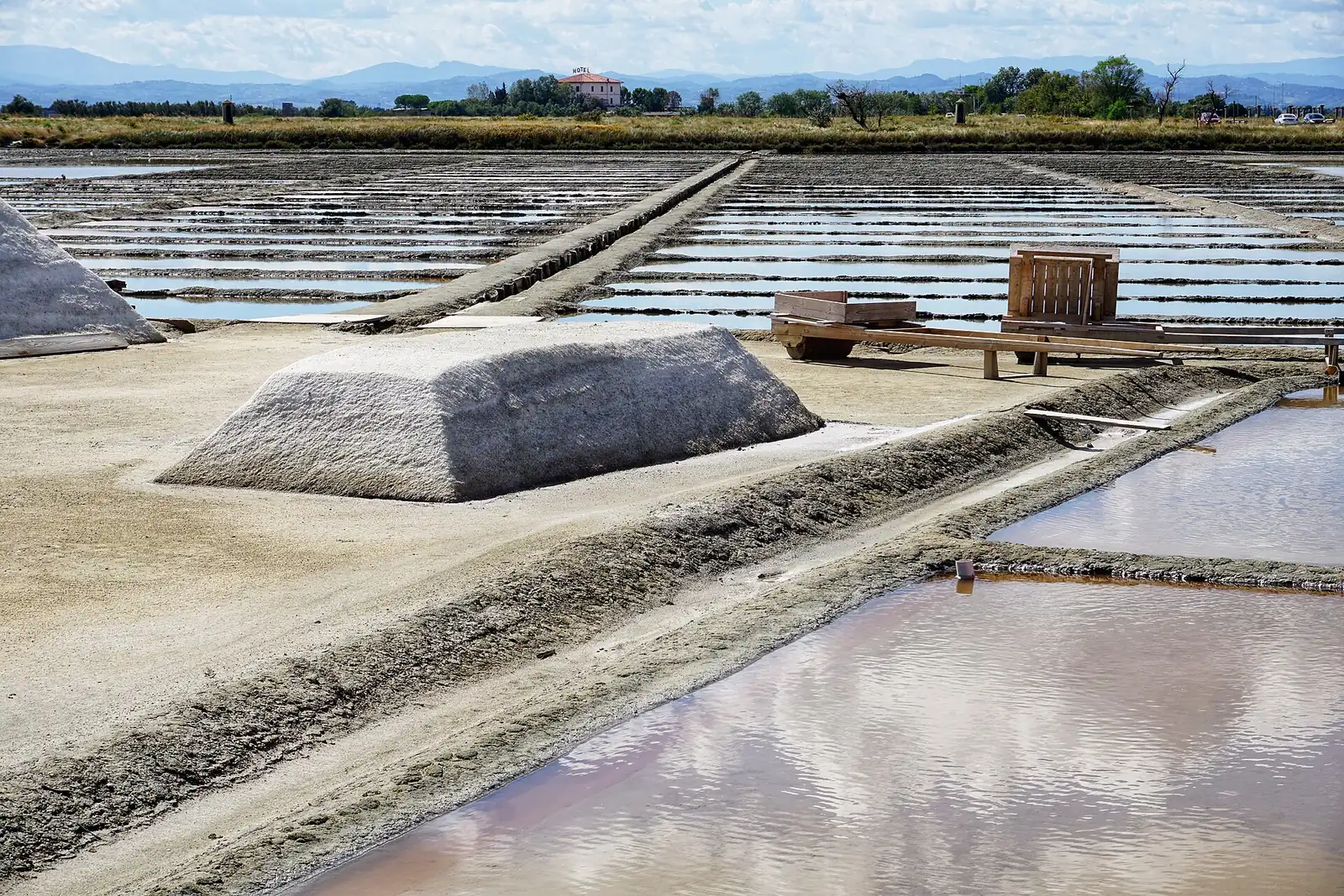
Cervia salt comes from seawater evaporating in the basins of an 827-hectare salt pan, around 1,600 metres from the coast. It is called “sweet” because bitter salts are deposited on the sodium chloride only in minimal quantities: the flavour is delicate, but it remains salt in every respect, with its sodium. Entry to the salt pan is through guided visits departing from Centro Visite, open March to November; the salt's history is explored year-round at MUSA museum in town.
How it forms and when it is harvested
Seawater enters through the inlet channel in Milano Marittima and flows through channels and basins, where evaporation concentrates it until crystallisation. In 1959, the salt pan was transformed: 144 small family-run pans became a single salt pan, with mechanised harvesting once a year.
Harvesting, the “cavadura”, begins in early August each year and lasts around forty days in basins called “salanti”. The waters host Artemia salina, a small reddish crustacean that keeps the water clear and feeds flamingos, shelducks, avocets and black-winged stilts.
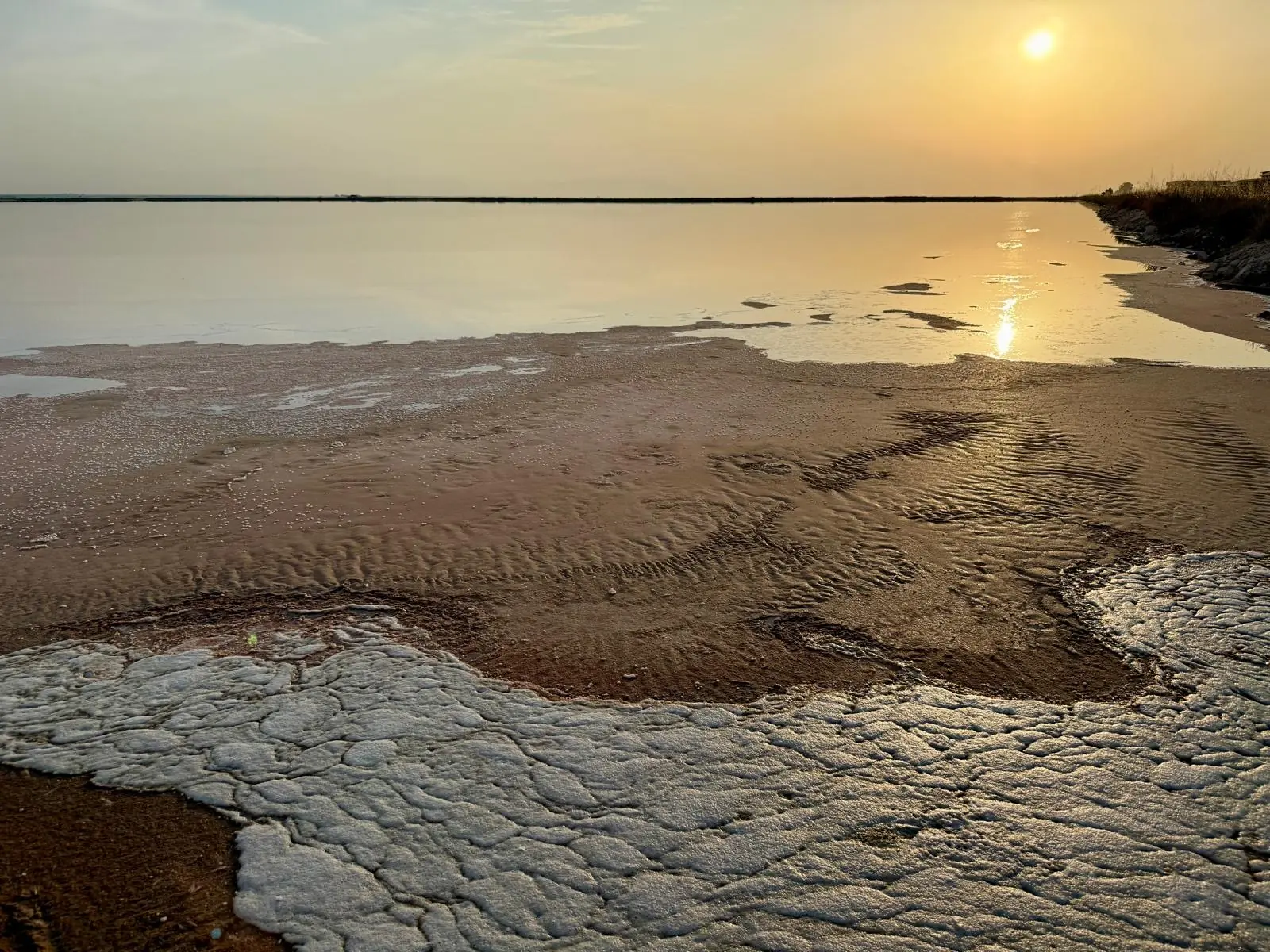
The salt pan belongs to Parco regionale del Delta del Po and is a site in the European Natura 2000 network (IT4070007, “Salina di Cervia”, 1,095 hectares including neighbouring areas). It includes the internationally important “Saline di Cervia” wetland, protected by the Ramsar Convention, and the state nature reserve of the same name.
Salina Camillone
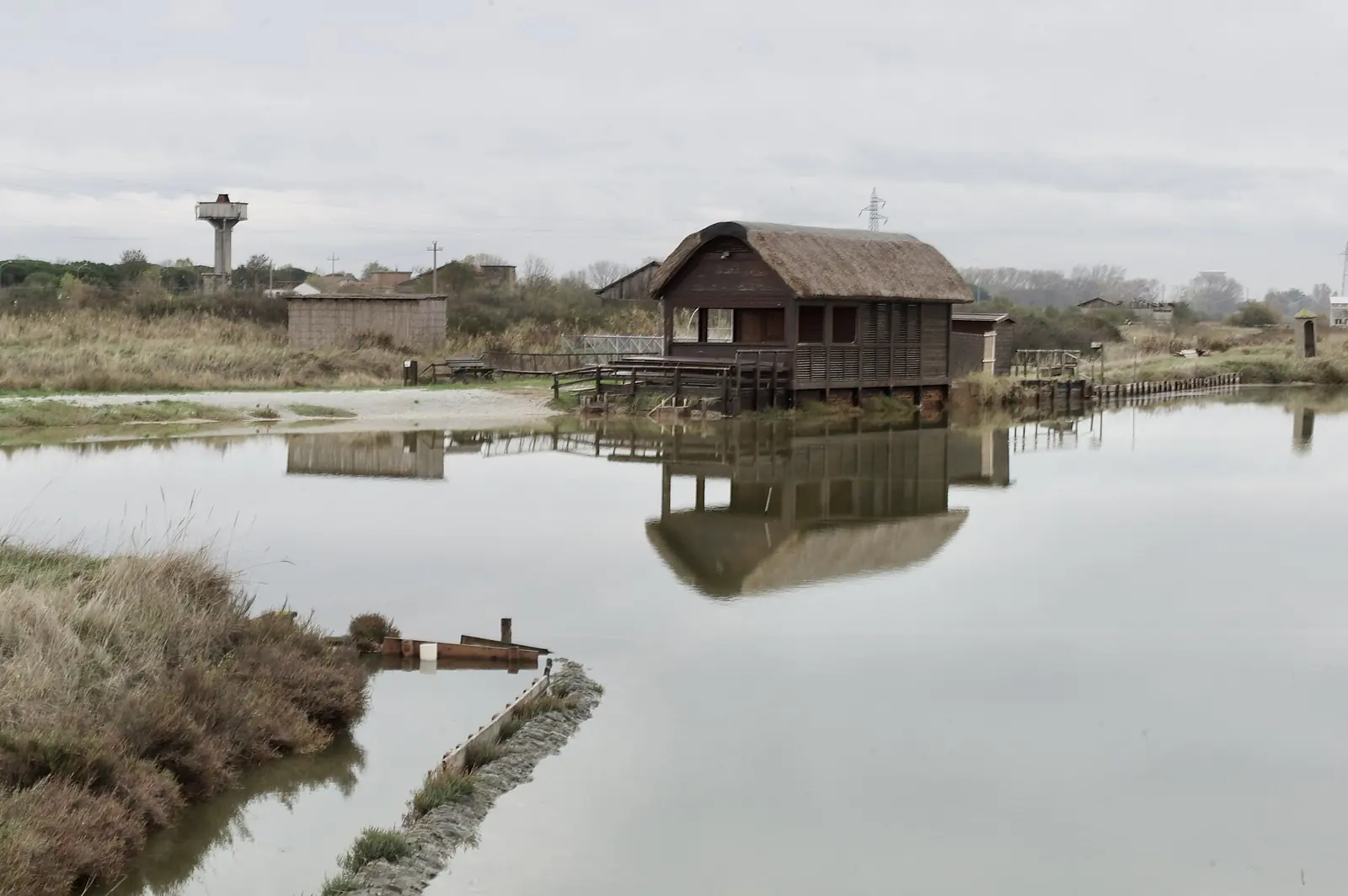
Salina Camillone is the sole survivor of the old multiple-harvest salt pans. Salt is still harvested by hand here, with the salt workers' tools and gestures; volunteers from a local cultural group keep it working, and it is MUSA museum's “living” section. Its salt is a Slow Food presidium: since 2004, according to the municipal museum.
Magazzini del Sale and MUSA
When the town moved from the centre of the salt pan towards the coast in the late 17th century, salt found a home in the canal harbour warehouses, from which it departed by water. Magazzini del Sale and Torre San Michele still form the town's salt landscape.
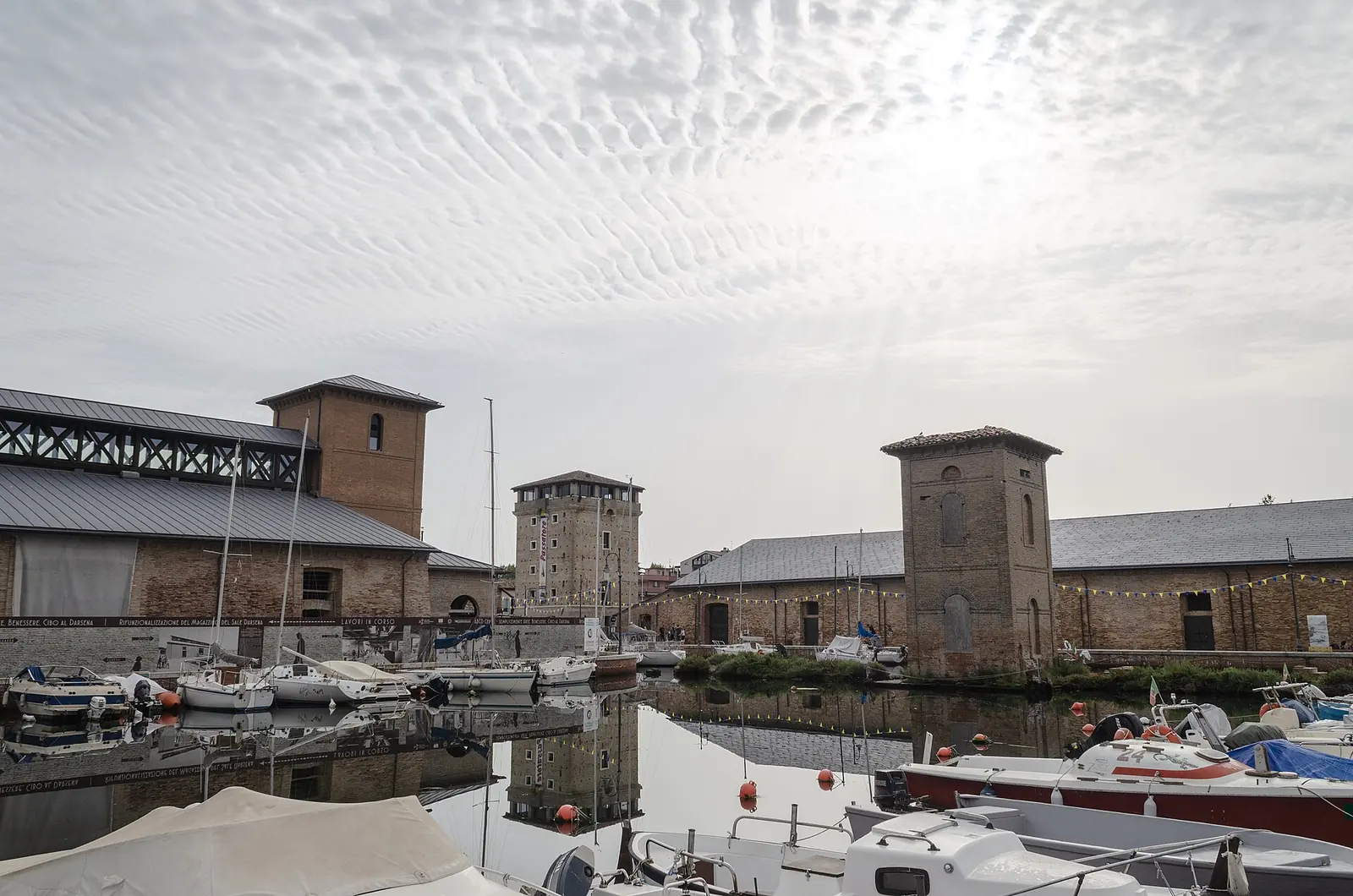
Magazzino del Sale Torre houses MUSA, the salt museum, with salt workers' tools, images and testimonies, and a burchiella, the flat-bottomed boat once used to transport salt. It offers a way to discover the salt pan's history even in months when harvesting has ended.
Guided salt pan visits
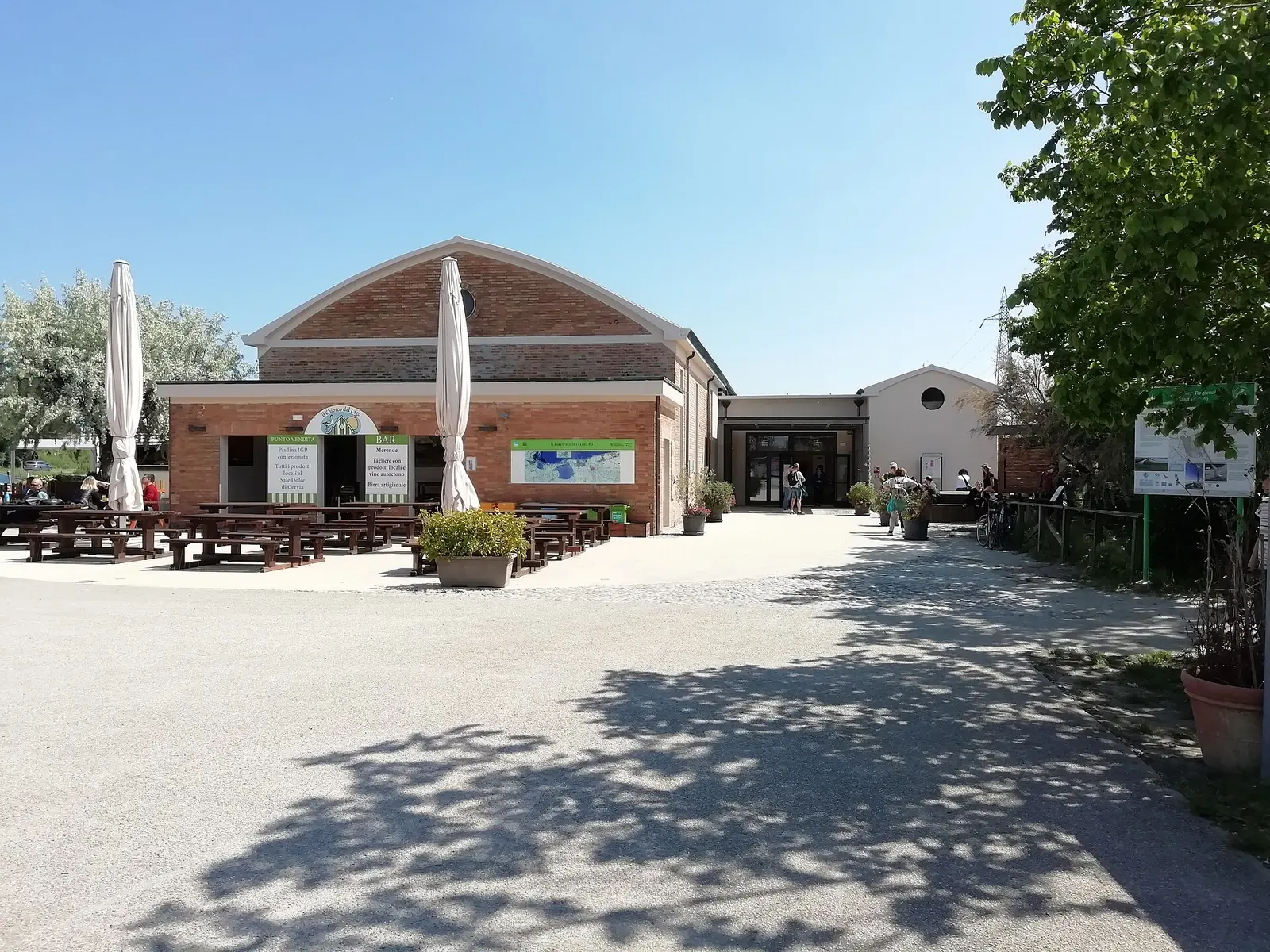
Centro Visite, at 61 Via Bova, is the starting point for all salt pan visits: in 2025, it opened from 29 March to 2 November. Outings change seasonally; in autumn, they mainly take place at weekends.
| Visit | Things to see | 2026 calendar, as an example |
|---|---|---|
| Tracce di un'antica salina romana (traces of an ancient Roman salt pan) | A walk of around 1 km out and back to Camillone; the guide explains the 2015 excavations that, according to the Comune, revealed a Roman salt pan from the 3rd century BC. | daily in summer, then Saturdays and Sundays until 1 November |
| In salina in barca elettrica (into the salt pan by electric boat) | The channel and crystallisation basins, with a walking stretch along the banks | daily in summer, then Saturdays and Sundays until 24 October |
| Tramonto in salina, in barca (sunset in the salt pan by boat) | The salt pan at sunset, with nesting in spring and production in late summer | from April to 31 October, on fixed days |
| Pedalata alle montagne di sale (cycle ride to the salt heaps) | By bicycle to the salt mounds at the plant | Sundays from 20 September to 1 November |
Booking is compulsory for all visits; each year's programme appears on the Comune tourism portal under guided nature visits. Salt mounds form during the cavadura between August and September; in spring, visits mainly focus on birds nesting in the basins.
Sapore di Sale and the return of the salt
Every year in early September, Cervia devotes the “Sapore di Sale” festival to salt, from Thursday to Sunday. The main moment is the return of the salt, Armesa de sel: the salt-laden burchiella travels up the canal from the salt pan to the Magazzini, as it once did at the end of harvesting, and salt is offered to those present for good luck. In 2026, the festival reached its thirtieth edition, from 3 to 6 September; other events are in events in Cervia.
The salt pan can be combined with other local destinations, from the pinewood to Ravenna, as described in excursions from Cervia.
Sources: Comune di Cervia, tourism portal (“La Salina”, “Sapore di Sale 30ª edizione”, “visite guidate 2026”) and MUSA museum (“Il sale dolce di Cervia”); Parco della Salina di Cervia, “La salina di Cervia”; Regione Emilia-Romagna, Rete Natura 2000, site IT4070007; accessed on 10 October 2026.