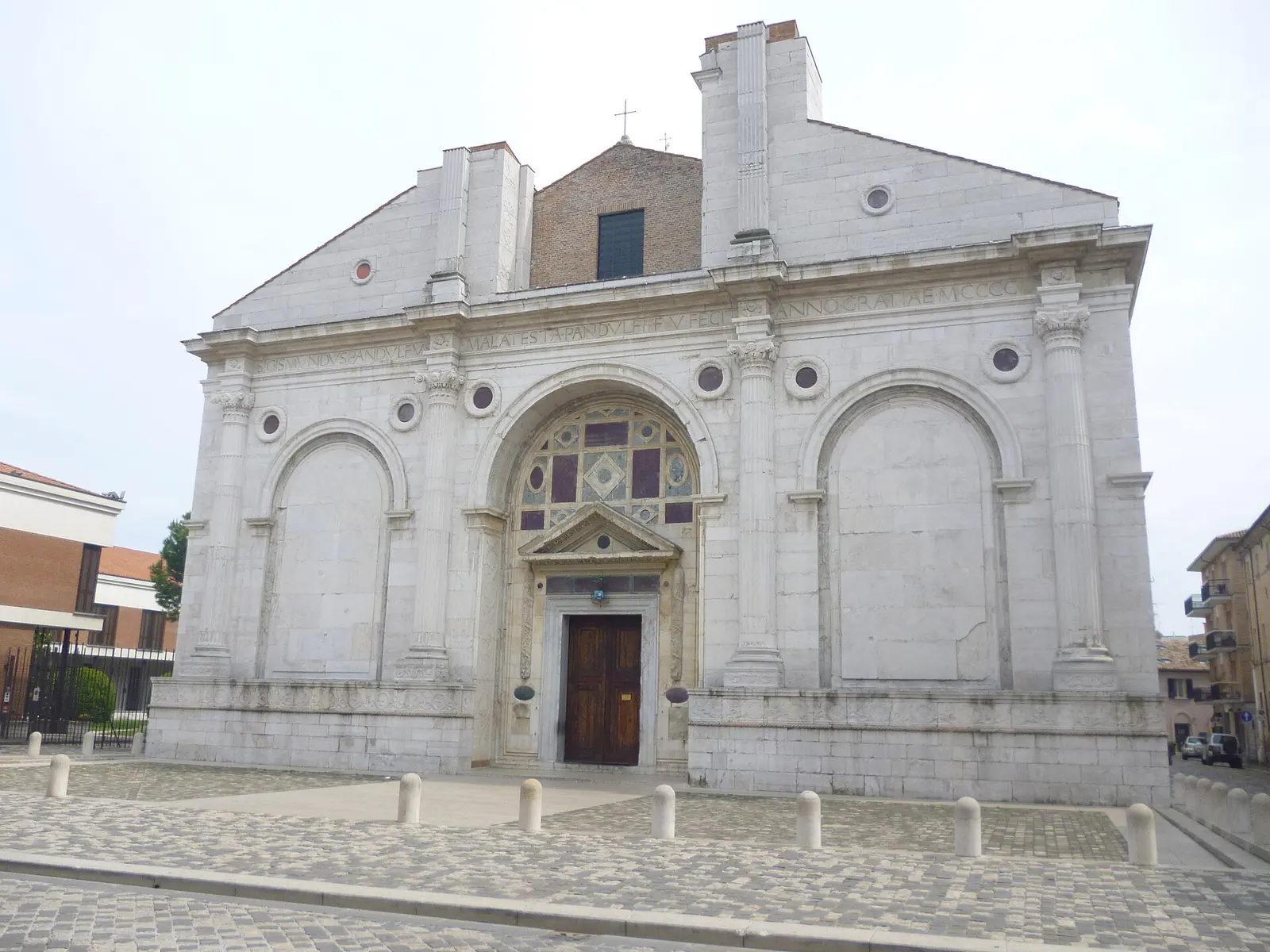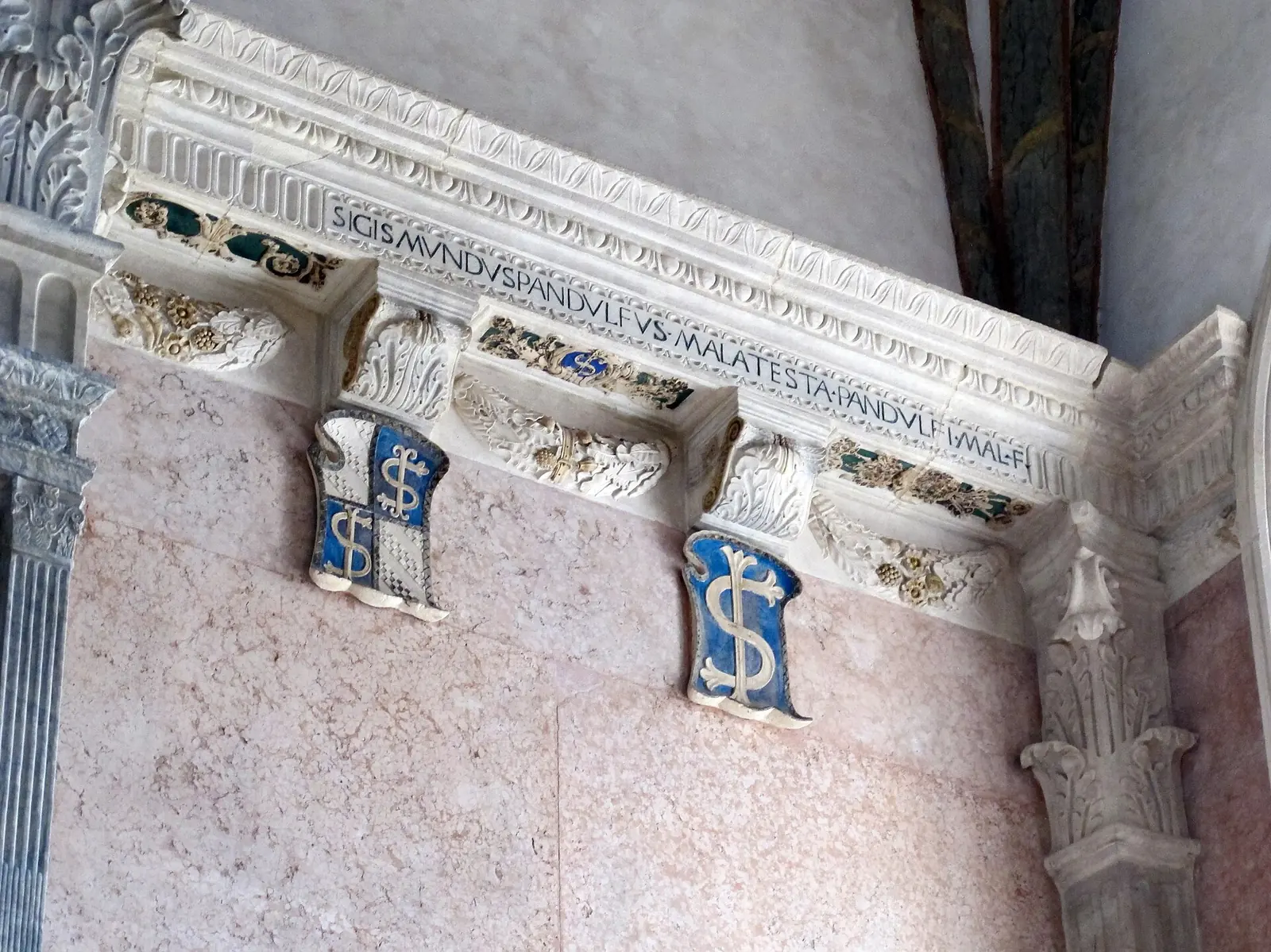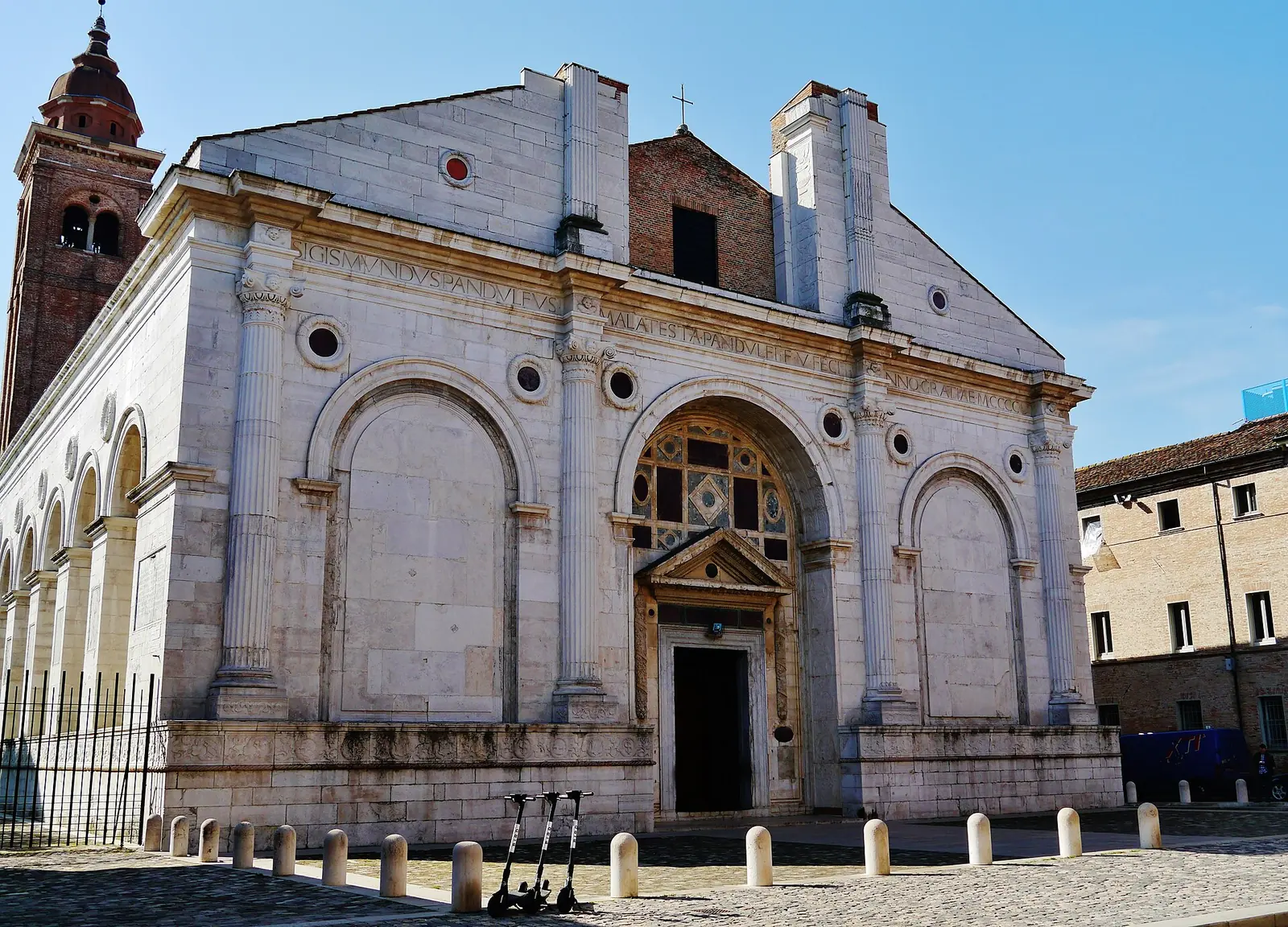
Tempio Malatestiano is Rimini's cathedral, at 35 Via IV Novembre. The Renaissance cladding designed by Leon Battista Alberti transformed the earlier Chiesa di San Francesco without completing it. Façade and chapels express Sigismondo Pandolfo Malatesta's project; works by Giotto and Piero della Francesca are preserved inside.
The unfinished project
Work began in 1447 with two family chapels on the right side, then extended to the whole building. The exterior cladding was made between 1450 and 1460; work stopped around 1460-61 amid the conflict between Sigismondo and Pope Pio II. Alberti drew on Rimini's Roman architecture, particularly the arch and the bridge. Above the façade columns, the upper register remained without its intended completion.
The transformation celebrated Sigismondo and his family alongside the building's religious function. The church became a cathedral in 1809.
Chapels, reliefs and paintings
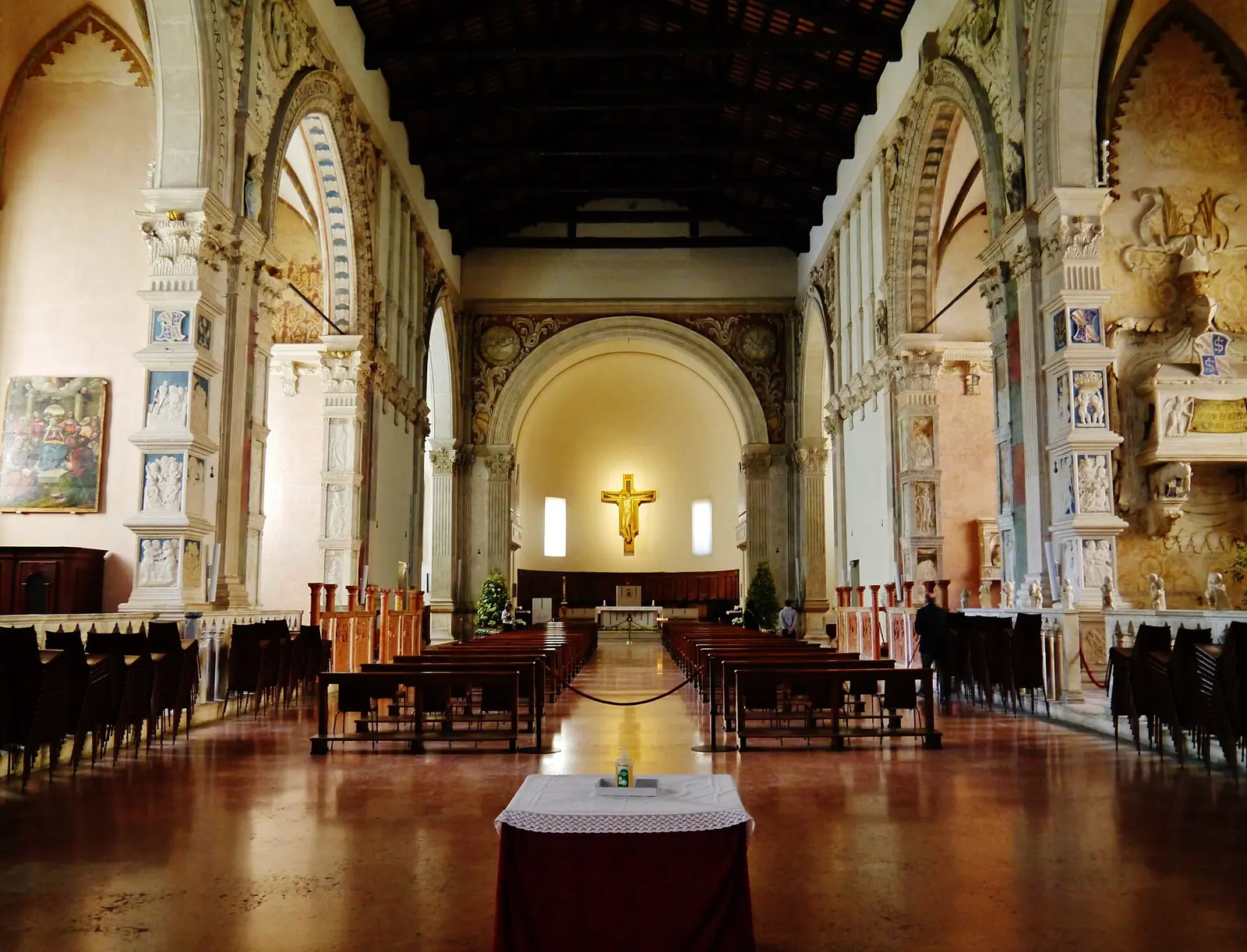
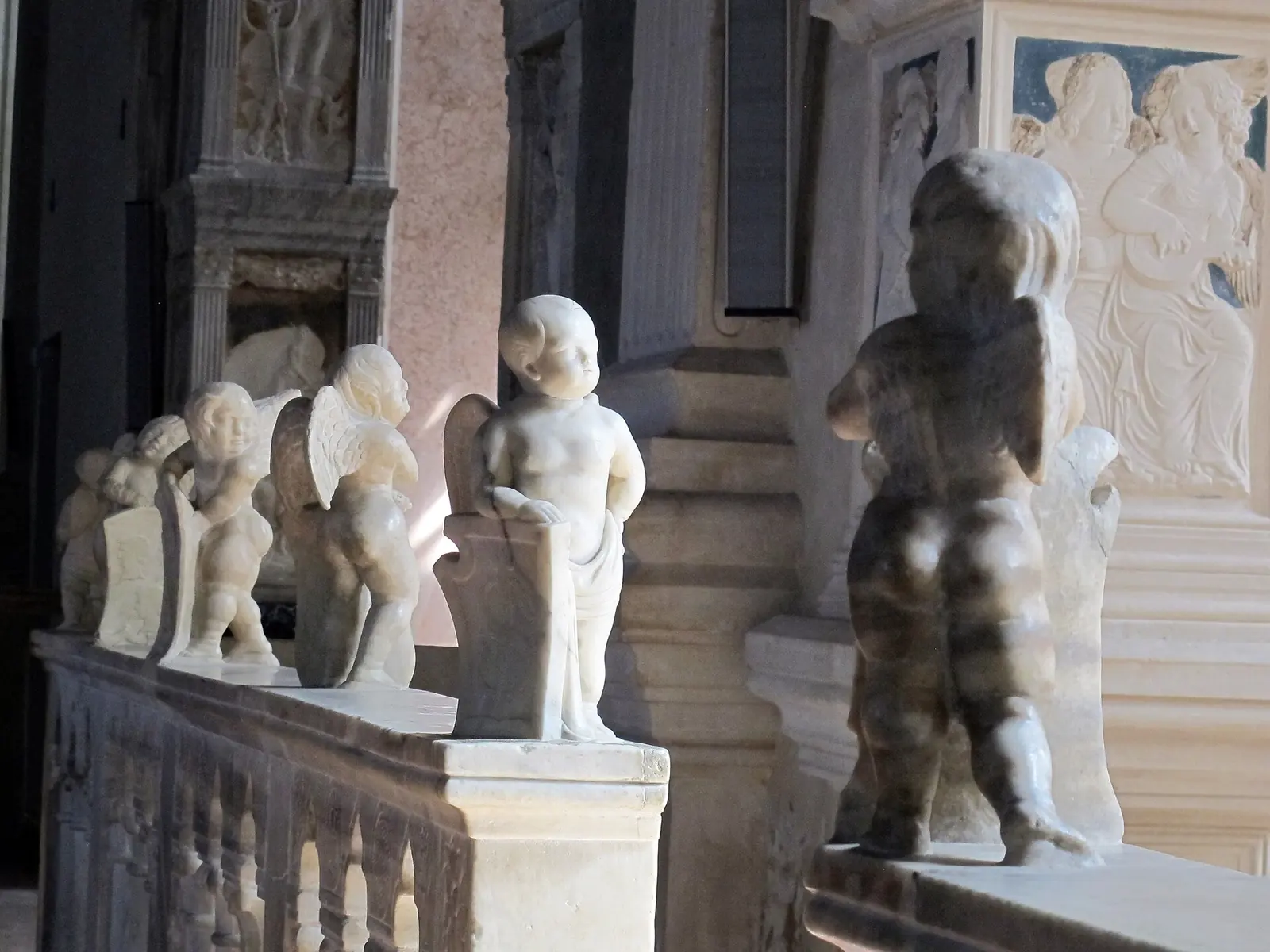
The single nave has exposed roof trusses and side chapels separated by marble balustrades. The interior arrangement is associated with Matteo de' Pasti; reliefs attributed to Agostino di Duccio include musical angels, ancestral figures and zodiac signs.
Giotto's Crucifix, painted around 1300 for the Franciscan church, is now in the apse. Piero della Francesca's fresco of 1451, showing Sigismondo praying before San Sigismondo, is in the last chapel on the right.
Visiting arrangements
Visits are unrestricted but suspended from half an hour before Mass until its conclusion. Wheelchair access is to the left of the main doorway, through the gate into the curia garden. The urban route continues in the Rimini monuments guide.
Images