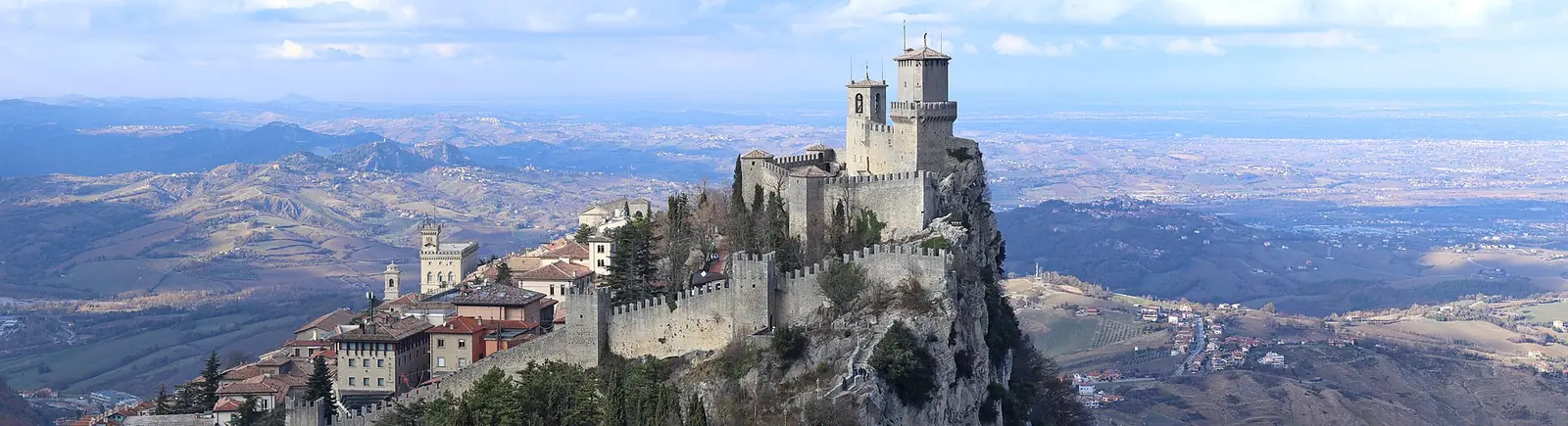
Photo by Terragio67, Wikimedia Commons, CC BY-SA 4.0
From Rimini
Visiting the Republic of San Marino
From Rimini, the Republic of San Marino is a day-trip destination: the scheduled bus leaves the railway station and reaches the historic centre in around 55 minutes; by car, the main road starts from the A14 Rimini Sud exit. The historic centre and Monte Titano have been a UNESCO World Heritage Site since 2008. Towers, Palazzo Pubblico and museums are connected by uphill streets, with paved stretches and steps.
Getting there from Rimini
The Rimini-San Marino bus leaves Rimini railway station, passes Arco di Augusto and reaches the terminus in San Marino's historic centre; the journey takes around 55 minutes. Timetables change seasonally: the winter timetable applies from 8 November 2026 to 21 March 2027. Booking is recommended, as a ticket guarantees travel but not a seat. The wheelchair ramp must be requested by phone at least 24 hours ahead. Timetables and tickets are on the Rimini-San Marino bus page.
By car, the route leaves the A14 at Rimini Sud and follows the Statale 72 towards San Marino, to the border and then on towards Città di San Marino.
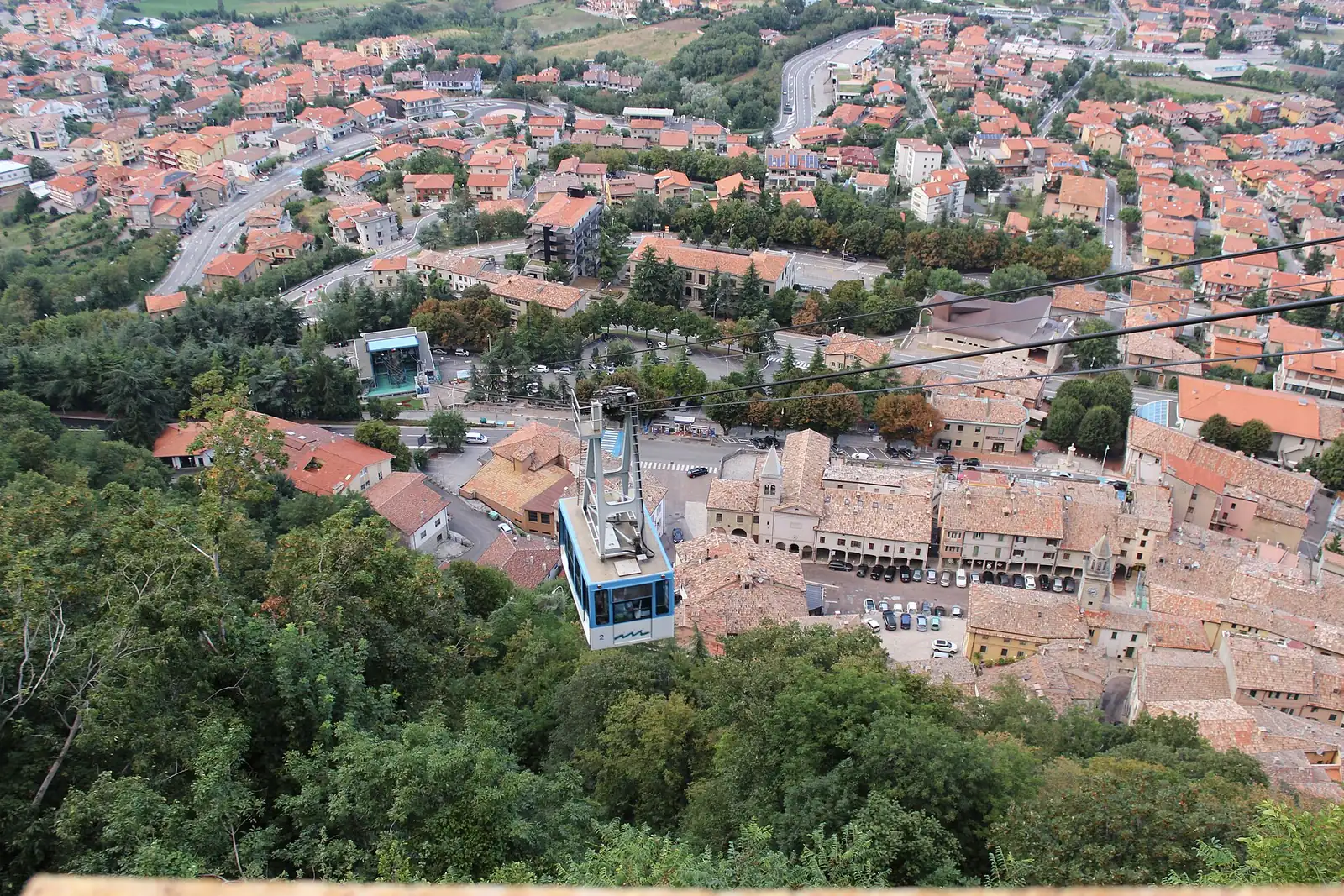
From Borgo Maggiore, the cable car climbs to the historic centre every quarter of an hour. It has operated since 1959, and the current installation dates from 1996. Calendar, scheduled closures and fares are on the AASS cable car service page; AASS is the public company that operates it.
Piazza della Libertà and Palazzo Pubblico
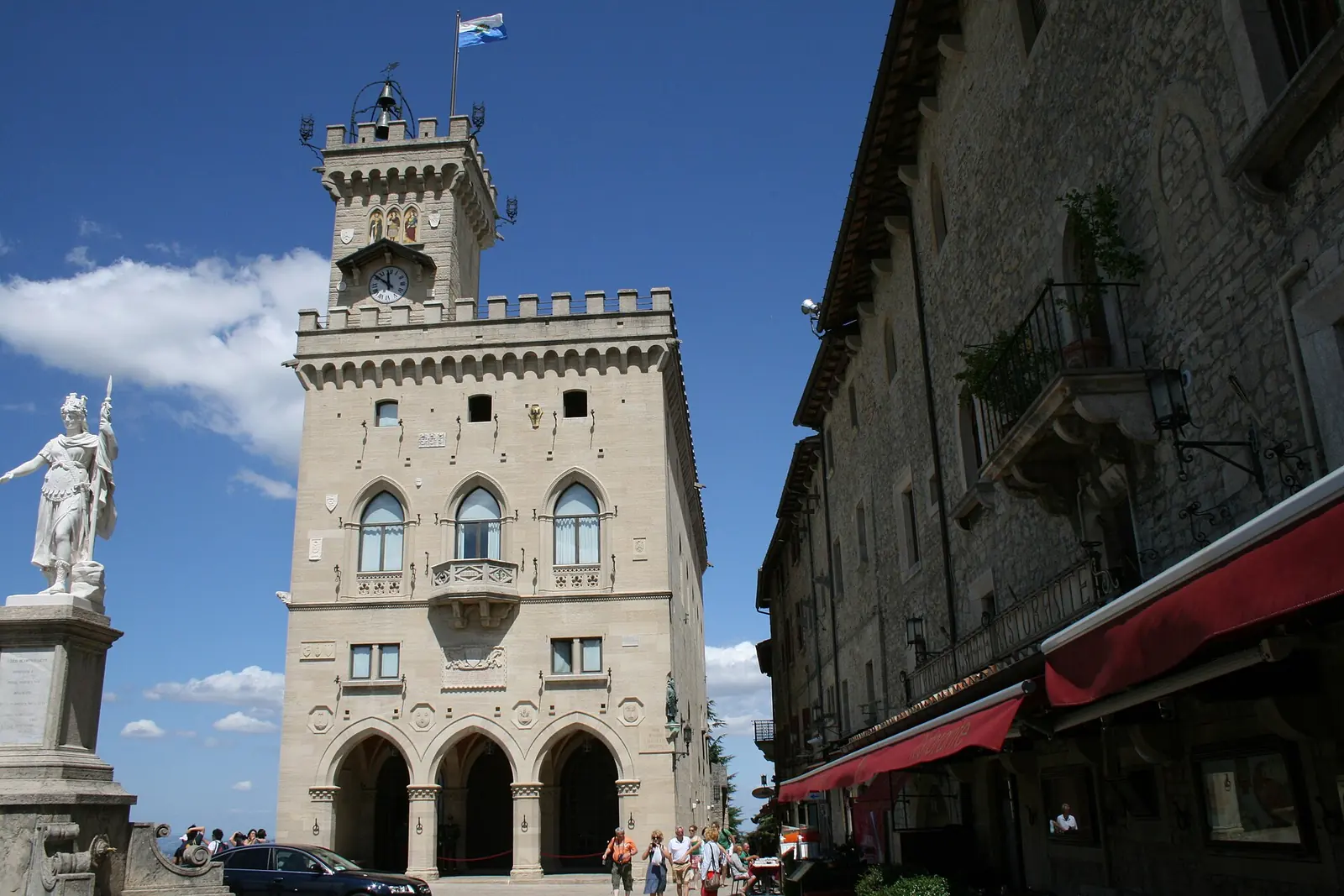
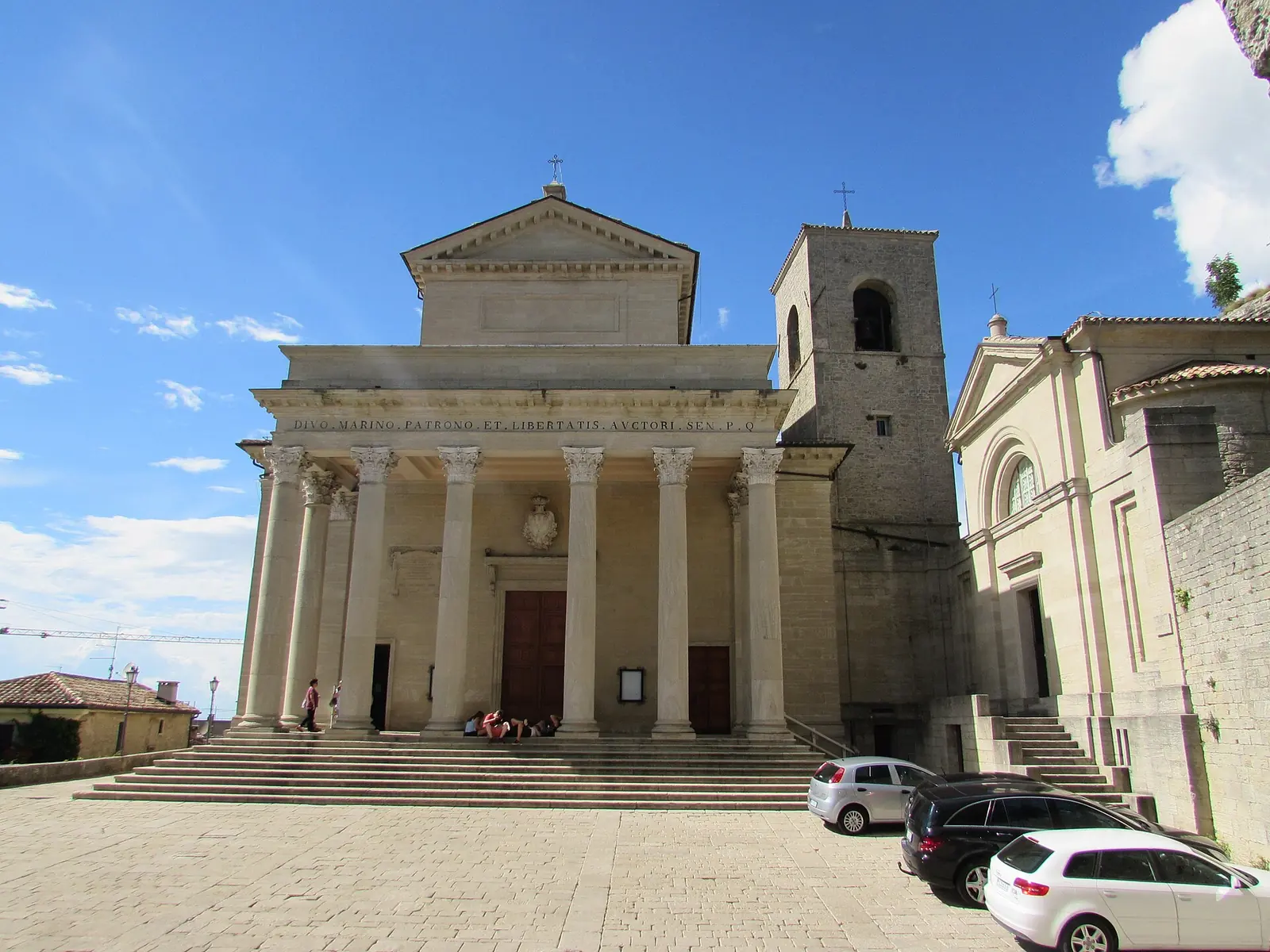
The heart of the visit is Piazza della Libertà, with Palazzo Pubblico and nearby Basilica del Santo. Palazzo Pubblico was built between 1884 and 1894 to a design by Roman architect Francesco Azzurri, in the style of 13th- and 14th-century town halls, replacing the old Domus Magna Comunis. It remains the seat of the Republic's institutions: Capitani Reggenti, Consiglio Grande e Generale, Consiglio dei XII and Congresso di Stato.
The basilica is dedicated to Marino, the Republic's founding saint. Surrounding streets connect squares, gateways and museums, with views across the plain to the sea; the closer to the towers, the steeper the climbs.
The three towers on Monte Titano
| Tower | Distinctive feature |
|---|---|
| Prima Torre, Guaita | The largest and oldest: its core dates from the 11th century; open to visits |
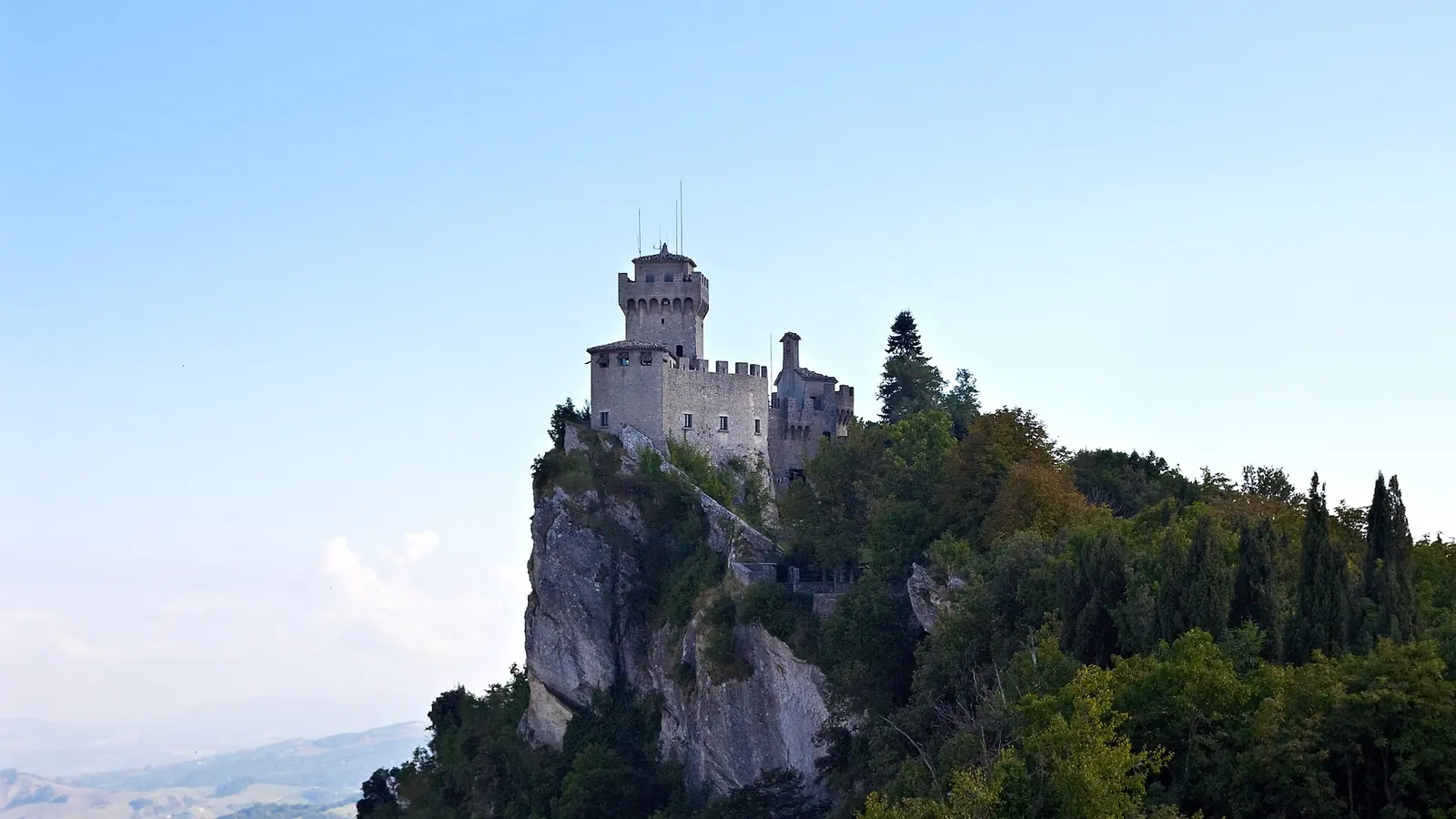
| Seconda Torre, Cesta or Fratta | On the highest Titano peak, at 755 metres; houses Museo delle armi antiche, closed for works in October 2026 |
| Terza Torre, Montale | Not open to the public |
A ridge path links the three towers, with uneven passages and wind-exposed stretches. Visitors with small children or reduced mobility can stop at Prima Torre.
Musei di Stato
| Museum | Collections |
|---|---|
| Museo di Stato | The Republic's archaeological, art and numismatic collections |
| Pinacoteca di San Francesco | Paintings and sacred art objects in the San Francesco complex |
| Galleria Nazionale | Modern and contemporary art |
| Museo del francobollo e della moneta | The Republic's stamps and coins from the second half of the 19th century to today |
Single and combined tickets, opening hours and closure days are on the Musei di Stato di San Marino website.
How much time to allow
With travel, climbs and at least one museum, San Marino fills a whole day. For a short visit, the square, basilica and Guaita suffice; museums and the towers path require more time.
On the same or following day, the Rimini hinterland offers other fortified villages: Santarcangelo di Romagna, Castello di Azzurrina in Montebello and the fortresses gathered in the Romagna castles guide. Other destinations are in excursions from Rimini.
Sources: Musei di Stato della Repubblica di San Marino; Azienda Autonoma di Stato per i Servizi Pubblici (AASS), cable car service; Istituto per la Sicurezza Sociale di San Marino, driving directions; F.lli Benedettini, Rimini-San Marino bus, 2026-2027 timetables; accessed on 10 October 2026.