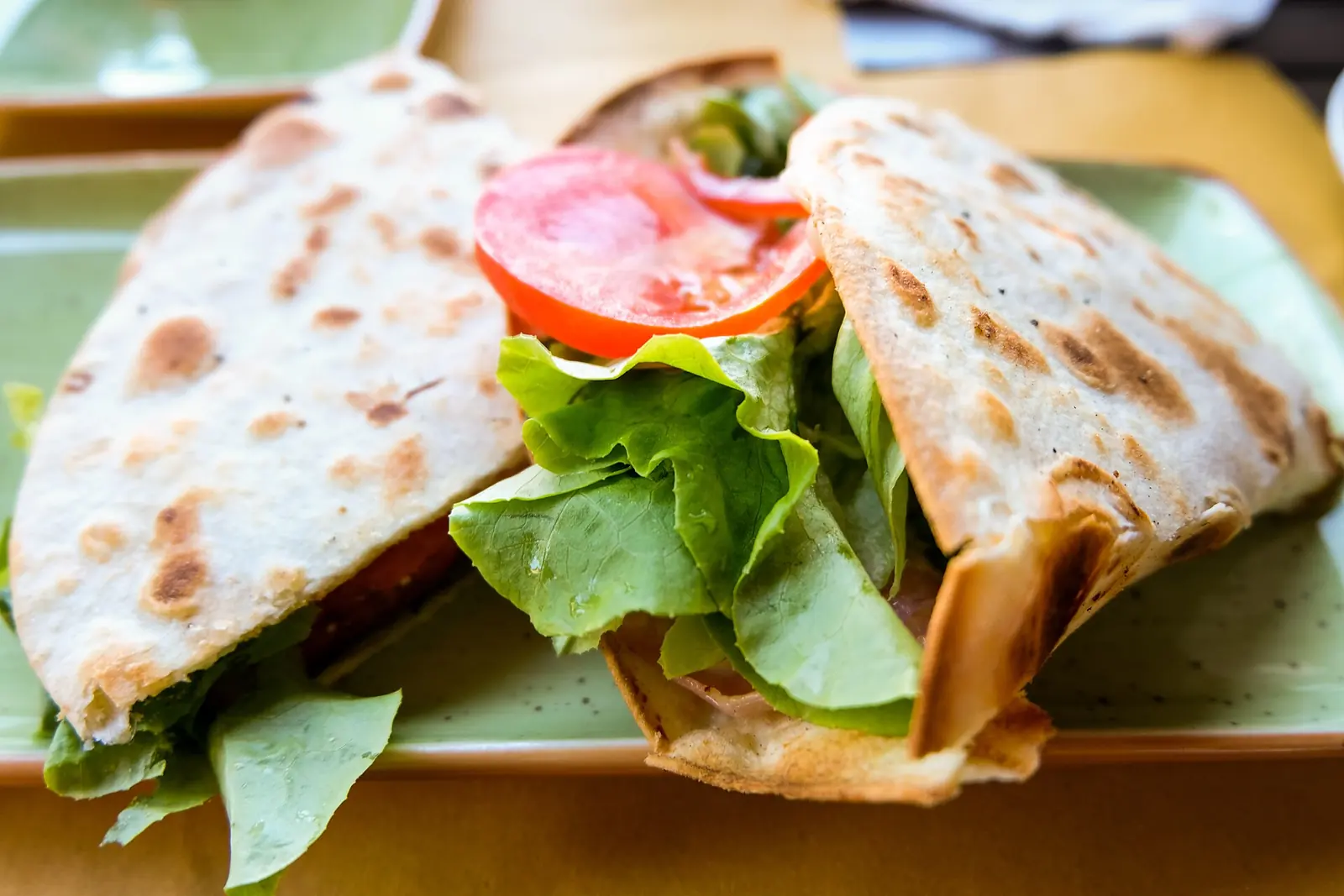
Photo by Cristian Ungureanu, Wikimedia Commons, CC0
Food in the nine resorts
What to eat on the Riviera Romagnola
Riviera Romagnola cuisine lies between sea and countryside: Piadina Romagnola IGP, fresh pasta first courses and fish from the harbours. Each resort also has something of its own, from Cervia salt to Cesenatico saraghina, Cattolica bizulà and Gabicce Mare clams.
Piadina Romagnola IGP and cassone
Piadina Romagnola, or Piada Romagnola, has been a protected geographical indication since 2014, and its specification was amended in 2022. Its production area is a list of municipalities in the provinces of Rimini, Forlì-Cesena and Ravenna and part of the Bologna area, as far as the Sillaro: it includes every coastal municipality from Cervia to Cattolica, but excludes Gabicce Mare, which is in Provincia di Pesaro e Urbino.
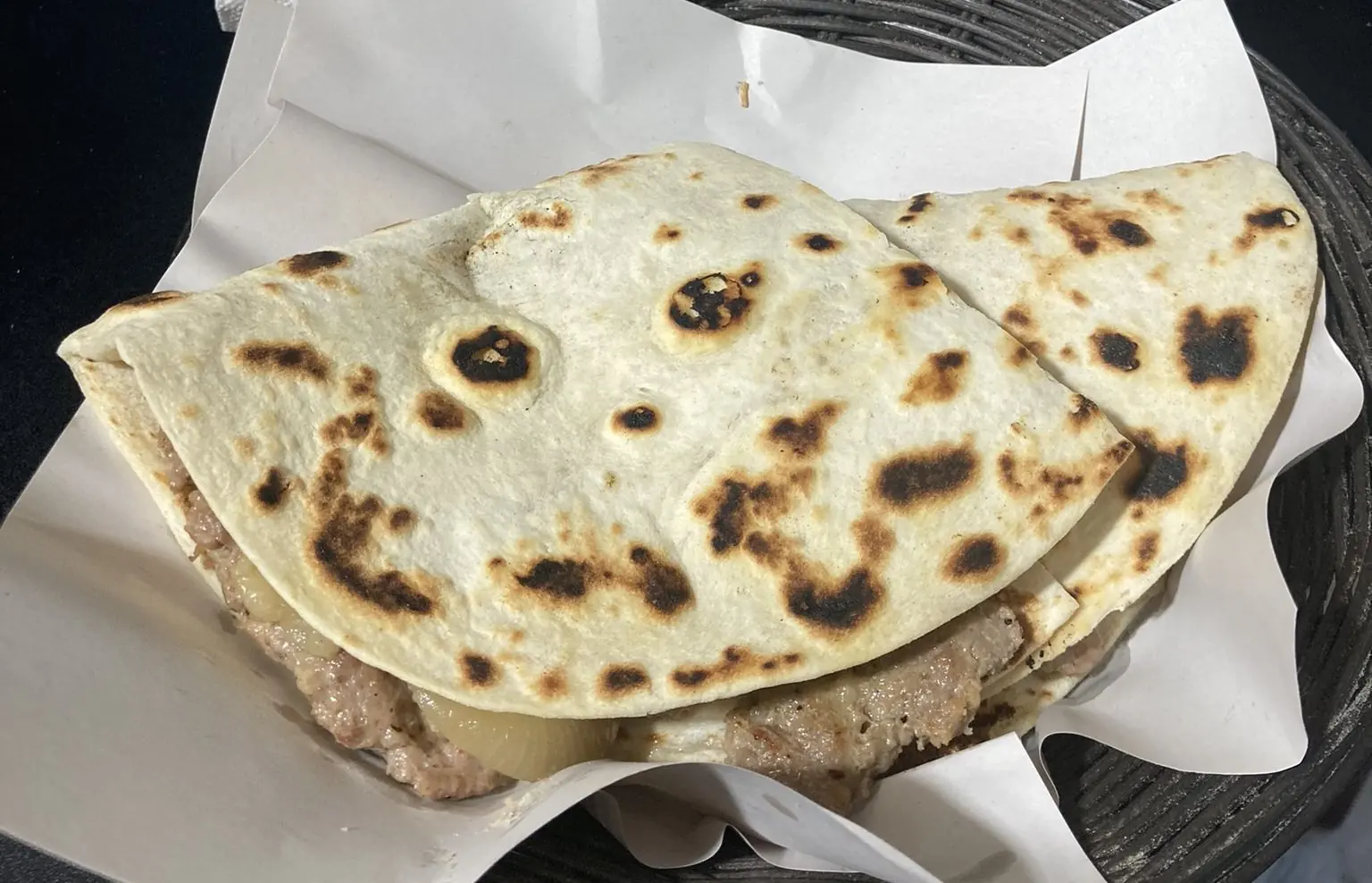
The specification sets ingredients for each kilogram of wheat or spelt flour: up to 25 grams of salt, up to 250 of lard or olive oil and optional raising agents, milk and honey in limited amounts. Preservatives, flavourings and additives are prohibited, and cooking lasts no more than four minutes. There are two types: the standard, 15 to 25 centimetres wide and 4 to 8 millimetres thick, and the Rimini style, 23 to 30 centimetres wide and no more than 3 millimetres thick, linked by the specification to the Rimini coast. The same text identifies kiosks as a typical Romagna feature.
Cassone, or crescione, is outside the IGP. It is a separate traditional product of Provincia di Forlì-Cesena, recognised by the Regione: a large piadina-dough parcel filled with greens and cooked on a griddle or fried.
Each harbour, its fish
Each coastal harbour has its speciality, as the figures show. Rimini has the region's largest fleet, 138 fishing vessels in 2020, mainly landing mantis shrimps, sole and red mullet. Cesenatico is an oily-fish harbour: sardines and anchovies accounted for almost four fifths of that year's catch. Cattolica is the clam harbour, with 13 hydraulic dredgers in 2025, more than any other Emilia-Romagna harbour, while Gabicce Mare in the Marche had 26 registered dredgers. Mussels are farmed in class A waters at Cervia and off Bellaria Igea Marina, Riccione and Cattolica.
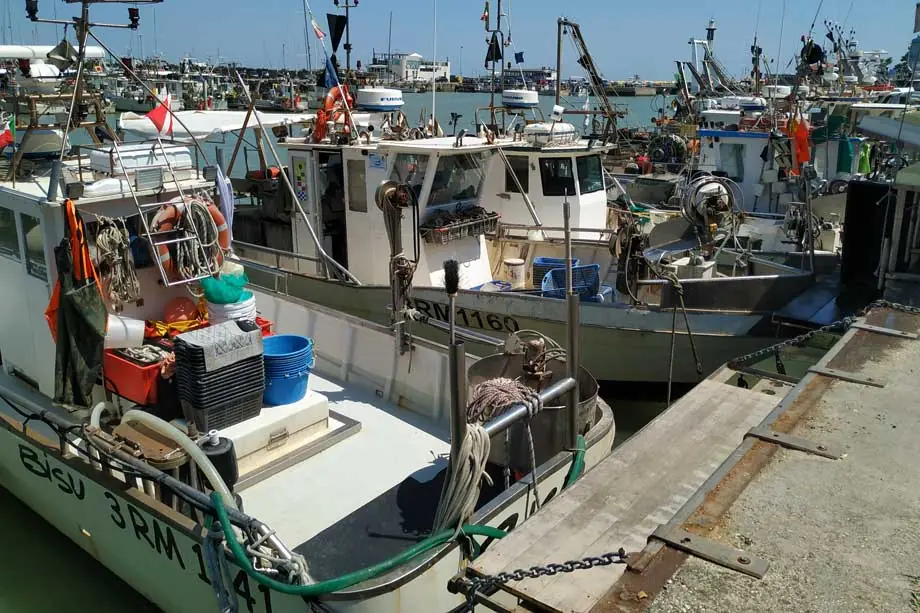
Sea clams are called poveracce in Romagna, and the Regione recognises several traditional dishes: clam brodetto from Provincia di Rimini, poveracce soup, risotto and spaghetti. Fishing also has its calendar: in 2026, the compulsory trawling closure from Trieste to Ancona was set from 31 July to 13 September.
Cuisine in each resort
| Resorts | On the table | Useful information |
|---|---|---|
| Restaurants in Milano Marittima | Cervia salt, mussels, piadina from kiosks | ten piadina kiosks on central avenues |
| Restaurants in Cervia | sweet salt, offshore farmed mussels and oysters, Pinarella cardoons | around ten food festivals in 2026 |
| Restaurants in Cesenatico | sardines and anchovies, salt-cured saraghina, cuttlefish with peas | three fish festivals each year |
| Restaurants in Bellaria Igea Marina | piadina, poveracce, mussels | the piadina festival in September |
| Restaurants in Rimini | Rimini-style piada, poveracce, mantis shrimps | the 1747 Vecchia Pescheria |
| Restaurants in Riccione | piadina from kiosks, fish skewers and fried fish, poveracce | Festa della Rustida dei bagnini in June |
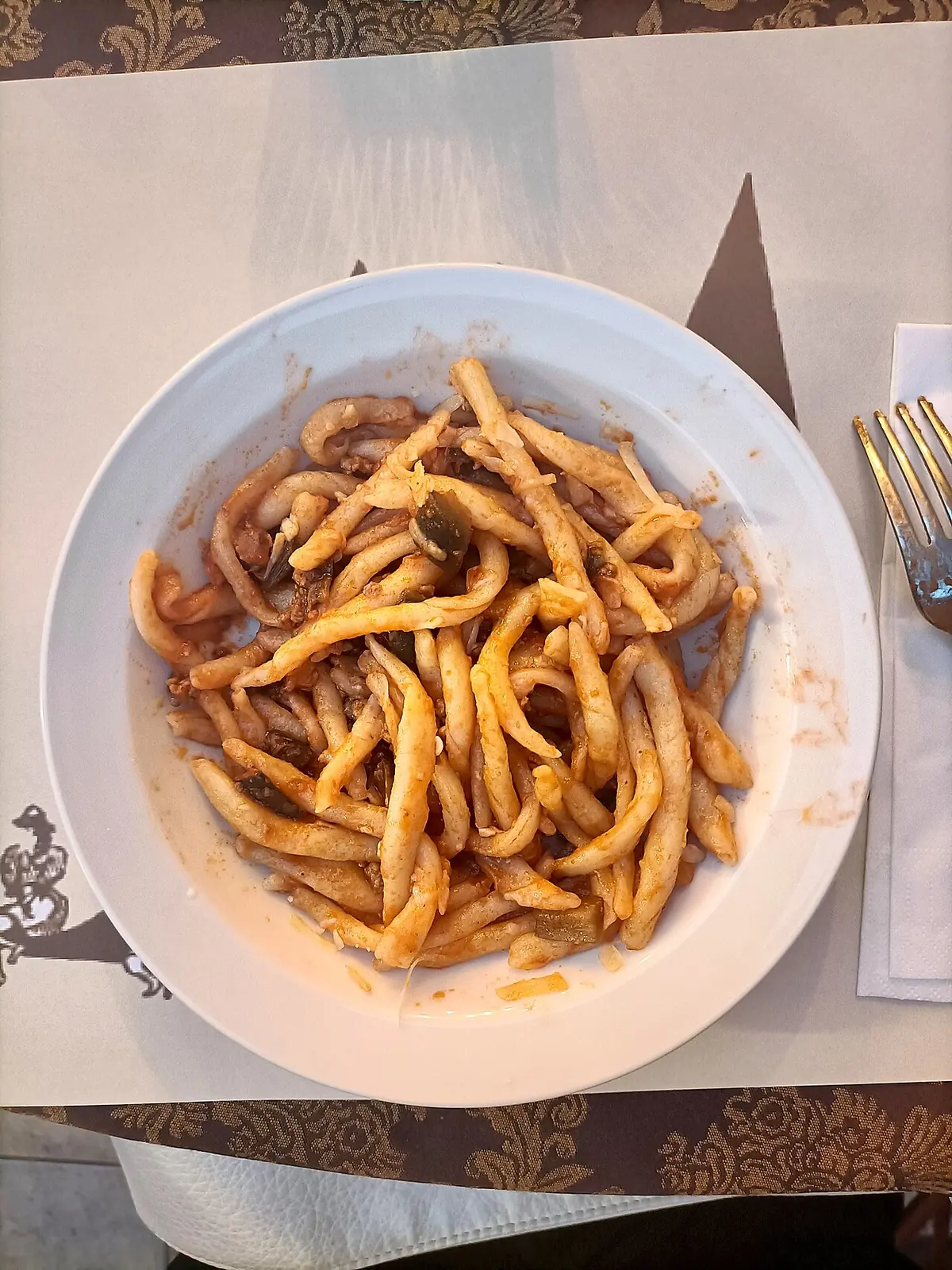
| Restaurants in Misano Adriatico | clams, grilled oily fish, homemade pasta | restaurants on Portoverde marina |
| Restaurants in Cattolica | clams, bizulà, miacetto | beach operators' rustida on free beaches |
| Restaurants in Gabicce Mare | clams, Colli Pesaresi wines, Marche IGP oil | local production outside the Piadina Romagnola IGP area |
Protected products and wines
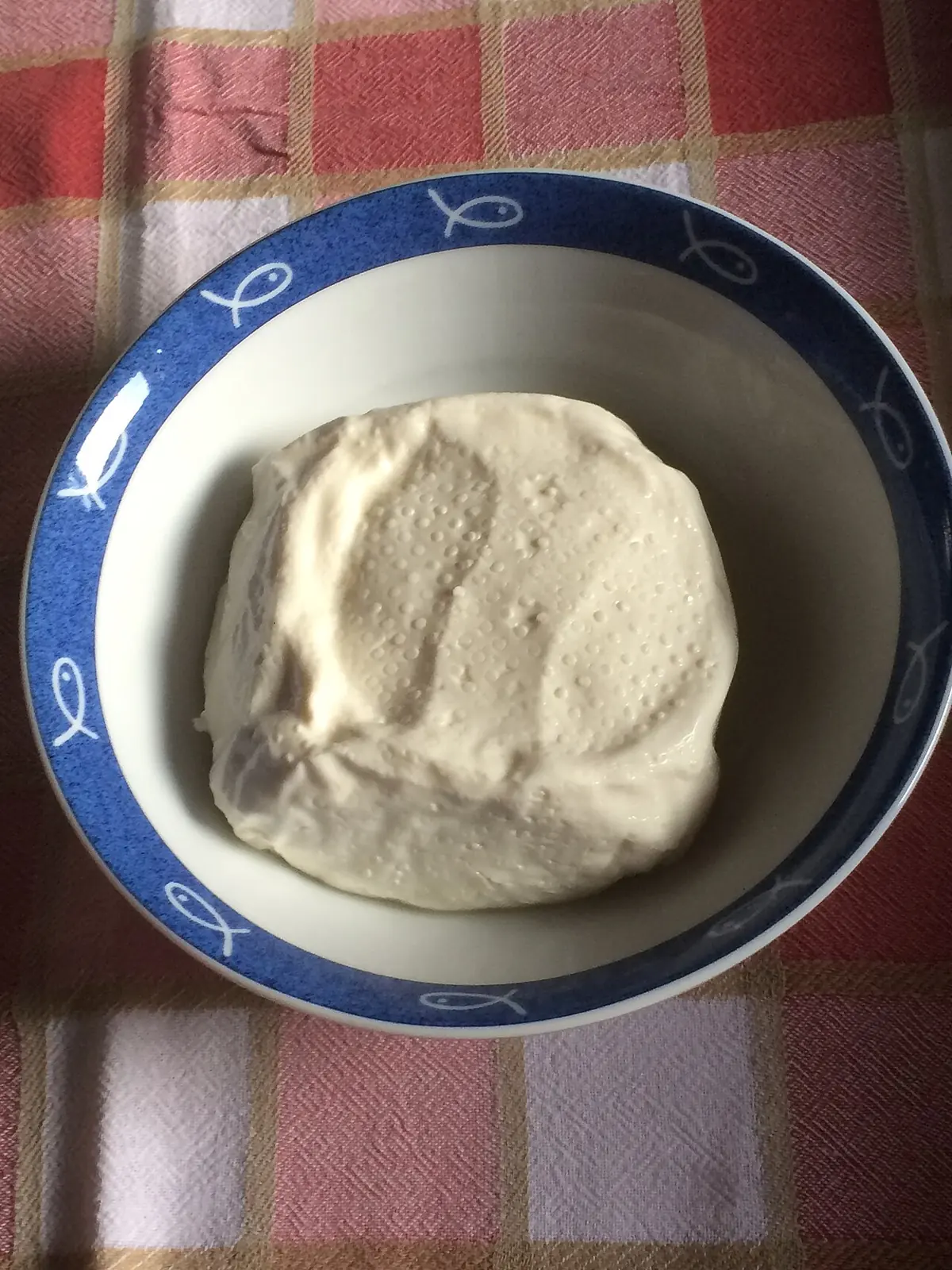
Alongside piadina, coastal tables feature Squacquerone di Romagna DOP, a fresh cow's milk cheese whose area includes the provinces of Rimini, Forlì-Cesena, Ravenna and Bologna and part of the Ferrara area. Formaggio di Fossa di Sogliano DOP matures for 80 to 100 days in pits dug into the ground, and its area extends into Marche. Colline di Romagna DOP extra virgin olive oil comes from the Rimini and Forlì hinterland; on the coast, its area covers only the part of Rimini, Riccione and Misano Adriatico inland of Statale Adriatica.
Among wines, Provincia di Rimini's designation has been called Rimini DOC since 2022, previously Colli di Rimini; Romagna DOC includes Sangiovese, Trebbiano, Pagadebit and Cagnina. In Cervia, part of the sandy land near the sea belongs to Bosco Eliceo DOC, while Gabicce Mare is in the Colli Pesaresi DOC area. The entire Romagna coast falls within Rubicone IGT.
Eating on the coast
The Comuni tourism portals describe similar patterns between resorts: seafood restaurants along canal harbours and seafronts, osterie and trattorie in historic centres and hinterland hills, bars and restaurants in beach establishments, piadina kiosks almost everywhere. The celebration returning almost everywhere is rustida, grilled oily fish. In Riccione, Festa della Rustida dei bagnini, established as an expression of gratitude to tourists after the June 1964 storm, is listed in Catalogo generale dei beni culturali; in Cesenatico, fishermen prepare it on the evening of 14 August, while in Cattolica and Gabicce Mare, beach operators do so.
Sources: Ministero dell'agricoltura, specifications for Piadina Romagnola IGP, Squacquerone di Romagna DOP, Formaggio di Fossa di Sogliano DOP and Colline di Romagna DOP oil, hydraulic dredger management plan and 2026 fishing closure decree; Regione Emilia-Romagna, traditional food products list, wine specifications and shellfish water classifications; Veneto Agricoltura, Osservatorio socio economico della pesca, Le marinerie di Rimini, Cesenatico e Cattolica (2020 data); Ministero della Cultura, Catalogo generale dei beni culturali, Festa della Rustida listing. Accessed between 25 September and 2 October 2026.