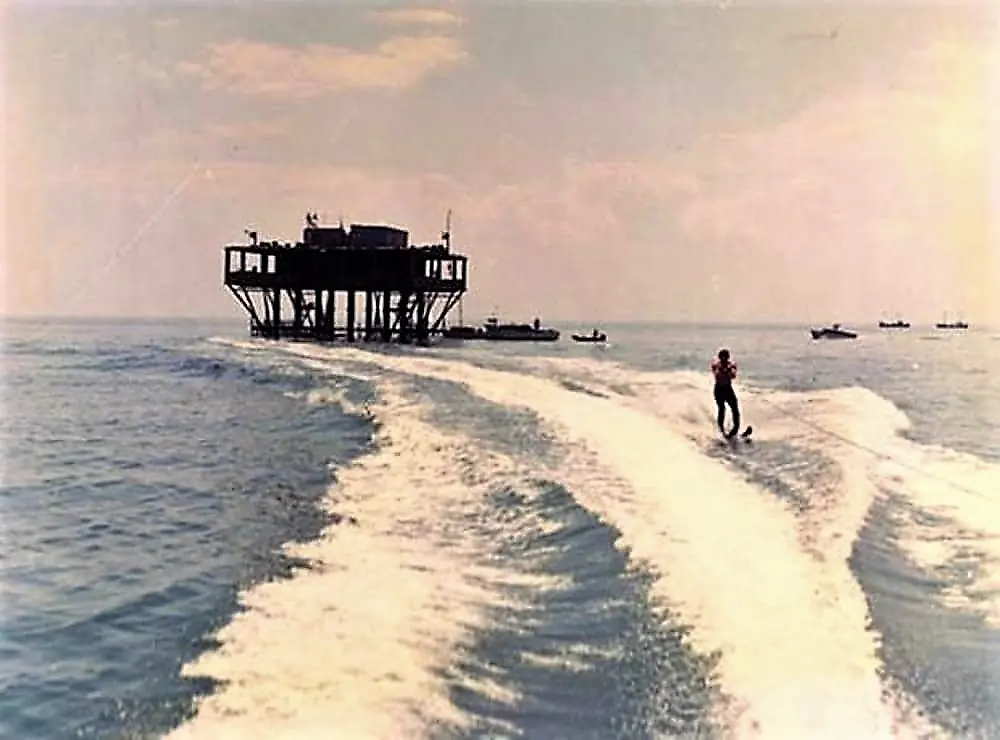
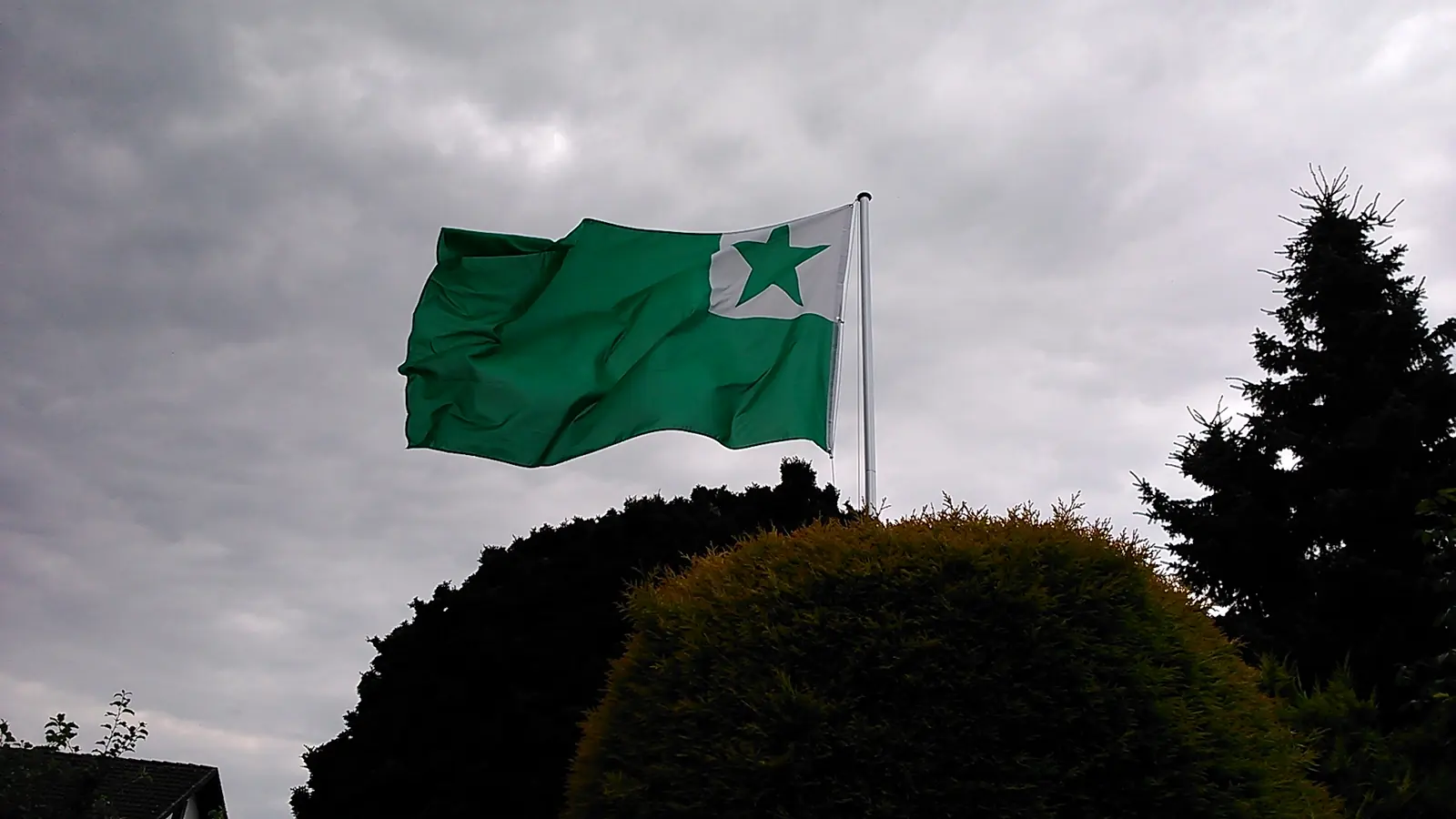
Isola delle Rose was an artificial platform of around 400 square metres, built by Bologna-born engineer Giorgio Rosa in the Adriatic, just under 12 kilometres off the Rimini coast. On 1 May 1968, Rosa proclaimed it an independent republic with Esperanto as its official language. No state recognised it. Italian law enforcement occupied it on 25 June 1968, and Marina Militare demolished it with explosives in February 1969. The republic lasted 55 days. Since 2020, its story has also been a film by Sydney Sibilia, which changes several details.
Where it stood and how it was built
The platform stood around 500 metres beyond Italy's then territorial waters, off Rimini's northern coast. The first article of the island's constitution placed it on an imaginary line between Torre Pedrera and Pola, on the Istrian coast. Torre Pedrera is the last district along Rimini beach before Bellaria Igea Marina.
The structure was based on a Rosa patent. A steel-tube frame, welded on land, was floated out to sea and fixed to the seabed with nine main tubes, later filled with concrete. A reinforced clay-block floor was cast above, around 8 metres above sea level. Work began on a second floor; the design envisaged five. The boat landing was called Porto Verde, Haveno Verda in Esperanto.
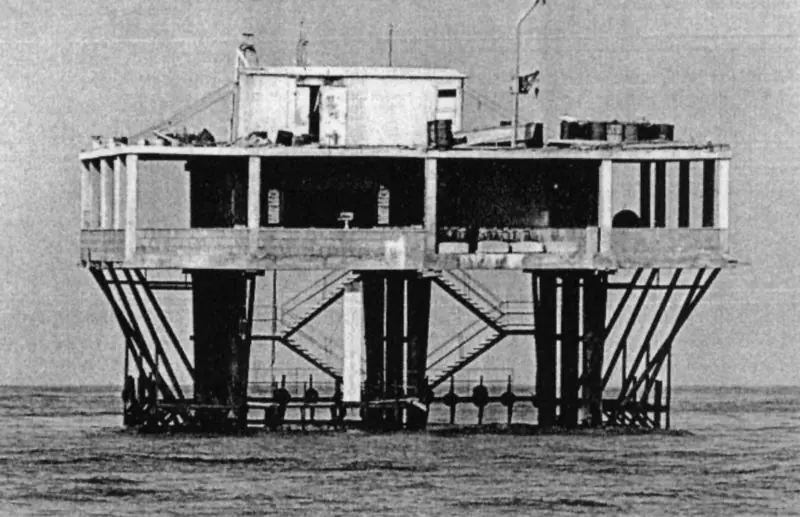
| Feature | Historical fact |
|---|---|
| Designer | Giorgio Rosa, engineer (Bologna, 1925-2017) |
| Distance from the coast | just under 12 km, around 500 m beyond the territorial waters of 1968 |
| Area | around 400 m² |
| Supports | 9 steel tubes filled with concrete |
| Floors | one completed, around 8 m above the sea; a second begun |
| Proclamation | 1 May 1968 |
| Occupation | 25 June 1968 |
| Demolition | explosions from 11 to 13 February 1969; sinking on 26 February |
From the 1958 design to work at sea
Rosa chose the location on a nautical chart in July 1958. In 1960, he founded SPIC (Società sperimentale per iniezioni di cemento) with his wife Gabriella Chierici: she was its president, he its technical director.
The steel frame, towed by three tugboats, reached the seabed on 31 July 1964. Still unanchored, it was overturned by a storm on the night of 12-13 February 1965. A pontoon raised it again between May and June that year. Sea and weather conditions allowed only a few hours' work each week, and construction continued for years.
At the end of 1966, Capitaneria di porto di Rimini asked for work to stop, partly because ENI held a concession for the area. Rosa continued. By February 1967, the supports were in place and the 400-square-metre floor was built, topped by a drill searching for fresh water beneath the seabed, which it found. That year, Santarcangelo-born senator Gino Zannini submitted a parliamentary question: he suspected a pirate radio station was taking shape at sea.
Still under construction, the platform had already become a curiosity. In summer, a motor vessel left Rimini harbour several times a day carrying dozens of passengers.
Why outside territorial waters
In 1968, the Codice della navigazione set Italy's territorial sea at six nautical miles from the coast, just over 11 kilometres. Rosa built just beyond that line, in international waters, basing his idea of an independent state on this position. A law of 14 August 1974 (No. 359) later extended the limit to twelve miles.
Consiglio di Stato rejected this reasoning. The judges held that, even on the high seas, the platform obstructed use of the sea and Italy's exclusive rights over the continental shelf, and Italian citizens remained bound by the state's laws.
The Esperanto republic
Its official name was Esperanta Respubliko de la Insulo de la Rozoj, Repubblica esperantista dell'Isola delle Rose. The news reached the papers on 22 June 1968, when Resto del Carlino reported on the new offshore state; Messaggero di Roma also covered it on 26 June.
The flag was orange, with a coat of arms showing three red roses on a white field. There was a bar and a post office on board, and Rosa planned other businesses modelled on small independent states such as San Marino.
Currency and stamps
The currency was called the mill, equal to the lira, but was never minted or printed. Stamps, however, survive. There were 5,000 copies of the 30-mill denomination, printed in sheets of ten and sold on the island from 1 May to 25 June 1968: around a thousand were sold. After the occupation, the stamp was overprinted Milita Itala Okupado, “Italian military occupation”. In March 1969, after demolition, a series of three denominations appeared with a Latin motto about violence destroying the work but not the idea.
The occupation of 25 June 1968
At 7am on 25 June, around ten Polizia, Carabinieri and Guardia di Finanza boats surrounded the platform and took possession without violence. Only the caretaker, Pietro Bernardini, was on board. Rosa was not allowed to board.
The island's government protested by telegram to President of the Republic Giuseppe Saragat, who did not reply. The case reached the Camera dei deputati through two questions to the minister of the interior: Stefano Menicacci's of 5 July 1968, describing a “joke state” with shops, flag and stamps, and Nicola Pagliarani's of 10 July, asking about the background and the Ministero's official position.
The demolition of 1969
On 8 August 1968, Ministero della Marina mercantile ordered the platform's demolition. Capitaneria di porto di Rimini implemented this in decree No. 2 of 16 August, served the next day on Gabriella Chierici as SPIC president: demolish it, or the authorities would do so.
On 28 August, SPIC appealed to Consiglio di Stato, requesting a stay of demolition. The appeal was rejected at the hearing on 8 October 1968; the final judgment, No. 718, came on 14 November 1969, after the platform had ceased to exist.
On 11 February 1969, Marina Militare divers began placing explosives on the supports after knocking down the masonry. Over three days they detonated almost two tonnes of TNT, but the deformed steel structure remained standing. The storm of 26 February 1969 sent it to the seabed.
| Date | Event |
|---|---|
| July 1958 | Rosa fixes the location on a nautical chart |
| 1960 | SPIC is founded, with Gabriella Chierici as president |
| 31 July 1964 | The steel frame reaches the seabed |
| 12-13 February 1965 | A storm overturns the still unanchored structure |
| End of 1966 | Capitaneria di Rimini requests a halt to work |
| 1 May 1968 | Proclamation of the republic |
| 22 June 1968 | The news appears in the papers |
| 25 June 1968 | Occupation |
| 5 and 10 July 1968 | Menicacci and Pagliarani questions in the Camera dei deputati |
| 16-17 August 1968 | Capitaneria demolition decree |
| 8 October 1968 | Consiglio di Stato rejects the appeal |
| 11-13 February 1969 | Marina Militare explosions |
| 26 February 1969 | A storm sinks the structure |
| 14 November 1969 | Final Consiglio di Stato judgment |
Giorgio Rosa and Gabriella Chierici
Giorgio Rosa was born in Bologna on 7 May 1925. After the demolition, he never returned to Rimini. He died in his home city on 2 March 2017.
Gabriella Chierici, his wife since 1960, was no bystander. She headed the company that built the platform, received the demolition order and signed the appeal to Consiglio di Stato.
What remains of Isola delle Rose today
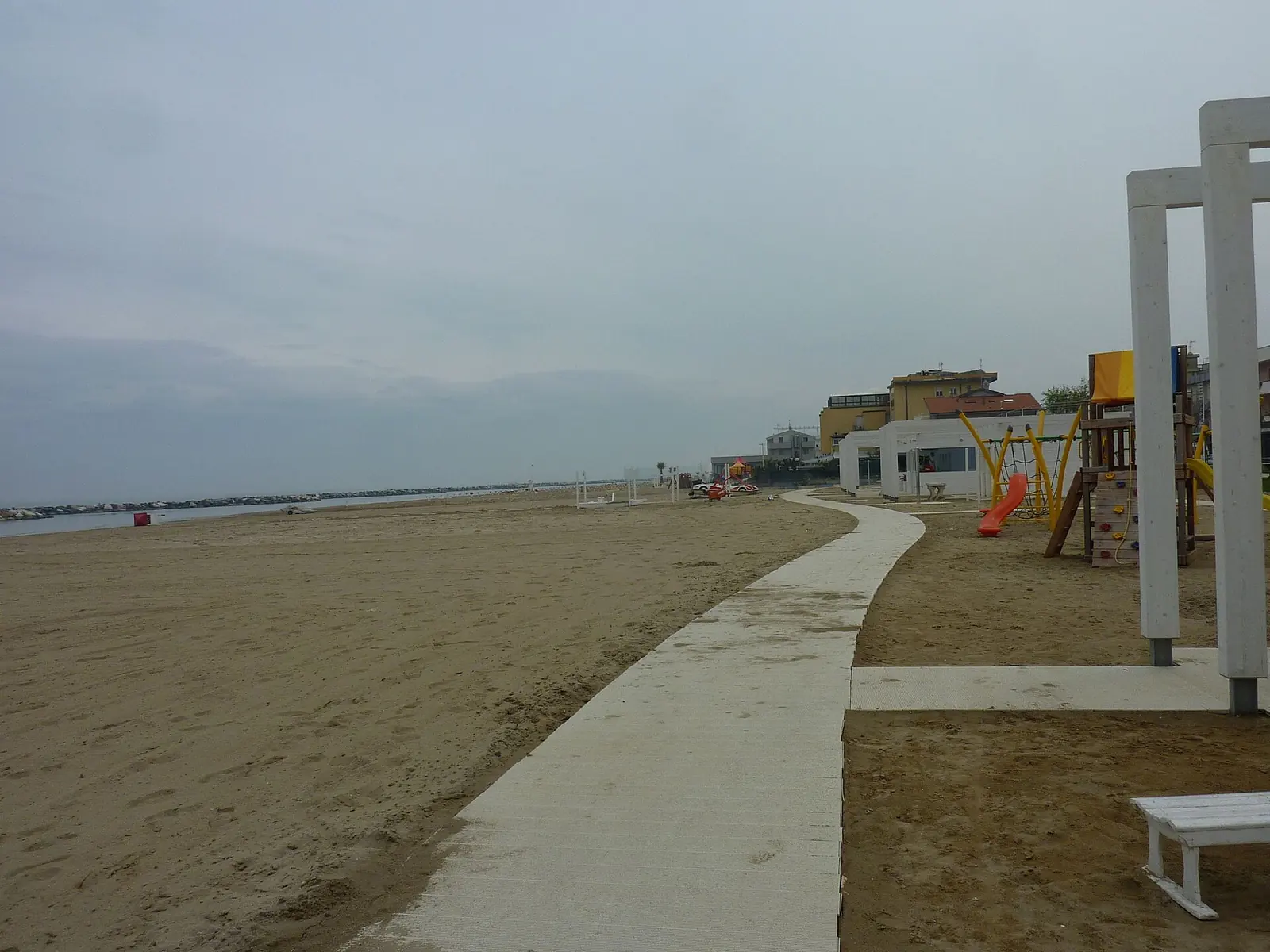
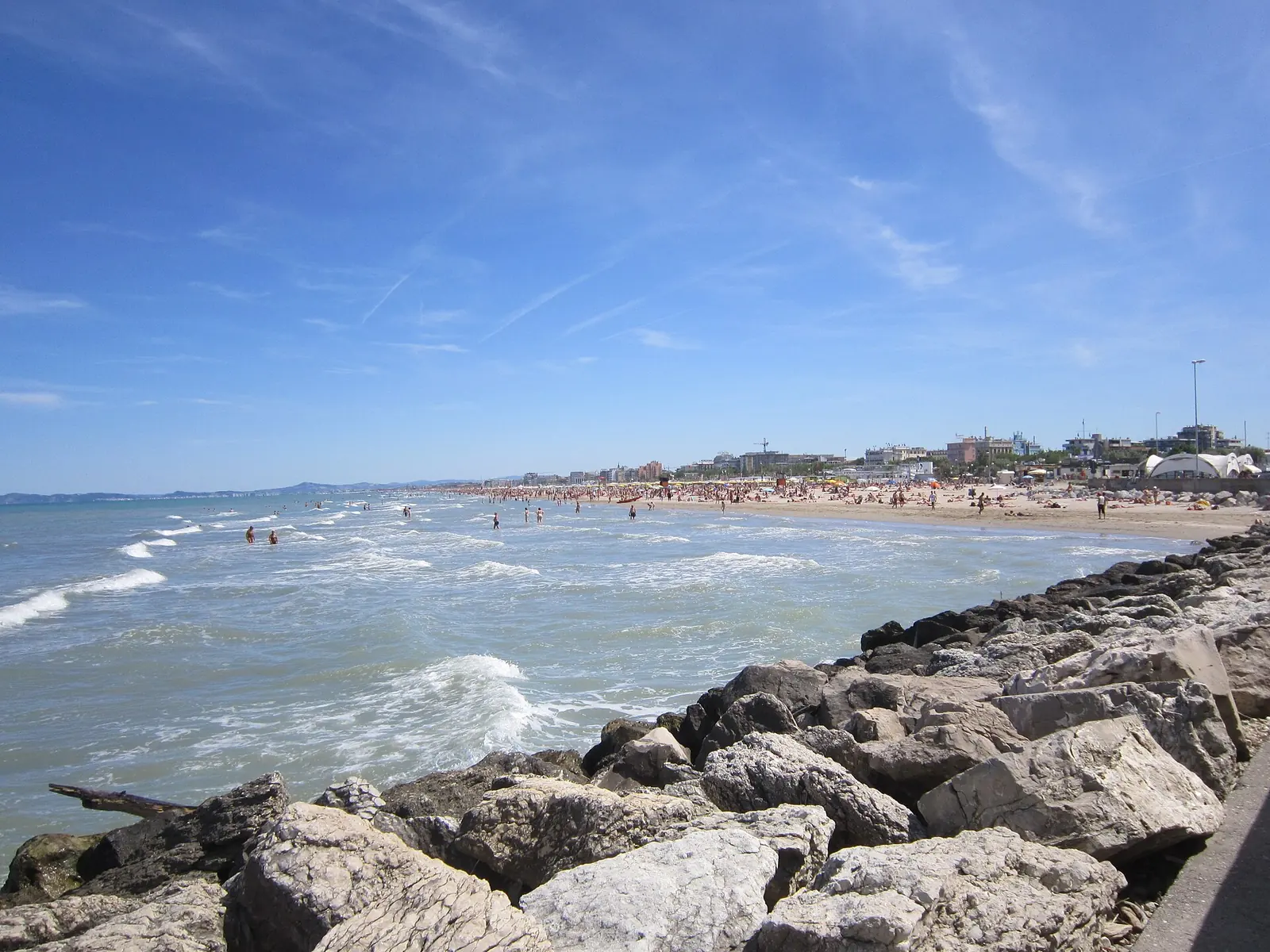
Nothing can now be seen from the beach. The remains were found on the seabed in July 2009 by a Rimini diving centre: supports, sections of masonry and a small ladder. The site has a maximum depth of 12 metres and is a destination for guided dives offered by diving centres on reservation.
The island's actual appearance is documented in photographs by Davide Minghini (1915-1987), held in the photographic archive of Biblioteca Gambalunga di Rimini: construction, life on board and occupation. A 2009 video interview with Rosa led to the documentary “Isola delle Rose. La libertà fa paura” by Stefano Bisulli and Roberto Naccari.
The 2020 film and the true story
L'incredibile storia dell'Isola delle Rose, directed by Sydney Sibilia, was released on Netflix on 9 December 2020, with Elio Germano as Giorgio Rosa and Matilda De Angelis as Gabriella. In 2021, it won three David di Donatello awards (supporting actress and actor, for Matilda De Angelis and Fabrizio Bentivoglio, and visual effects) and the Nastro d'Argento for best comedy.
The film portrays Gabriella as the girlfriend to be won back: in reality, in 1968 she had been married to Rosa for eight years and headed the construction company. The framing device of hearings at the Council of Europe in Strasbourg is part of the fiction: in October 1968, Rosa's lawyers considered an appeal to Strasbourg, but the case was decided before Consiglio di Stato.
Cinema in Rimini has its home at Fellini Museum, dedicated to the director born in the city.
Sources: Biblioteca civica Gambalunga, Speciale Isola delle Rose; Camera dei deputati, records of the sittings of 5 and 10 July 1968; law of 14 August 1974, n. 359; Comune di Rimini, news of 21 April 2021; Regione Emilia-Romagna, Emilia-Romagna Turismo portal; Università di Catania, CRIO Papers n. 74/2024; Il Post, 9 December 2020; Fondazione Nastri d'Argento, 2021 winners; accessed on 10 October 2026.