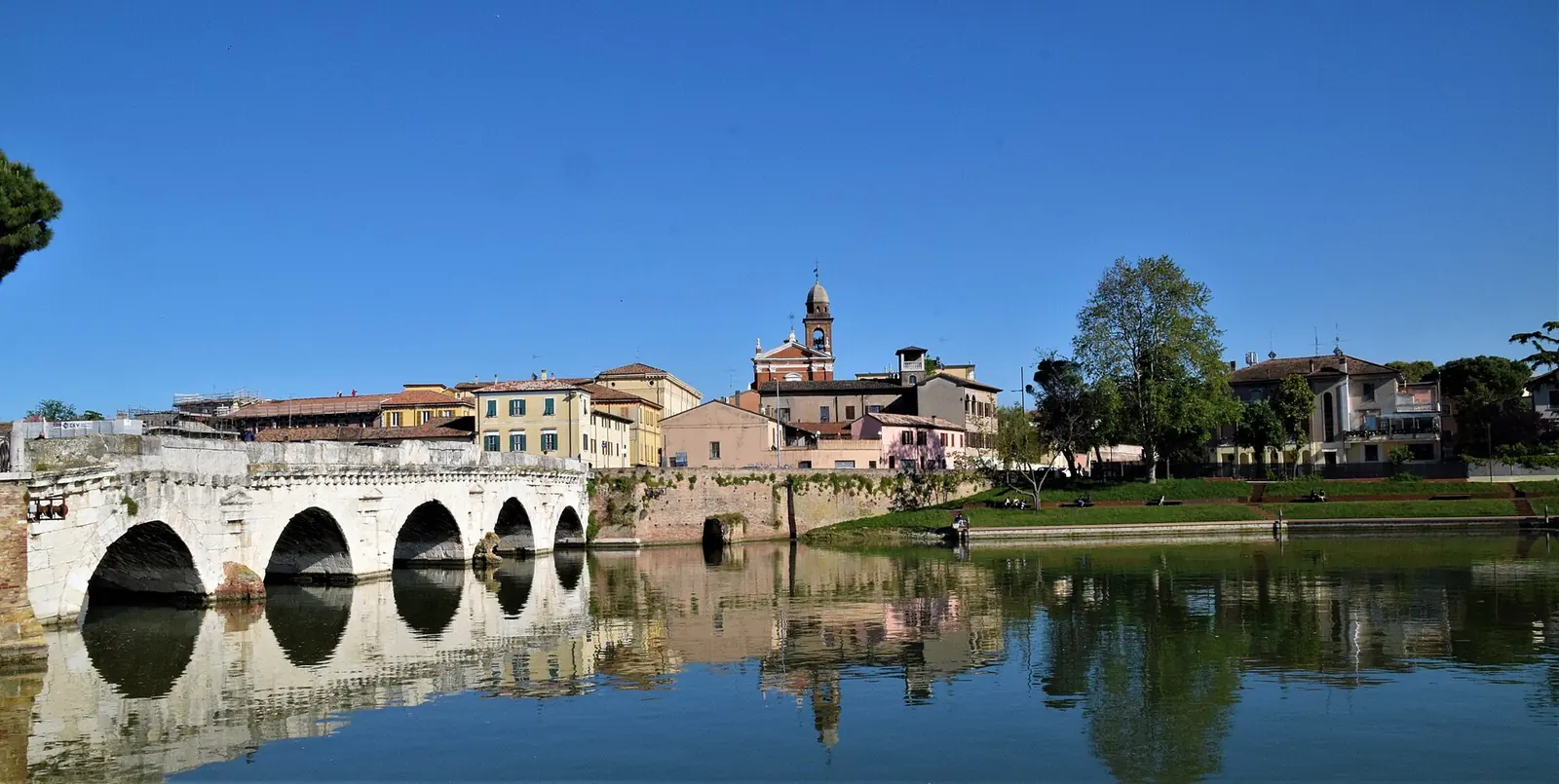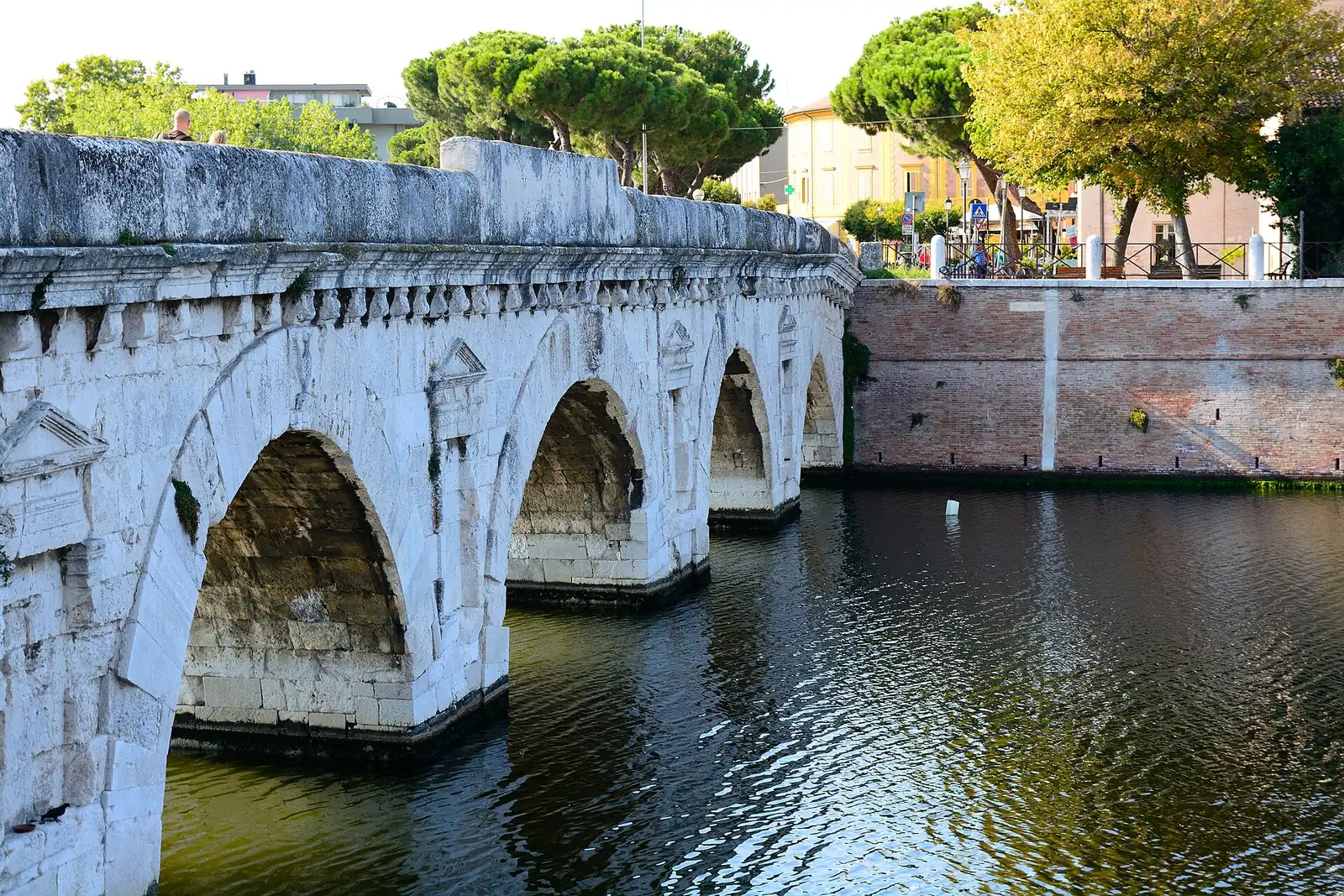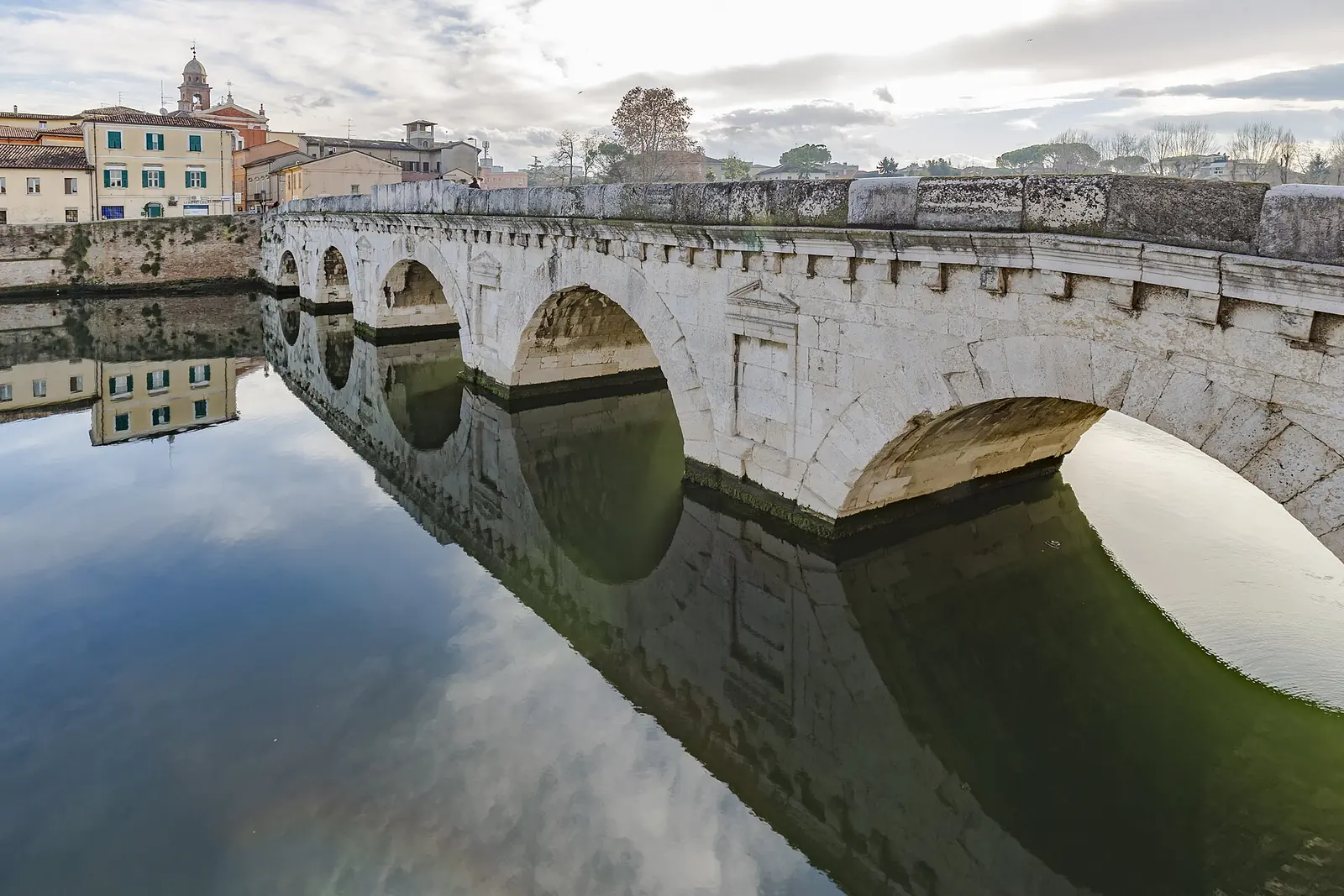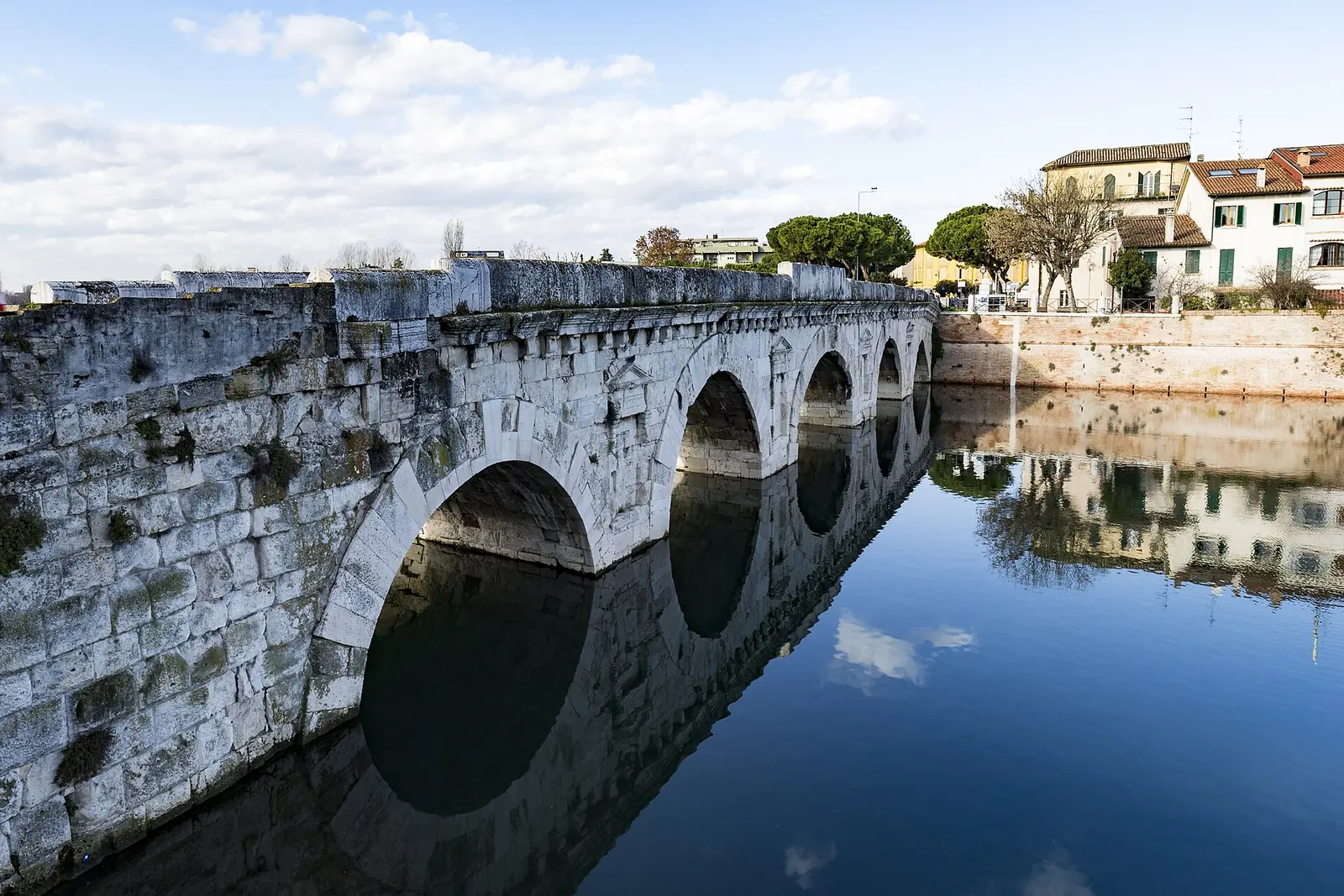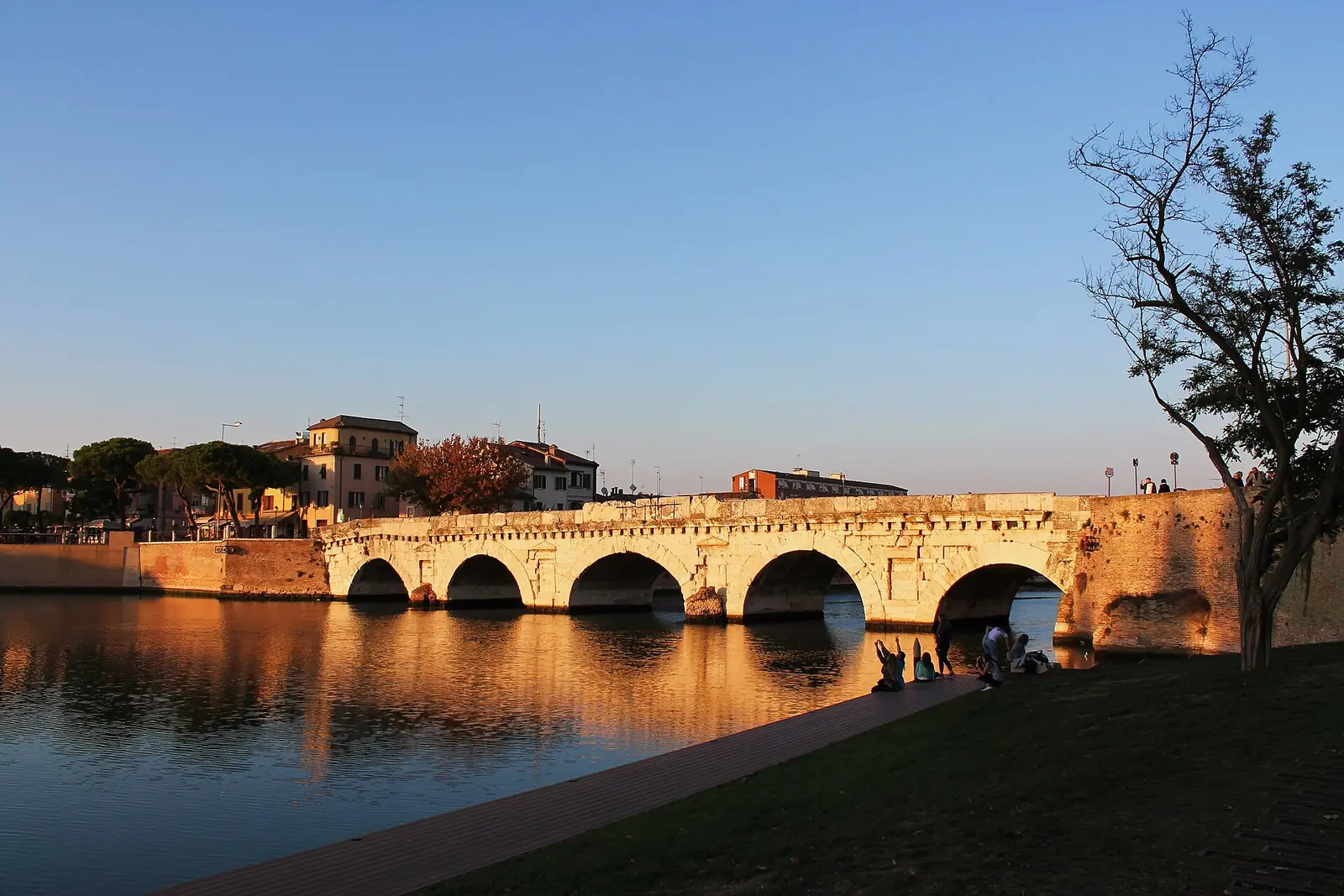
Ponte di Tiberio links Rimini's historic centre to Borgo San Giuliano across the former course of the Marecchia. Its five Istrian stone arches belong to the work begun under Augusto in AD 14 and completed under Tiberio in 21. Today the bridge is open to pedestrians and freely accessible from Corso d'Augusto or Viale Tiberio.
The Roman structure
Inscriptions on the parapets commemorate the two emperors. The piers have angled cutwaters designed to accommodate the current; foundations rest on a system of wooden piles. The bridge also marked a starting point for roads heading north, including the Via Emilia and the Via Popilia.
The bridge has withstood earthquakes, river floods and wars. The last arch towards Borgo San Giuliano retains signs of Narsete's attack in 551 during the war between Goths and Byzantines; most recently, retreating German forces tried to mine it.
The Borgo and Piazza sull'Acqua
On the San Giuliano side, the streets of the Borgo begin; beside the bridge are Piazza sull'Acqua and the Le pietre raccontano archaeological route. Parco Marecchia offers another walking direction, towards greenery rather than the centre.
On the opposite side, Corso d'Augusto leads to Piazza Tre Martiri and Arco di Augusto. This succession of places follows the Roman city's axis within today's urban fabric.
Images