Skip to content
Riviera Romagnola The nine coastal resorts
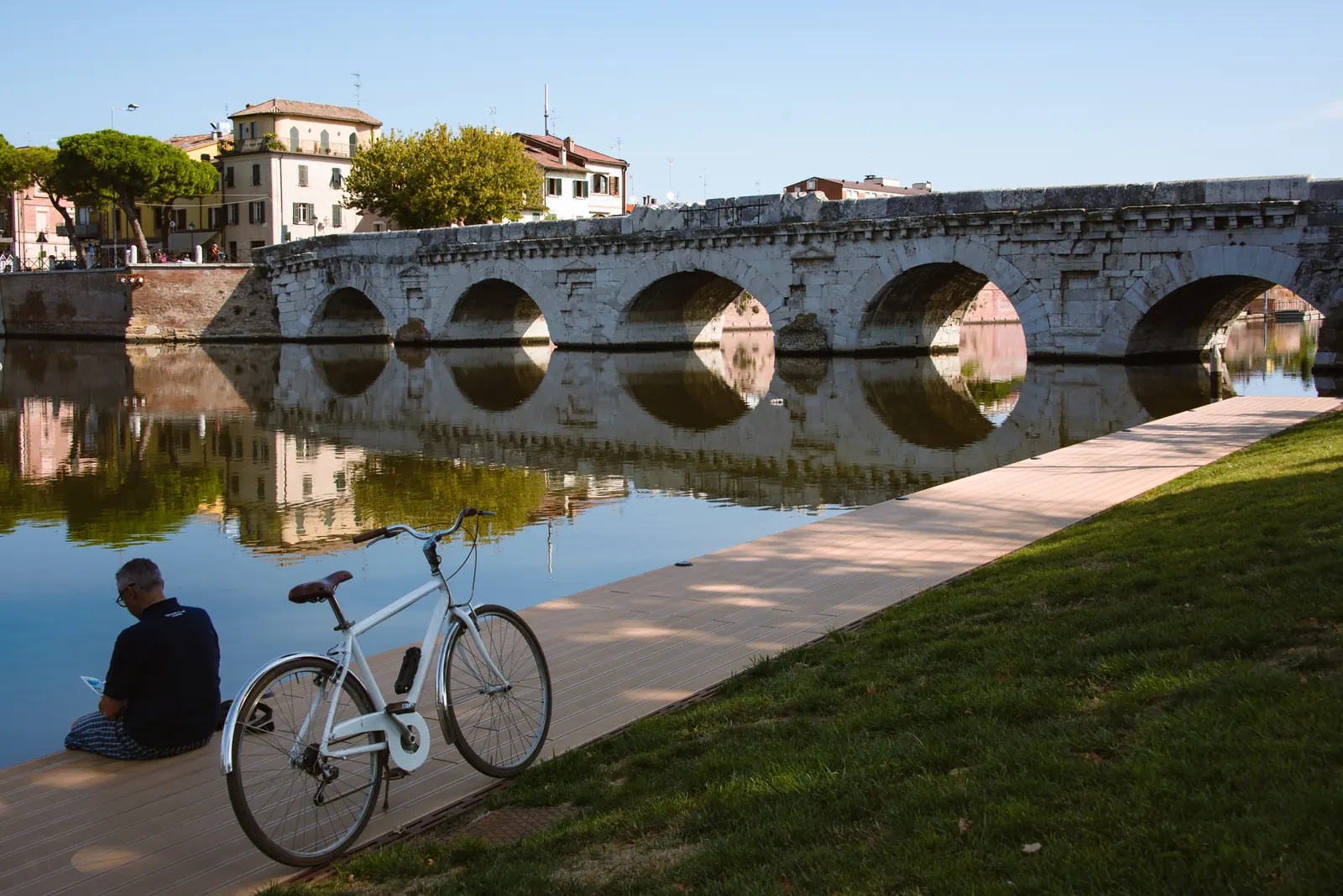
Ponte di Tiberio in Rimini with its arches reflected in the canal, a white bicycle on the walkway and the lawn

Provincia di Rimini, Emilia-Romagna

Things to do in Rimini

The resort

At a glance

Rimini combines the sea with a historic centre visit: Arco di Augusto, Ponte di Tiberio and Tempio Malatestiano are accessible along a walking route, while Fellini Museum adds a stop devoted to cinema. The coast extends around 15 kilometres from Torre Pedrera to Miramare: accommodation choices include the historic centre, Marina Centro near the harbour, and beach districts to the north and south.

Municipality
Rimini, capital of Provincia di Rimini, Emilia-Romagna
Population
150,774 residents as at 1 January 2026 (Istat estimate)
Area
around 136 km² (Istat)
Boundaries
Riccione, Bellaria Igea Marina, San Mauro Pascoli, Santarcangelo di Romagna, Verucchio and Coriano (Istat)
Coast
around 15 kilometres, from Torre Pedrera at the Bellaria Igea Marina boundary to Miramare at the Riccione boundary
Beach districts
north of the canal harbour: Torre Pedrera, Viserbella, Viserba, Rivabella and San Giuliano Mare; south: Marina Centro, Bellariva, Marebello, Rivazzurra and Miramare
Patron saint
San Gaudenzo, 14 October
Beach
17 bathing waters, 14 “excellent” and 3 “good”; Blue Flag 2026, returning after fifteen years
Motorway
A14, Rimini Nord and Rimini Sud exits
Train
Rimini station on the Bologna-Ancona and Rimini-Ravenna lines
Airport
Aeroporto Internazionale di Rimini e San Marino Federico Fellini, at 409 Via Flaminia in Miramare, around 8 kilometres south of the historic centre according to the operator
Local transport
Start Romagna, with Metromare to Riccione
Tourist information
IAT at the station, 1 Piazzale Cesare Battisti, and in Marina Centro, 3 Piazzale Federico Fellini; alberghi.it

Sources: Istat (population as at 1 January 2026, area, neighbouring municipalities); Diocesi di Rimini (patron saint); Comune di Rimini (Blue Flag news of 14 May 2026, 2025 beach plan); Regione Emilia-Romagna (DGR n. 561 of 20 April 2026; district list on emiliaromagnaturismo.it); RFI; Provincia di Rimini (IAT list); airport website; Start Romagna. Accessed between 2 and 10 October 2026.
Things to do

Twenty things to do in Rimini

The main entries, each linking to a detailed guide.

  1. Starting at Arco di Augusto

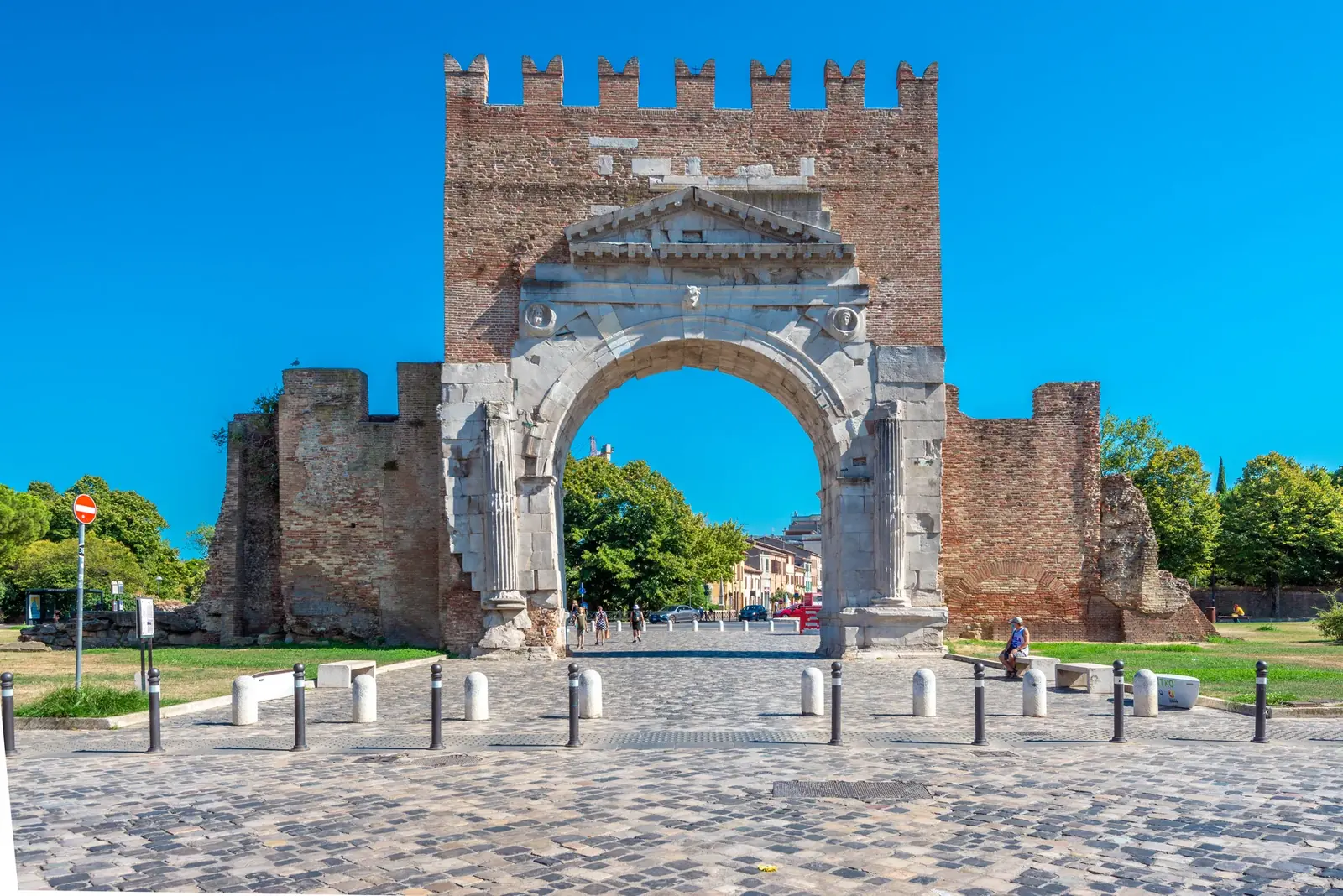
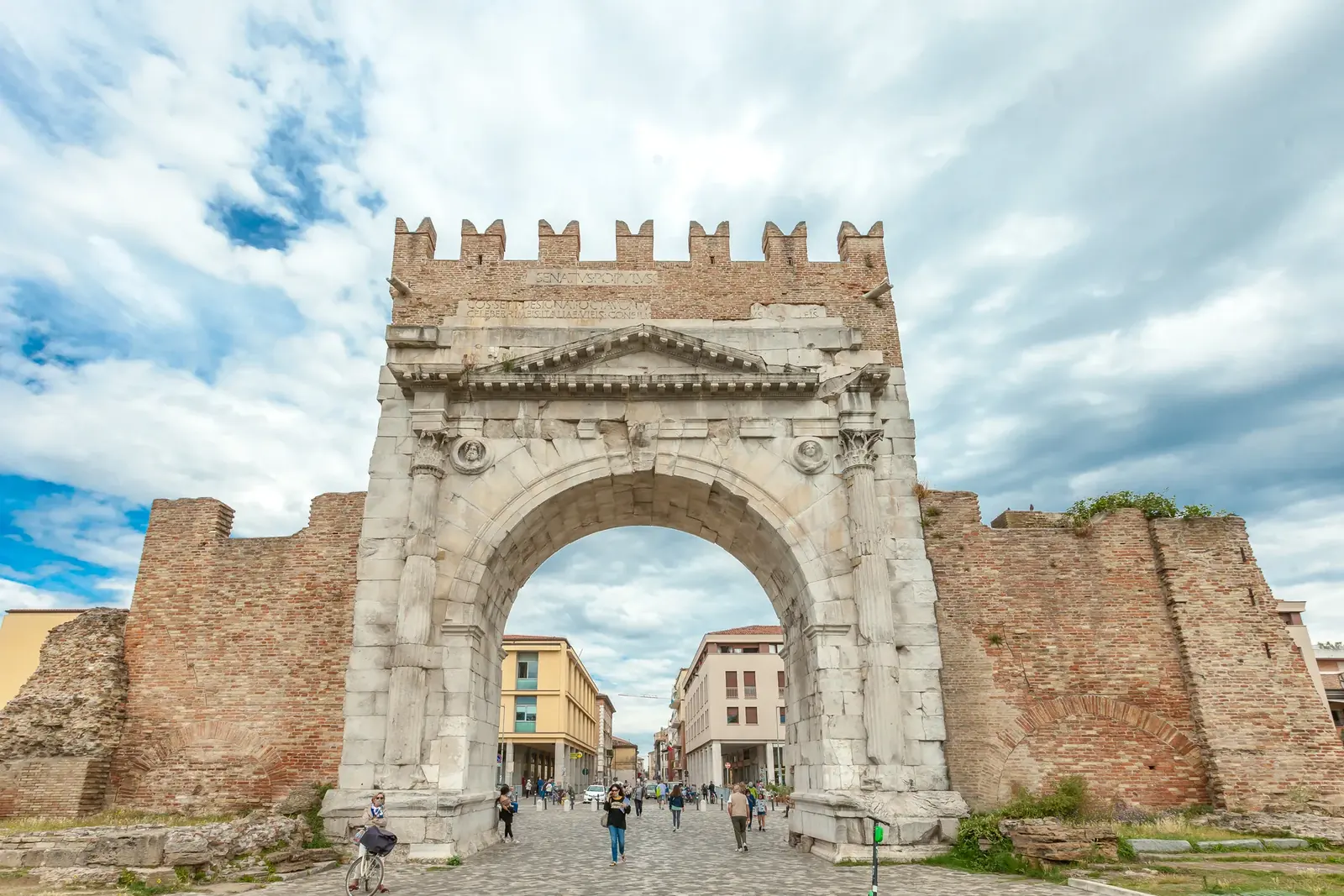
    Arco di Augusto is a good starting point for a historic centre walk. Built in 27 BC at the end of Via Flaminia, it opens the route along Corso d'Augusto towards Piazza Tre Martiri and Ponte di Tiberio. The brick battlements date from a medieval alteration and are immediately distinguishable from the Roman stone.

    The Arco di Augusto in Rimini seen from the front, with its brick battlements, the walls on either side and the Corso d'Augusto beyond the archway
  2. Crossing Ponte di Tiberio

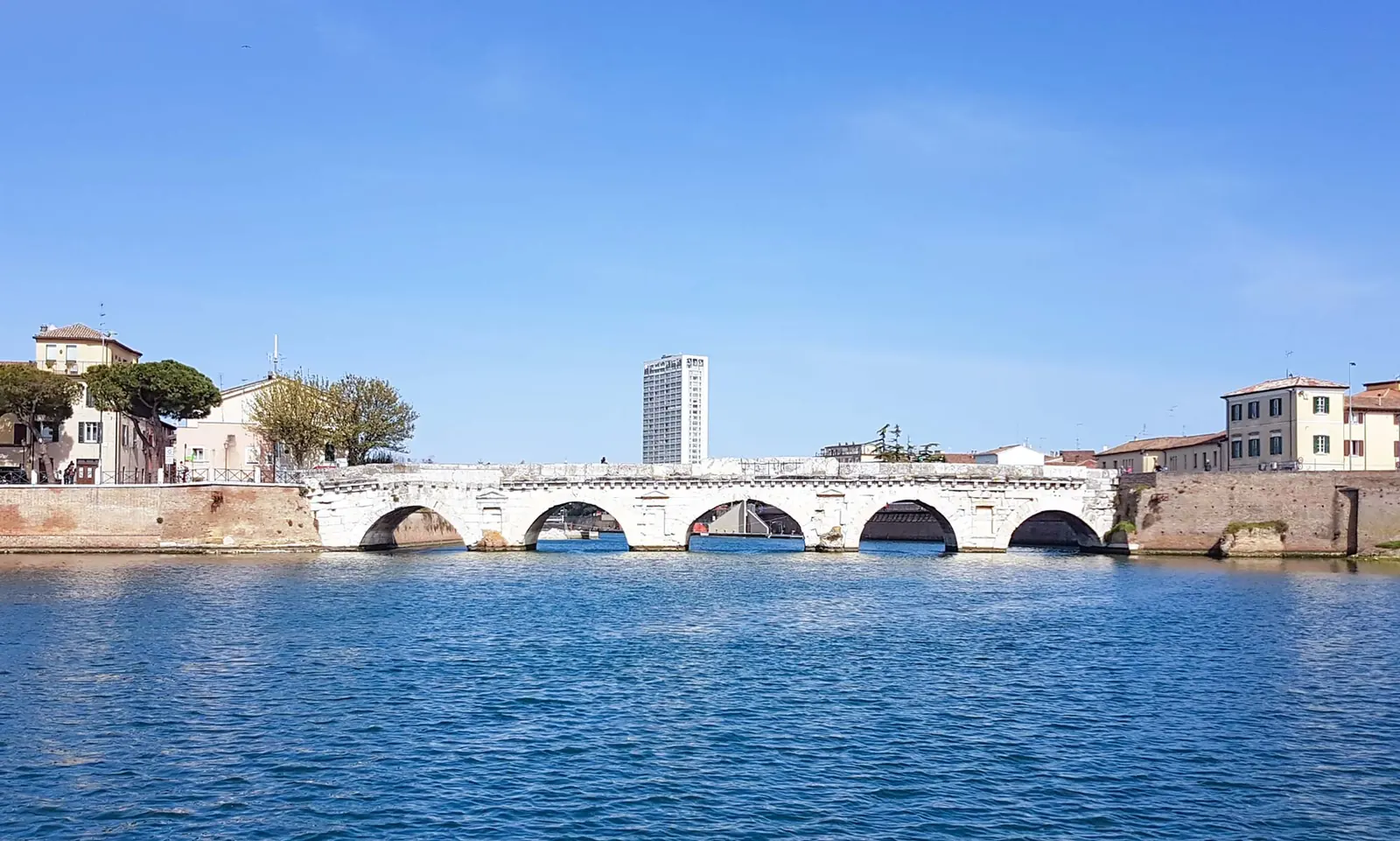
    Ponte di Tiberio links the centre to Borgo San Giuliano. Its five arches date from AD 14 to 21; today the crossing is pedestrian. Piazza sull'Acqua offers a side view of the bridge and its reflections in the basin. The walkway and bankside paths extend the stroll towards the Marecchia park.

    Ponte di Tiberio in Rimini seen from the water, with its five white stone arches and the skyscraper in the background
  3. Reading the city in Piazza Tre Martiri

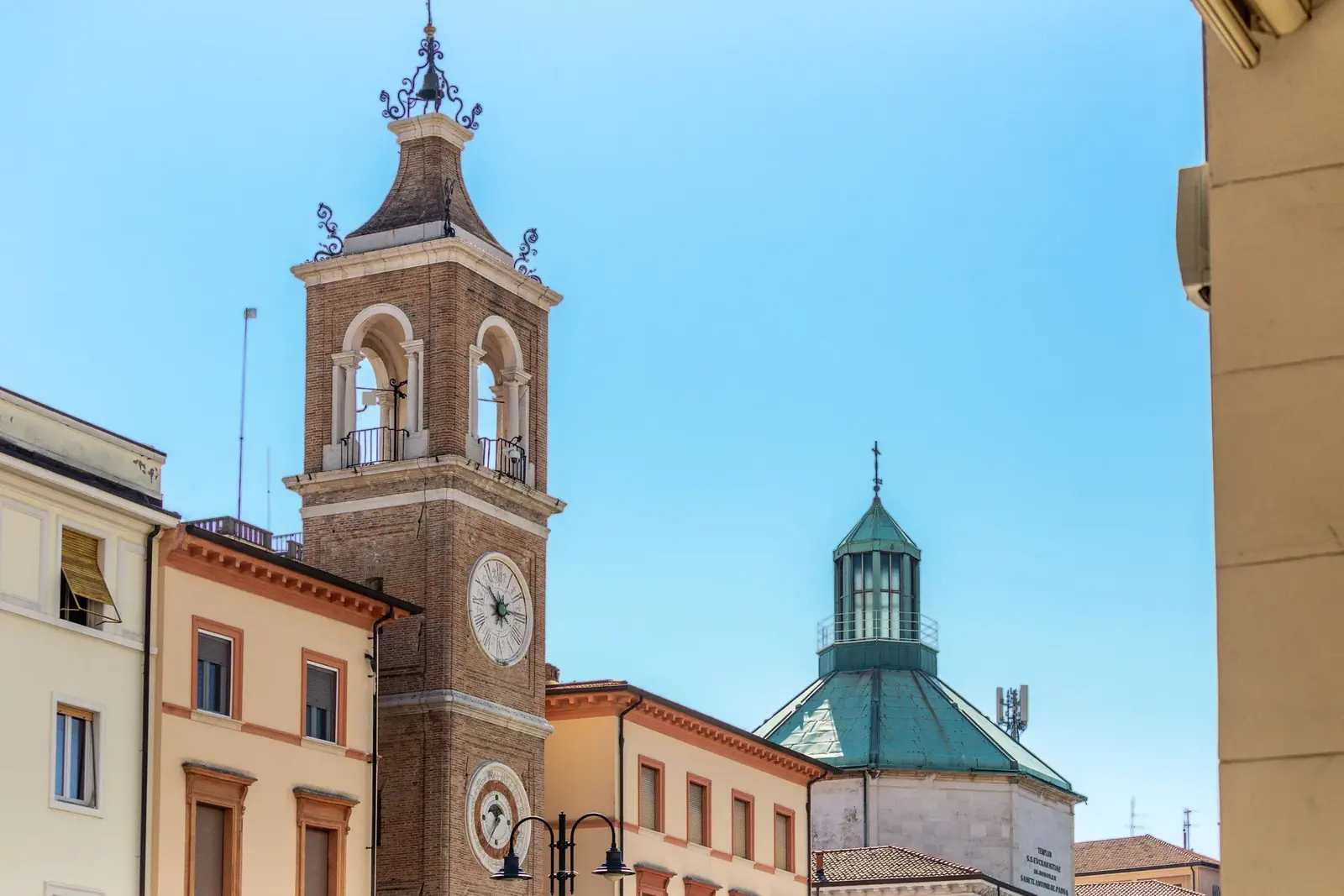
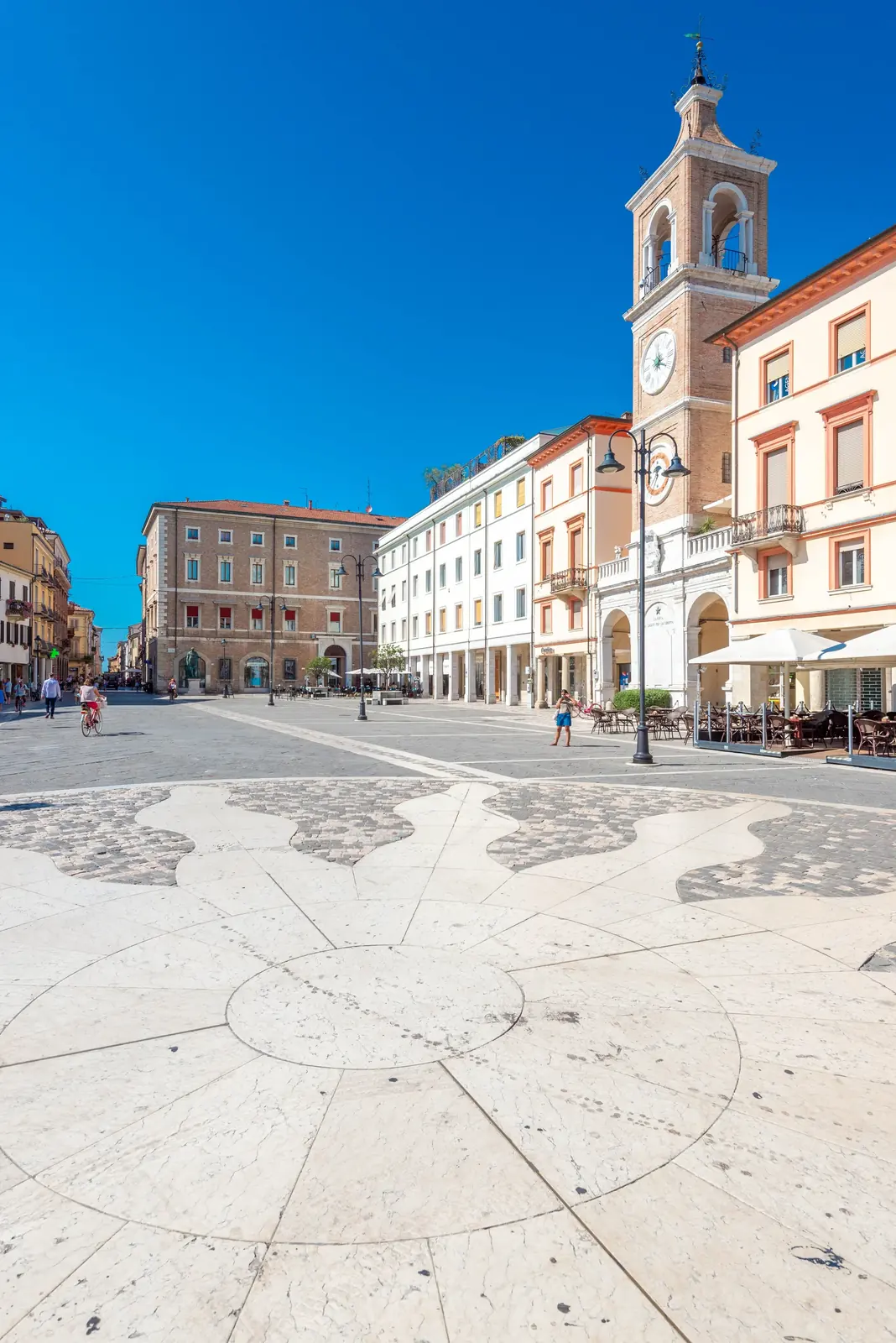
    Corso d'Augusto crosses Piazza Tre Martiri, where the Roman forum stood. Torre dell'Orologio is the most obvious landmark, but the square also preserves a 20th-century memory: its name recalls the three partisans killed here on 16 August 1944. The square lies on the route between Arco di Augusto and Ponte di Tiberio.

    Piazza Tre Martiri in Rimini with the pale pattern of the paving, the Torre dell'Orologio and the arcaded buildings
  4. Viewing Tempio Malatestiano inside and out

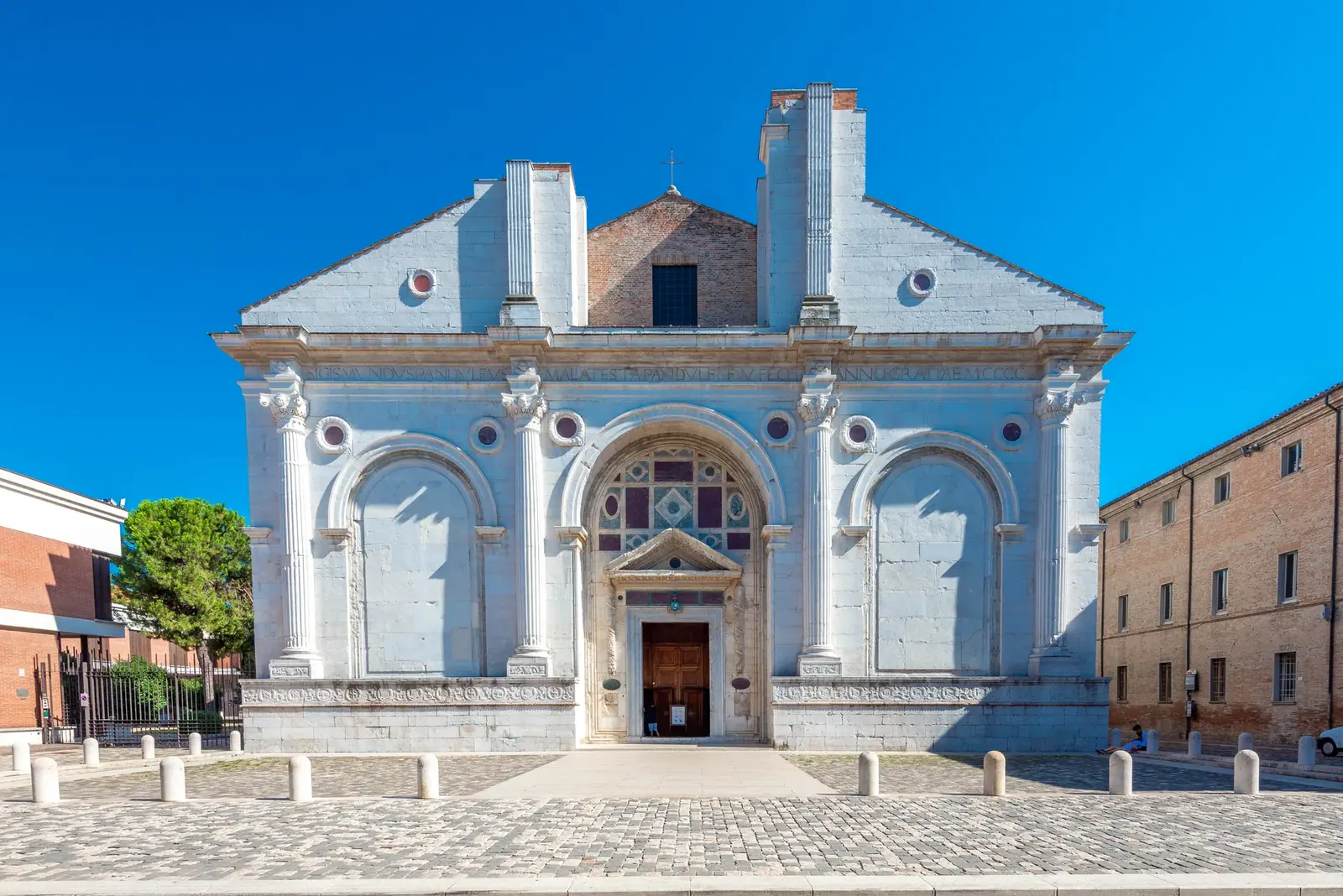
    The façade of Tempio Malatestiano, designed by Leon Battista Alberti, expresses Sigismondo Pandolfo Malatesta's ambition in 15th-century Rimini. Inside are Giotto's Crucifix and Piero della Francesca's fresco showing Sigismondo in prayer. The church is also the city's cathedral.

    The white stone façade of the Tempio Malatestiano seen from the front, with the columns, the arches and the central portal
  5. Following Fellini between the castle and Fulgor

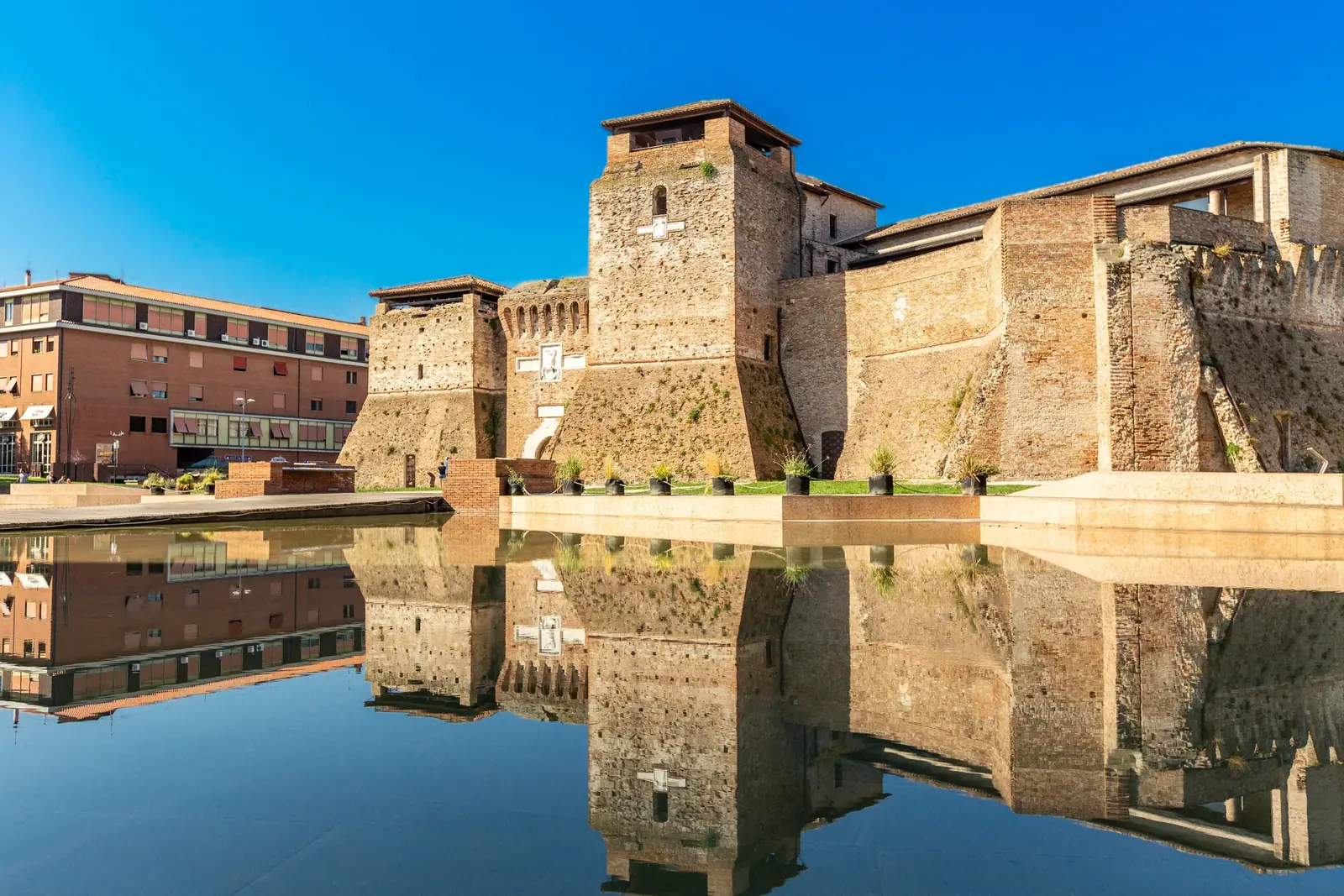
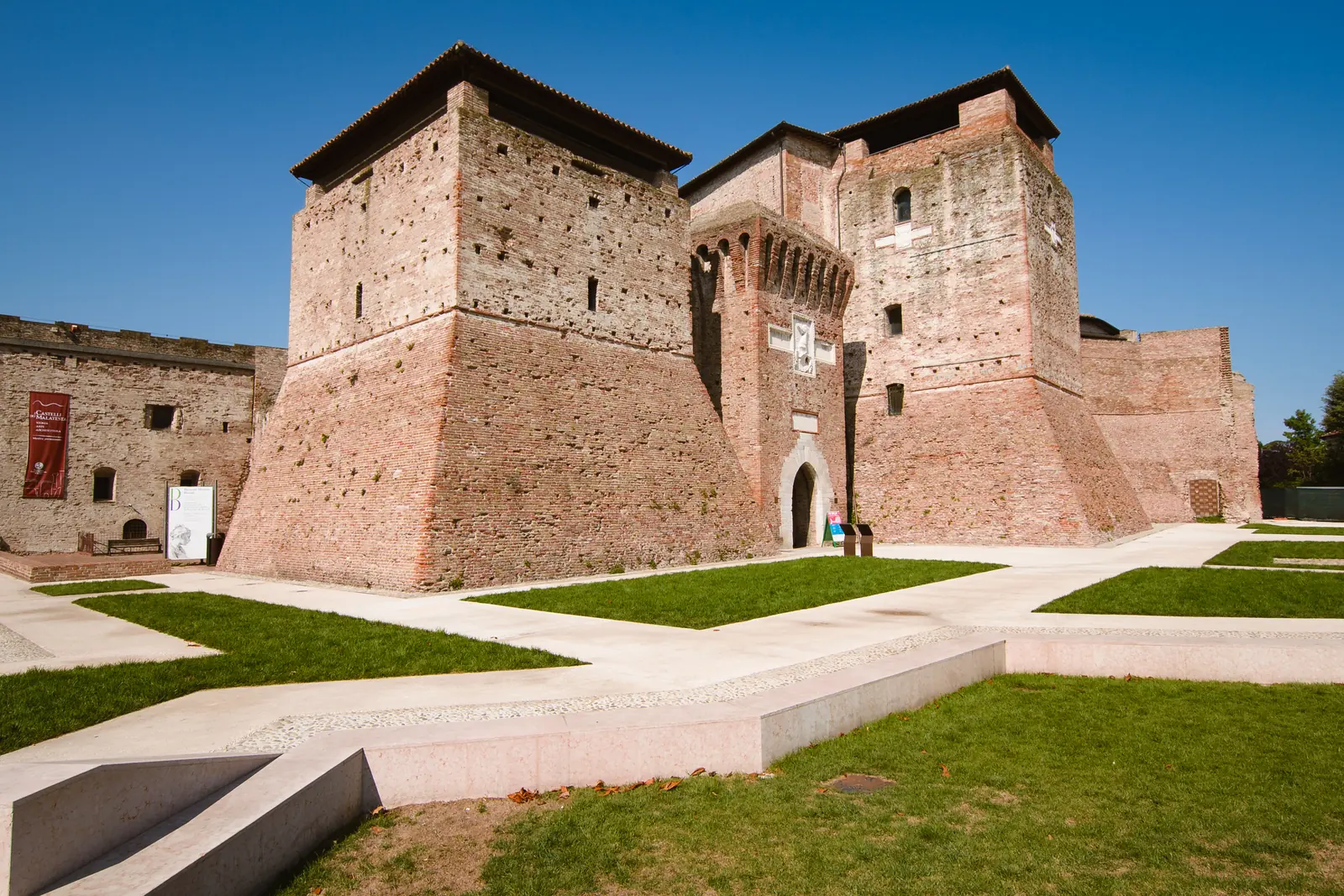
    Fellini Museum spreads its route between Castel Sismondo, Palazzo del Fulgor and Piazza Malatesta, connecting images, cinema and city spaces. The castle of Sigismondo is also of interest in its own right, for its links with Malatesta rule. Cinema Fulgor, on Corso d'Augusto, completes the route through places associated with the director.

    Castel Sismondo in Rimini by day, with its brick towers, the gateway and the lawns of the square in front
  6. A visit to Domus del Chirurgo and Museo della Città

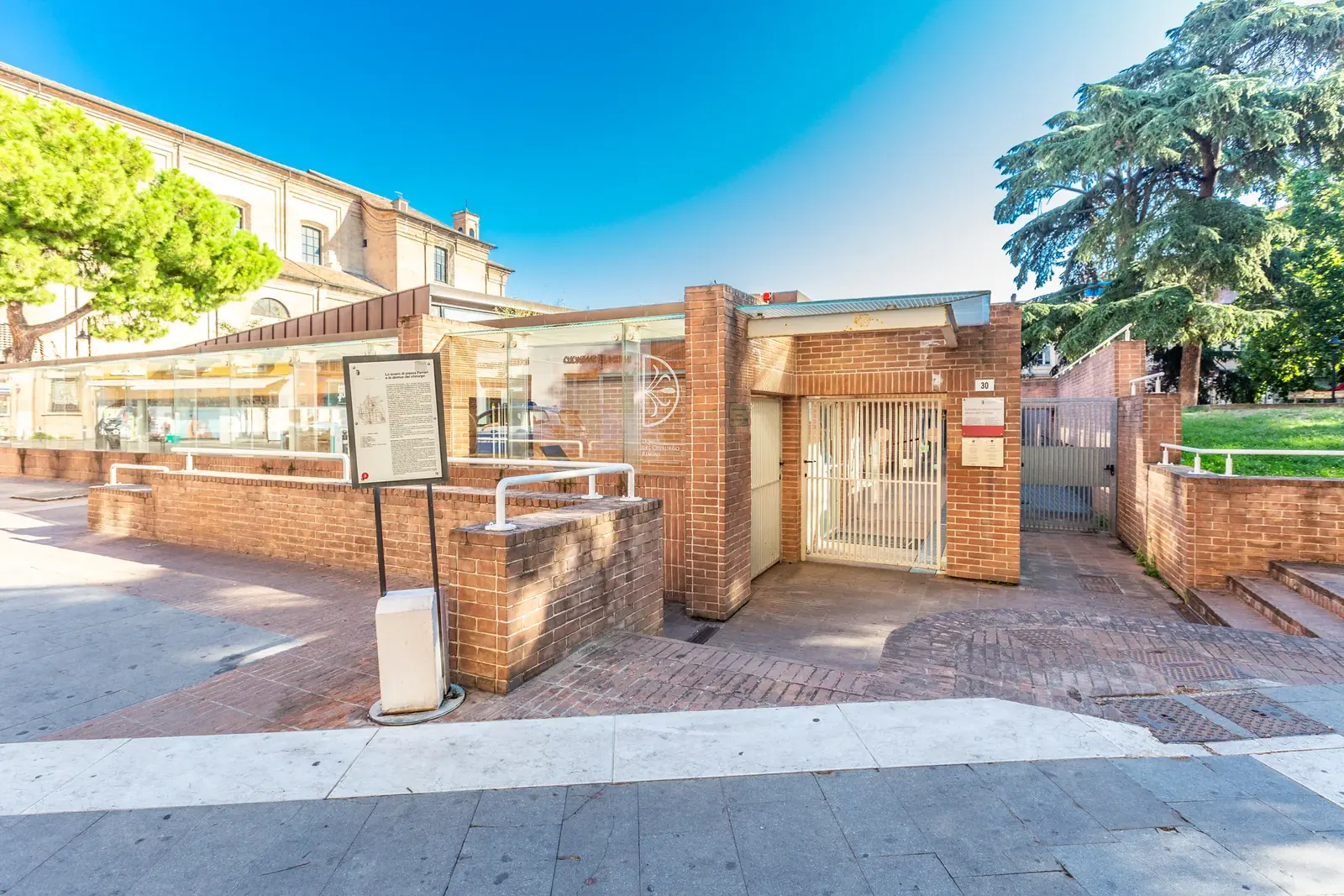
    Domus del Chirurgo, on Piazza Ferrari, preserves mosaics and rooms of a Roman house from the 2nd century AD. Its cover allows views of the archaeological area from outside too. To understand its resident's work, the route continues at Museo della Città Luigi Tonini, at 1 Via Tonini: surgical instruments found in the house are preserved here. Domus and museum are two nearby stops.

    The glass and brick pavilion protecting the excavations of the Domus del Chirurgo, in Piazza Ferrari in Rimini
  7. A stop between Piazza Cavour and Vecchia Pescheria

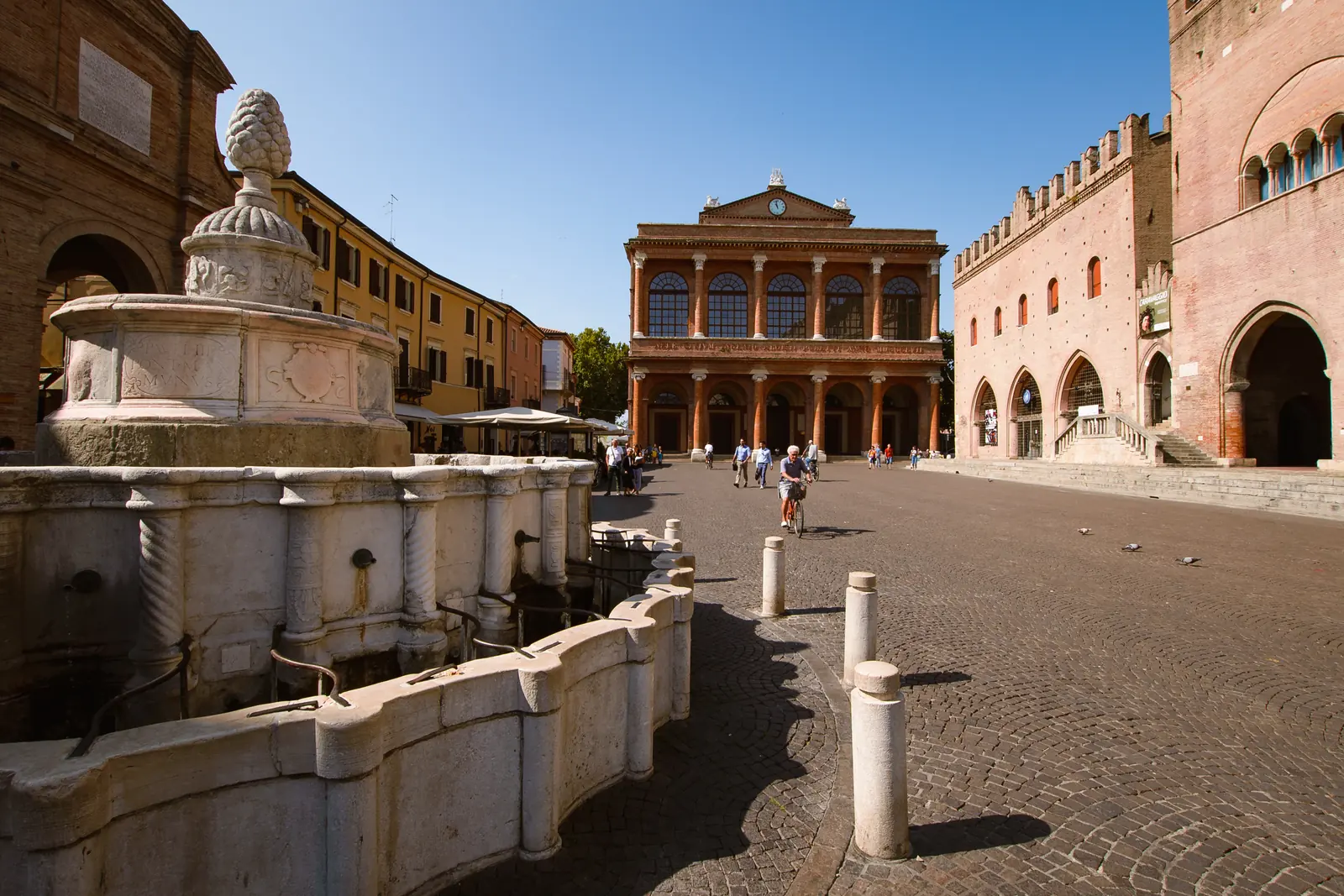
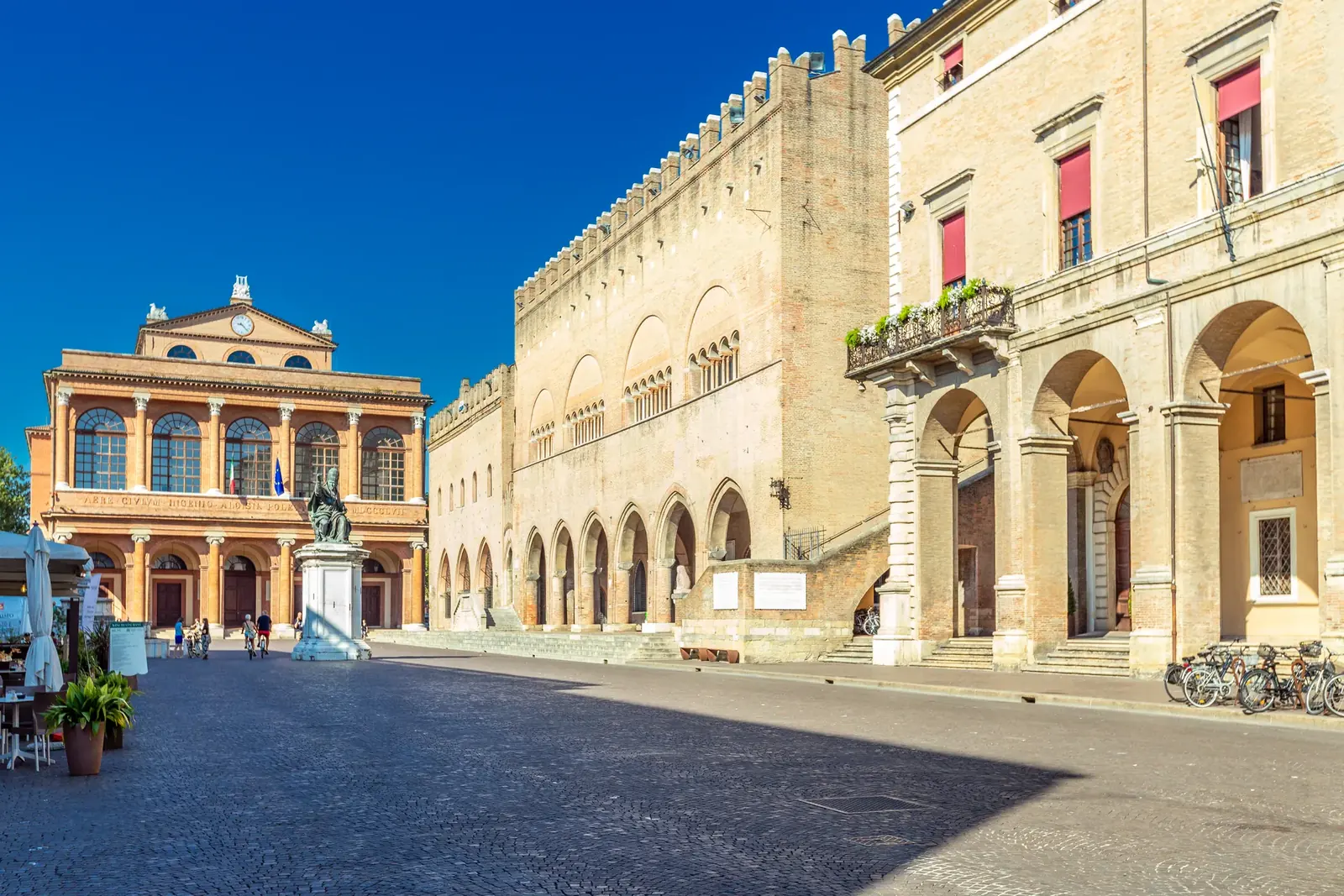
    Piazza Cavour brings together Teatro Galli, civic palaces, the Paolo V statue and Fontana della Pigna. Vecchia Pescheria, with its loggia and stone counters, leads into streets that are busy in the evening. The square therefore serves both as a historic centre stop and as a starting point for an evening in Rimini. At Palazzi dell'Arte, the visit continues among modern and contemporary works.

    Fontana della Pigna in Piazza Cavour, Rimini, with Teatro Galli at the far end and Palazzo dell'Arengo on the right
  8. Walking among the houses of Borgo San Giuliano

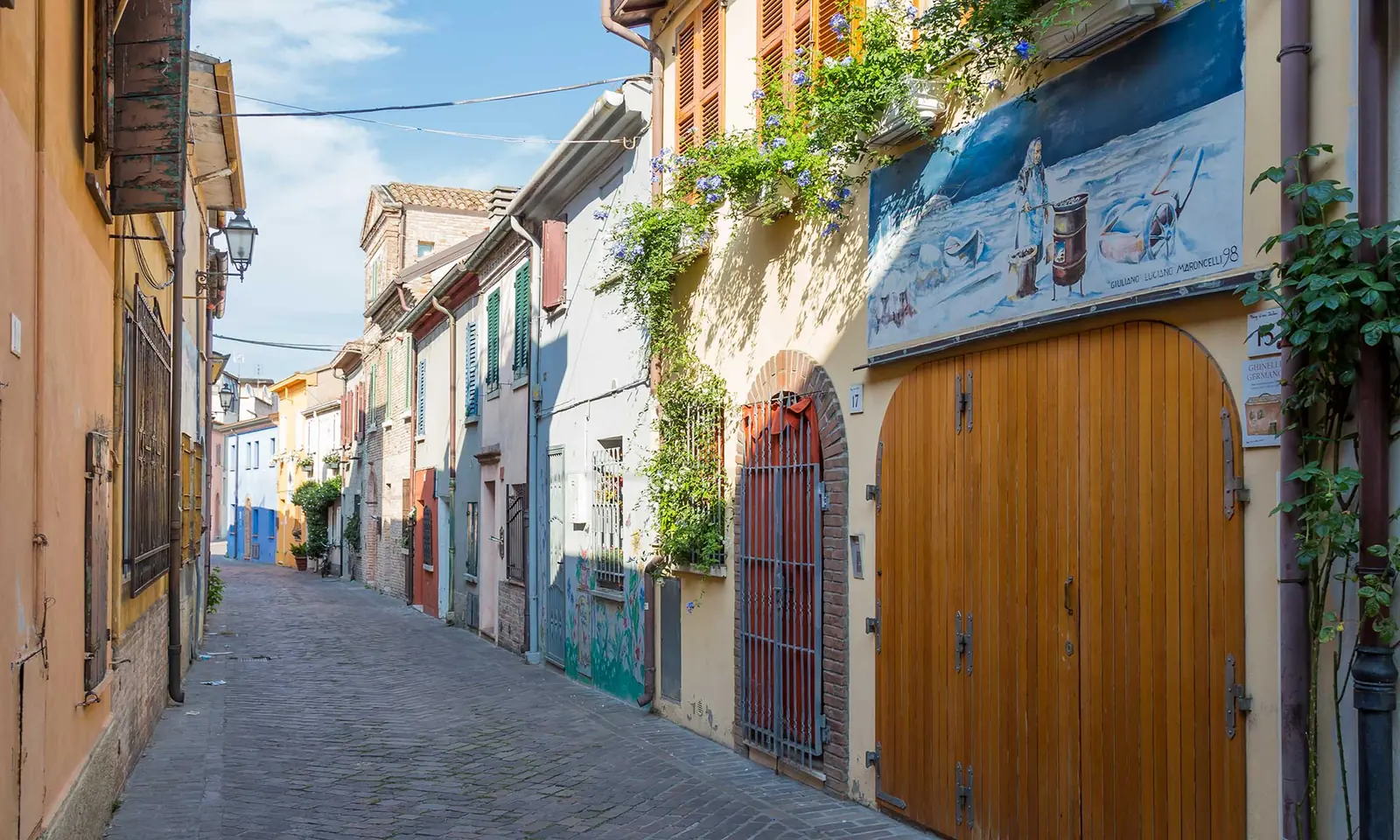
    Beyond Ponte di Tiberio, Borgo San Giuliano changes the walk's pace: low houses, lanes and murals also devoted to Fellini's cinema. Its fishing neighbourhood origins remain part of its identity. The borgo is beside the historic centre; similarly named San Giuliano Mare instead faces the coast. Festa de Borg is a biennial event in even-numbered years, covered in the events calendar.

    A street in Borgo San Giuliano in Rimini, with colourful houses, a wooden door and a mural on the façade
  9. Reaching the Palata along the canal harbour

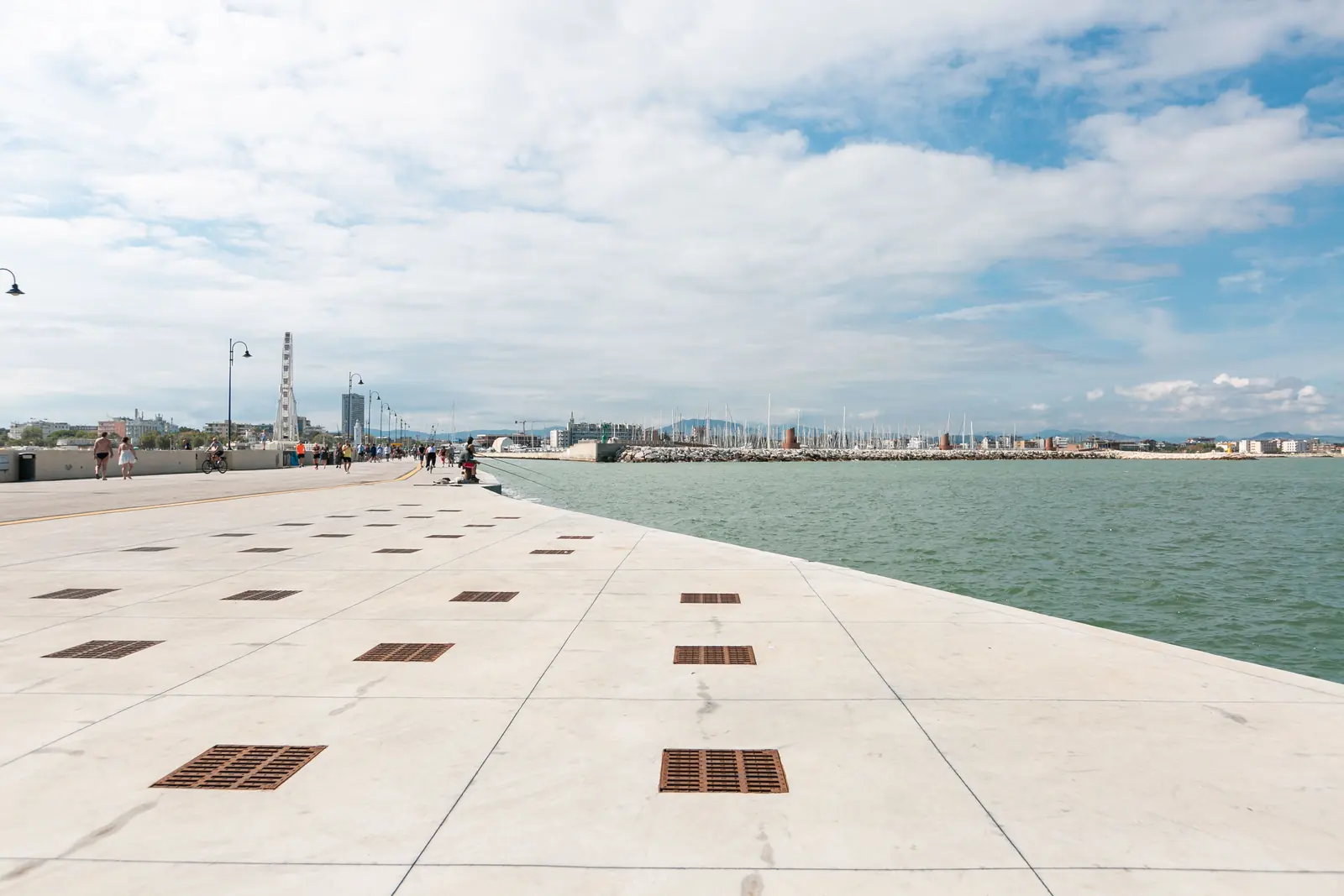
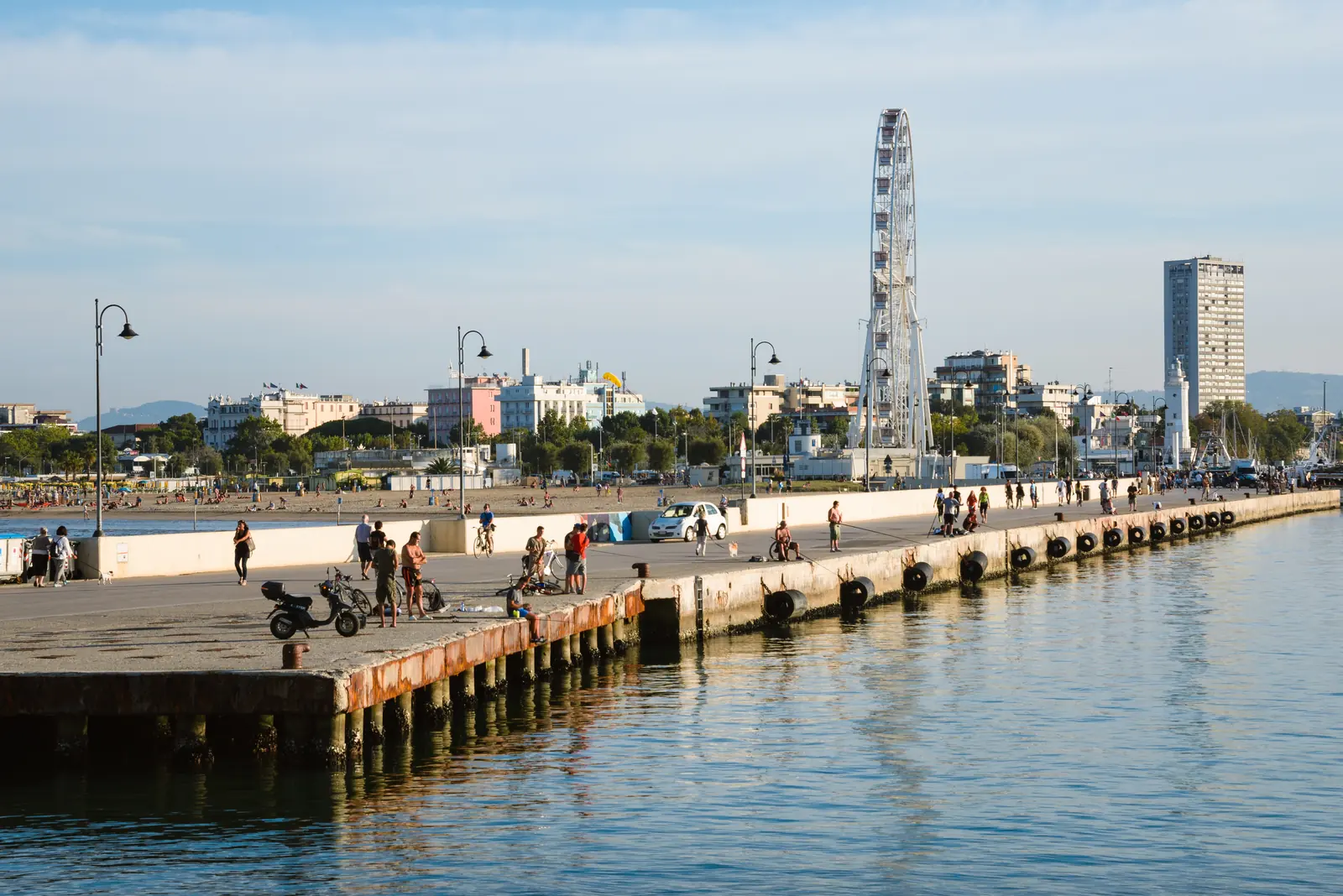
    The canal harbour leads to the Faro and Palata, the Levante pier. Here the walk changes perspective: harbour entrance on one side, Marina Centro beach on the other. The Palata also belongs to Fellini's imagery, associated with the appearance of the ocean liner Rex. The Faro, over 27 metres high and brought into service in 1862, opens to the public only on special occasions, such as Giornata del Mare on 11 April. Offshore, just under 12 kilometres from the coast, stood Isola delle Rose, Giorgio Rosa's platform demolished in 1969.

    Rimini's Levante pier with pale paving, the sea on the right and the observation wheel in the distance
  10. Viewing the coast from Ruota Panoramica

    Ruota Panoramica stands near the harbour, between Lungomare Tintori and Via Destra del Porto. From above, the line of beaches, Marina Centro and the city skyline are recognisable. It is a seasonal attraction.

    The Rimini canal harbour with the quay, passers-by, the observation wheel and the skyscraper in the background
  11. Choosing an area for a seaside day

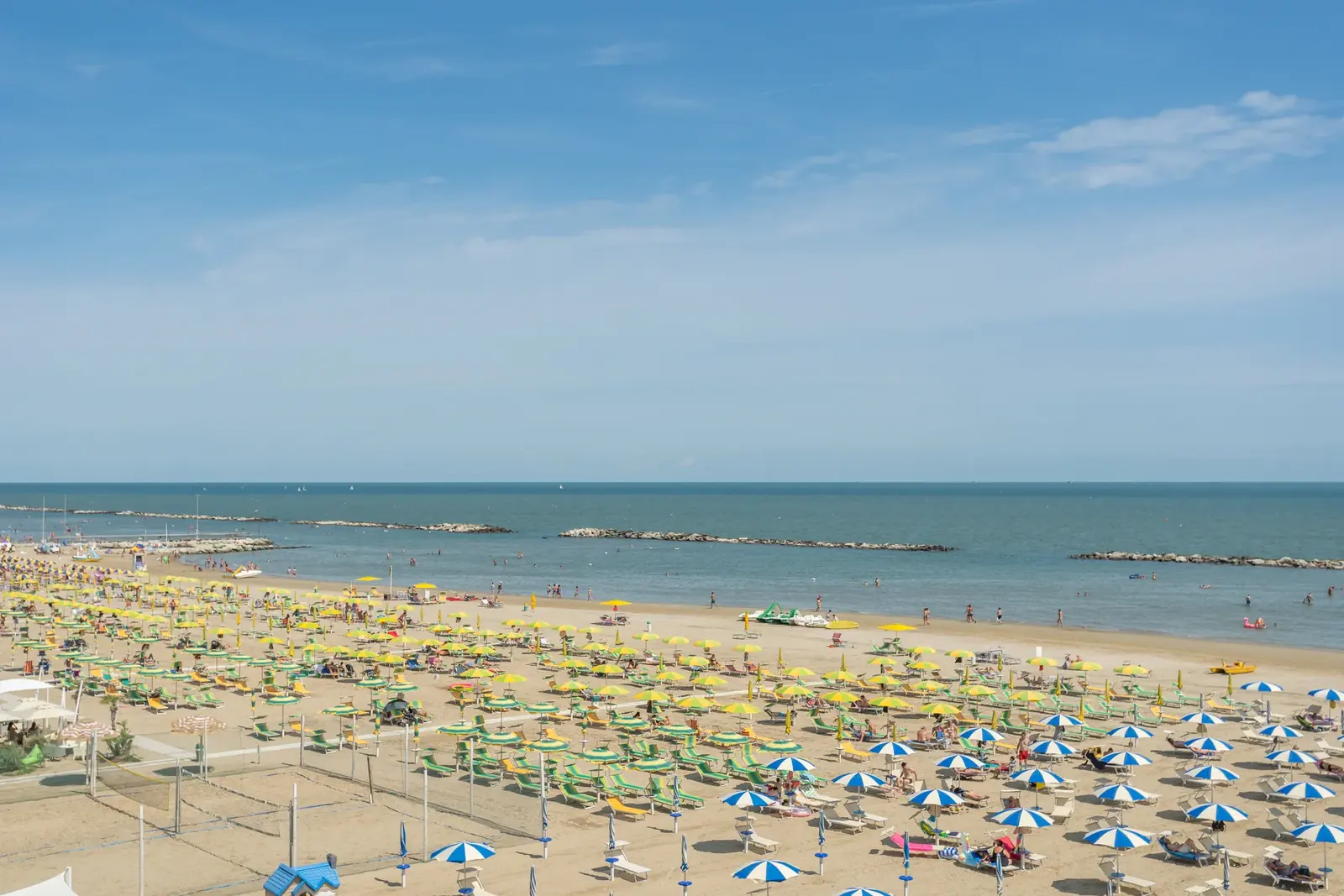
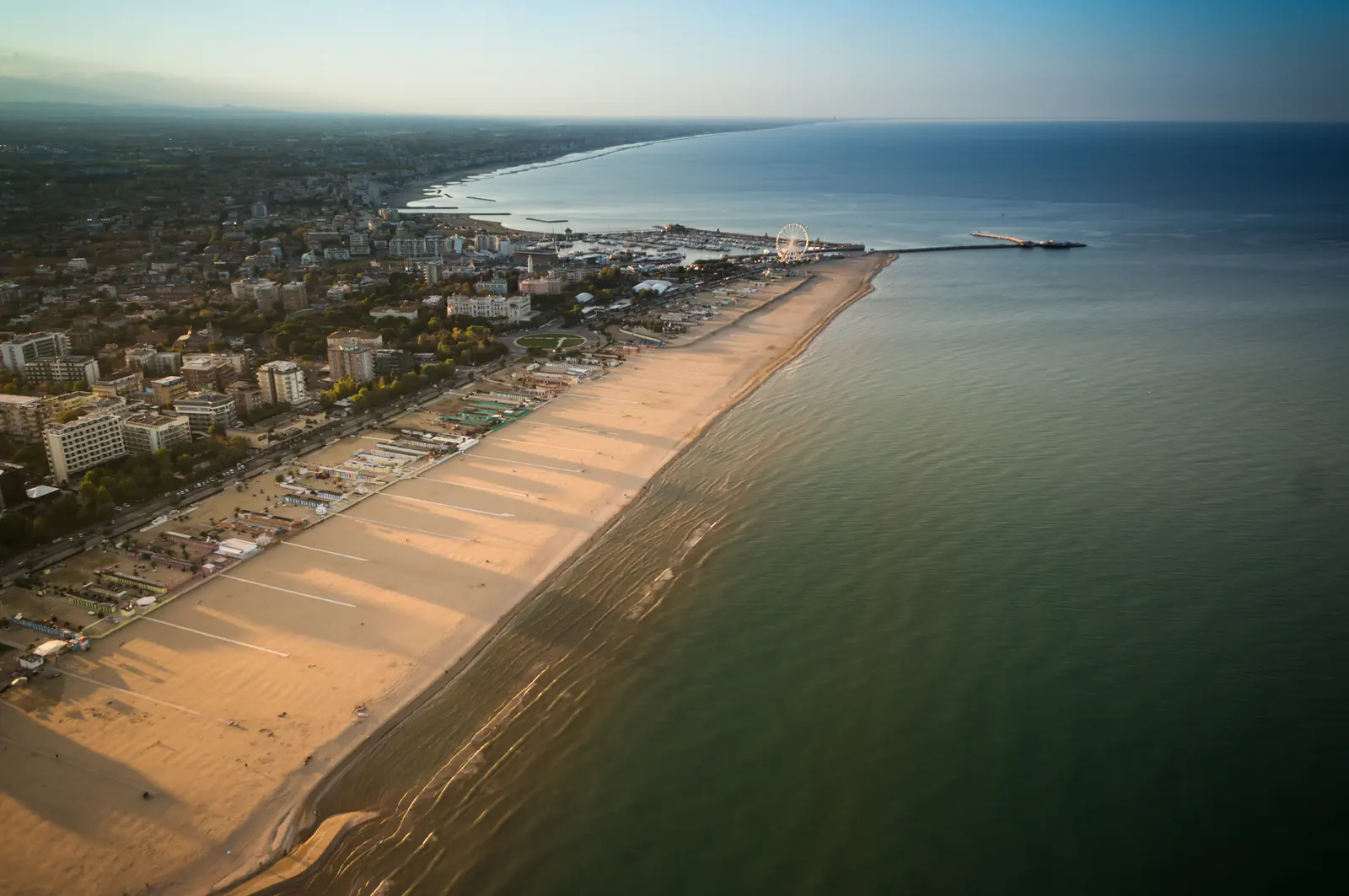
    Rimini's coast extends around 15 kilometres from Torre Pedrera to Miramare. The choice of area matters as much as the beach: Marina Centro is near the harbour, northern districts follow one another towards Bellaria Igea Marina, and southern ones towards Riccione. The Rimini beach and free beaches guides compare coastal stretches and access points.

    The beach of Rimini from above, with rows of colourful umbrellas, the water's edge and the breakwaters offshore
  12. Walking through sections of Parco del Mare

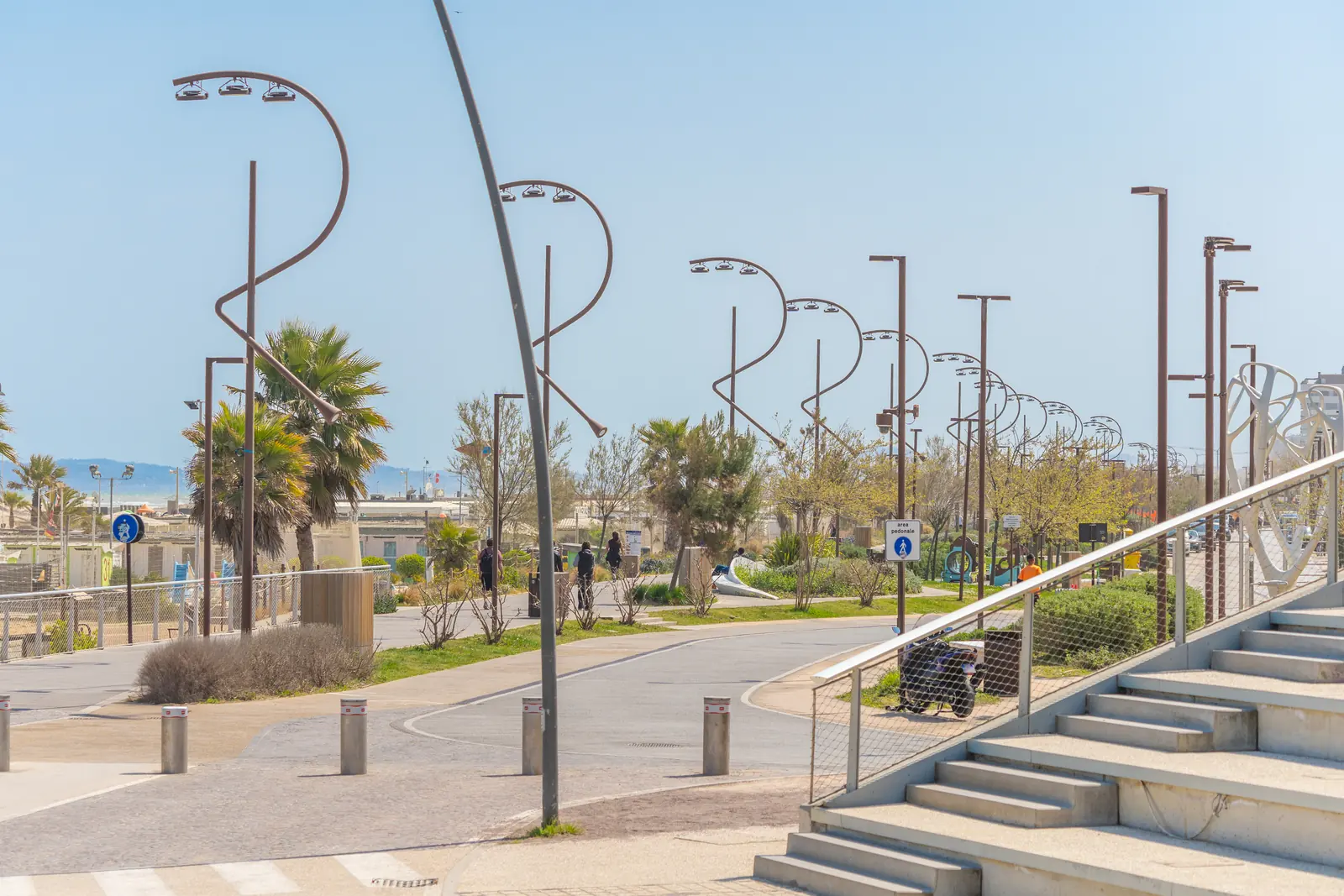
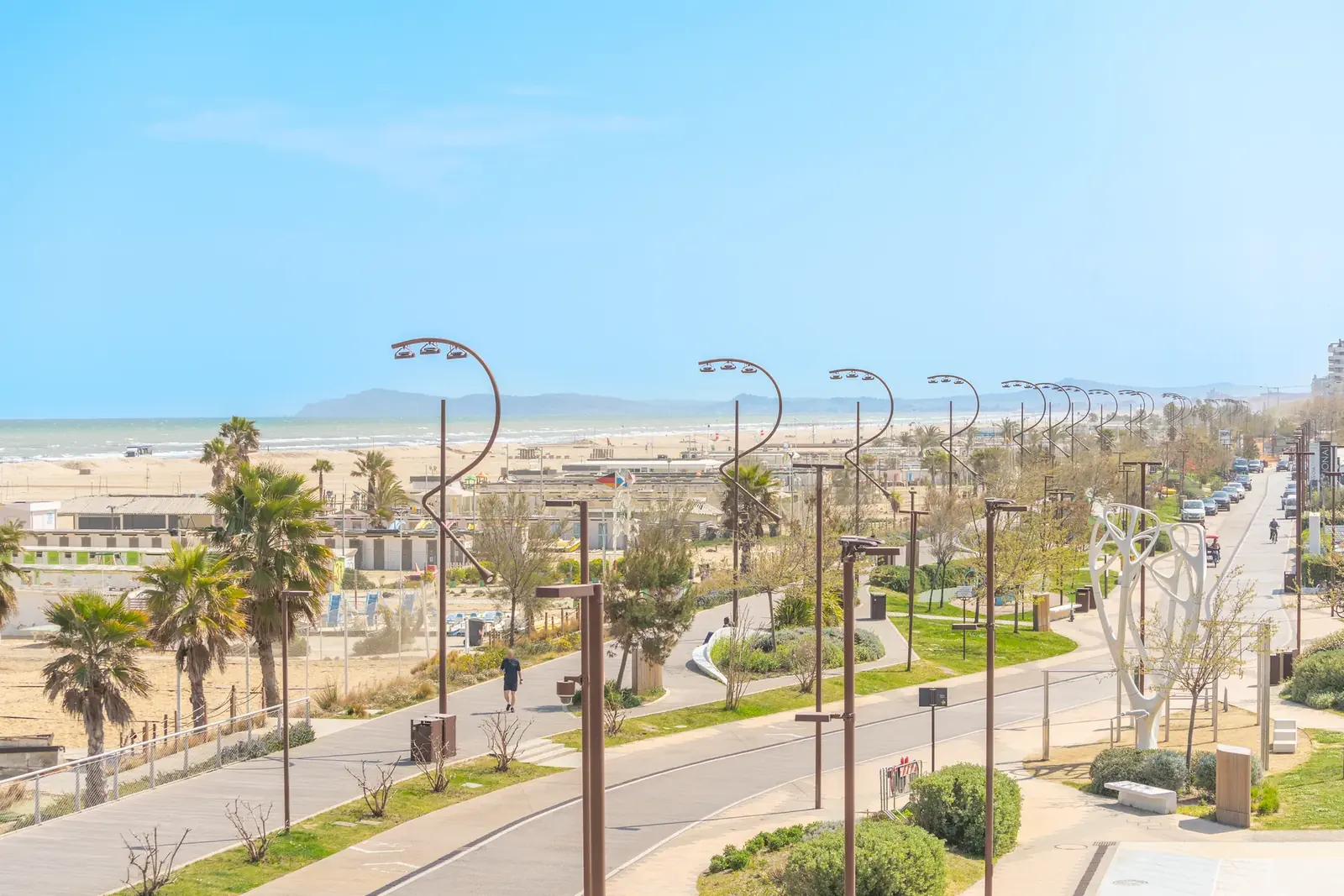
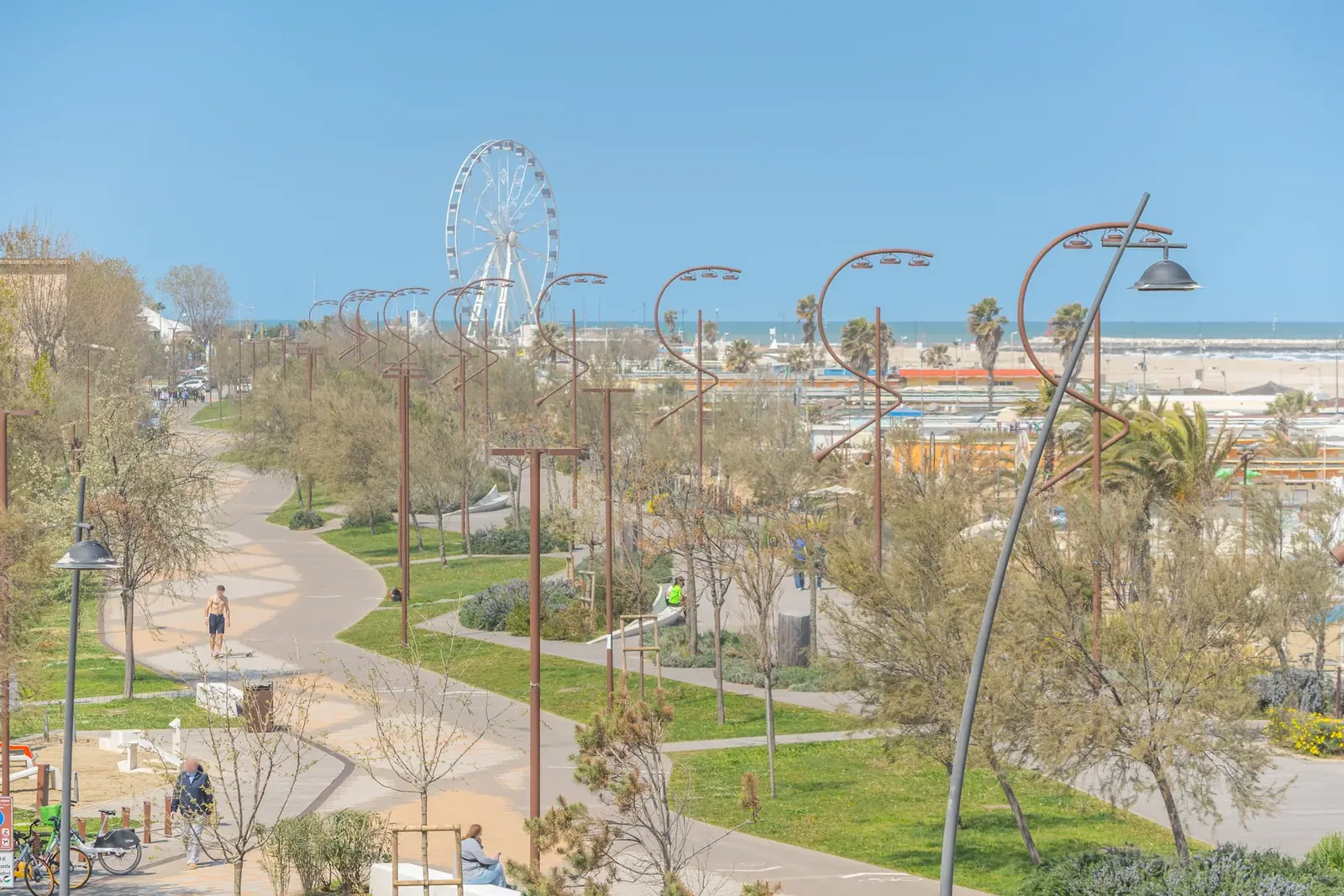
    Parco del Mare transforms the seafront with walking and cycling paths, green spaces and exercise areas. In Marina Centro, the Belvedere on Piazzale Kennedy is a recognisable point on the walk. The project covers several coastal areas and is built in sections at different times.

    Parco del Mare in Rimini with curved lampposts, palm trees, the cycle and pedestrian path and a flight of steps
  13. Cycling from the coast towards the Marecchia

    Along the coast, bicycles connect beach areas; following the Marecchia, they offer a way into the hinterland. The riverside route includes gravel stretches, relevant when choosing a bicycle and itinerary. The sport in Rimini guide explores the options. To combine cycling and Metromare, Start Romagna allows only folding bicycles on board.

    The Parco del Mare on the seafront of Rimini seen from above, with the curved street lamps, the cycle path and the beach
  14. A change of scenery on Covignano hill

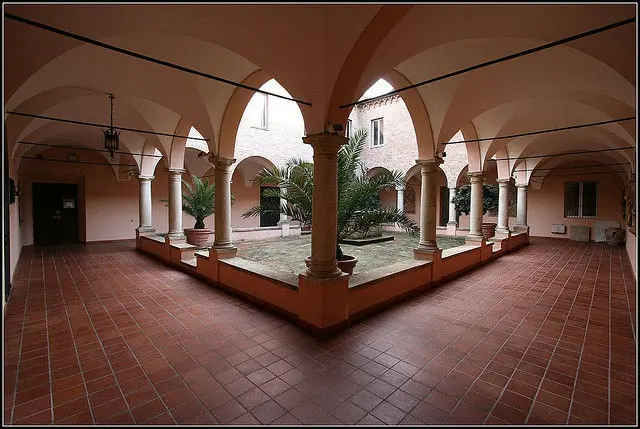
    Covignano takes the visit into the hills beside Rimini. Santuario di Santa Maria delle Grazie and the Via Crucis are route landmarks; the hill area offers views over plain and coast. At Villa Alvarado, Museo degli Sguardi holds artefacts from African, Oceanian and pre-Columbian American cultures. Visits are by appointment.

  15. A day at Italia in Miniatura

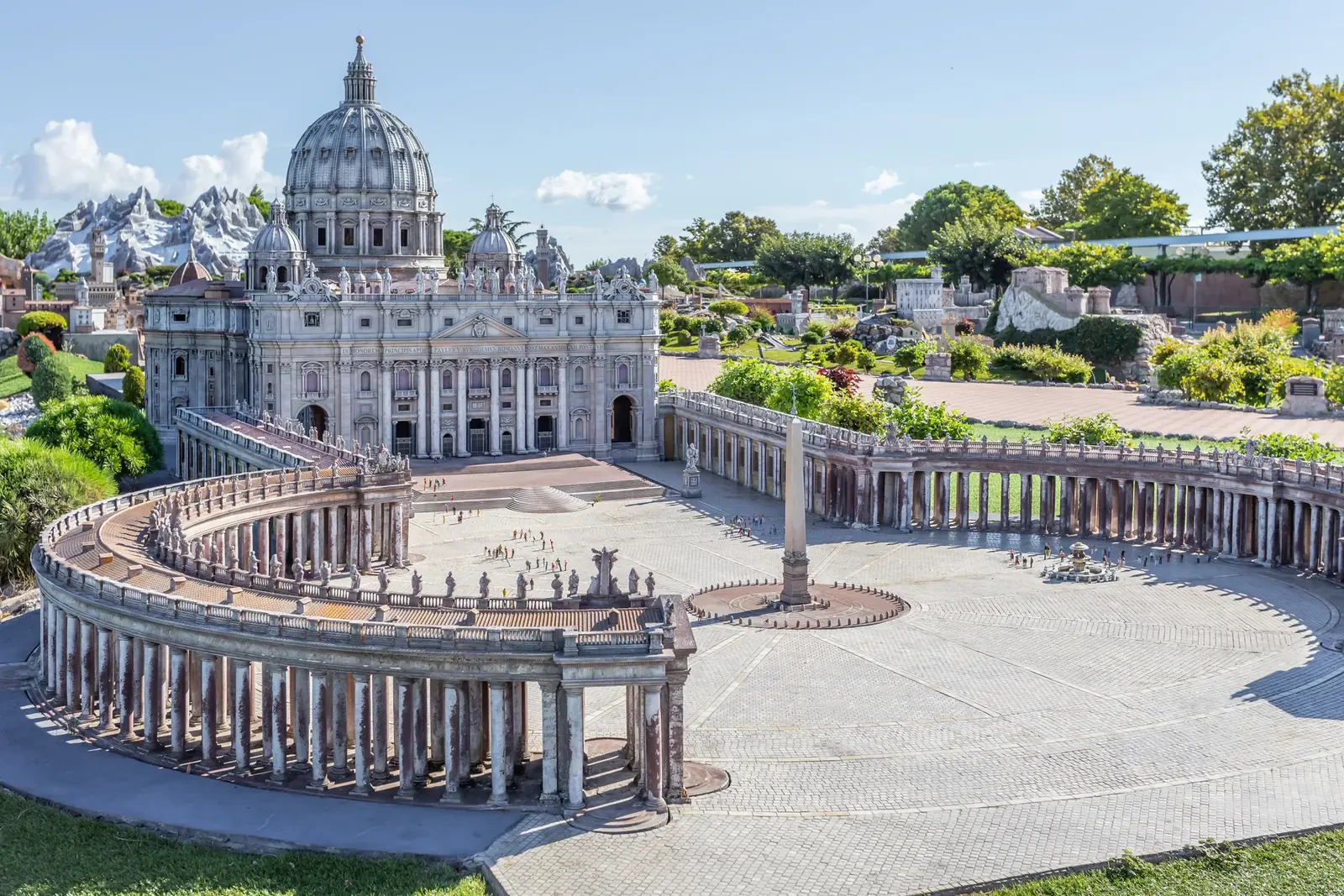
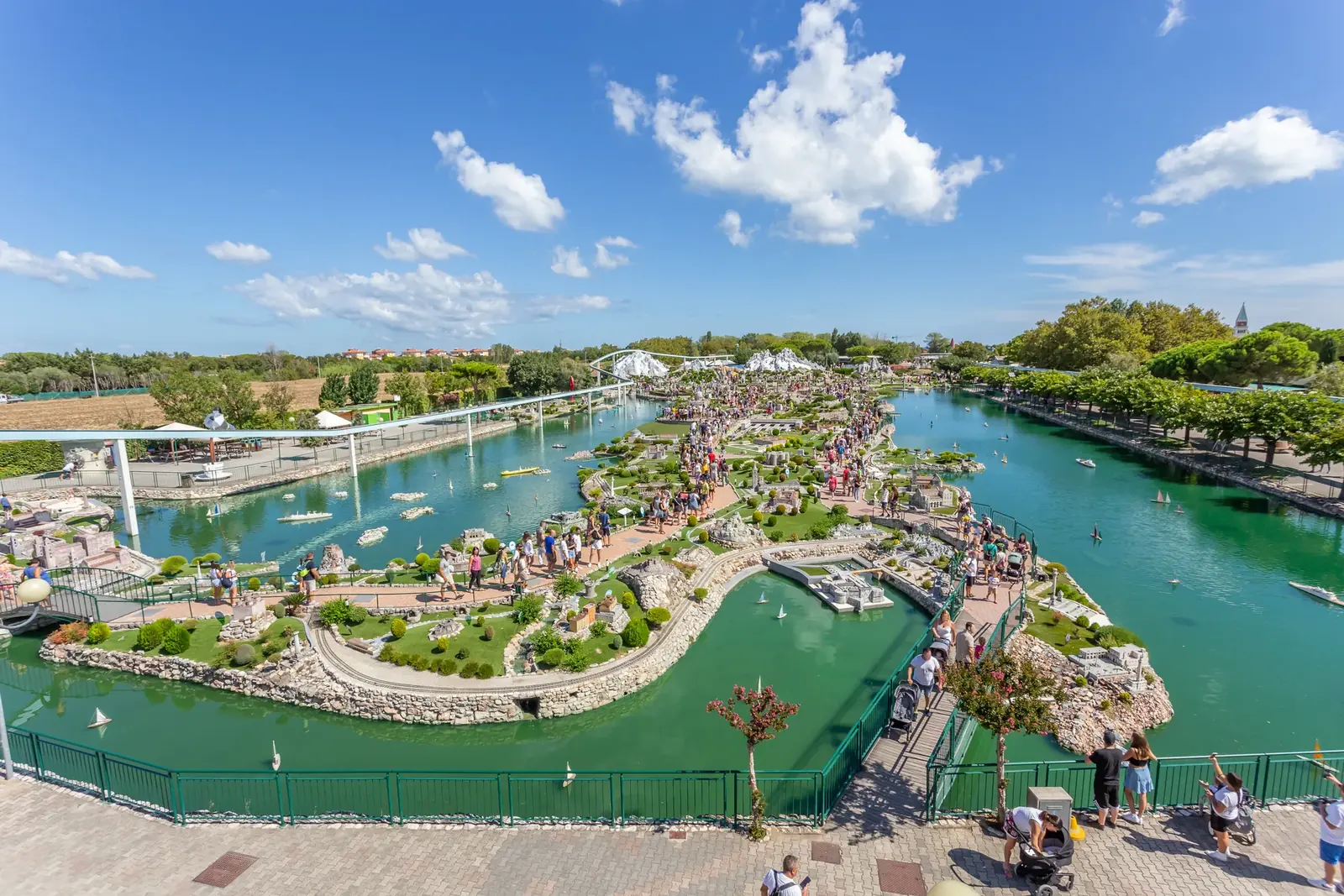
    In Viserba, at 239 Via Popilia, Italia in Miniatura offers a route among replicas of monuments and squares. The visit requires a separate day from the historic centre, and the opening calendar changes through the year. To combine the park with other family activities, the Rimini with children guide gathers further options.

    Piazza San Pietro in miniature at Italia in Miniatura, with the basilica, the colonnade and the obelisk
  16. Choosing between Fiabilandia and other parks

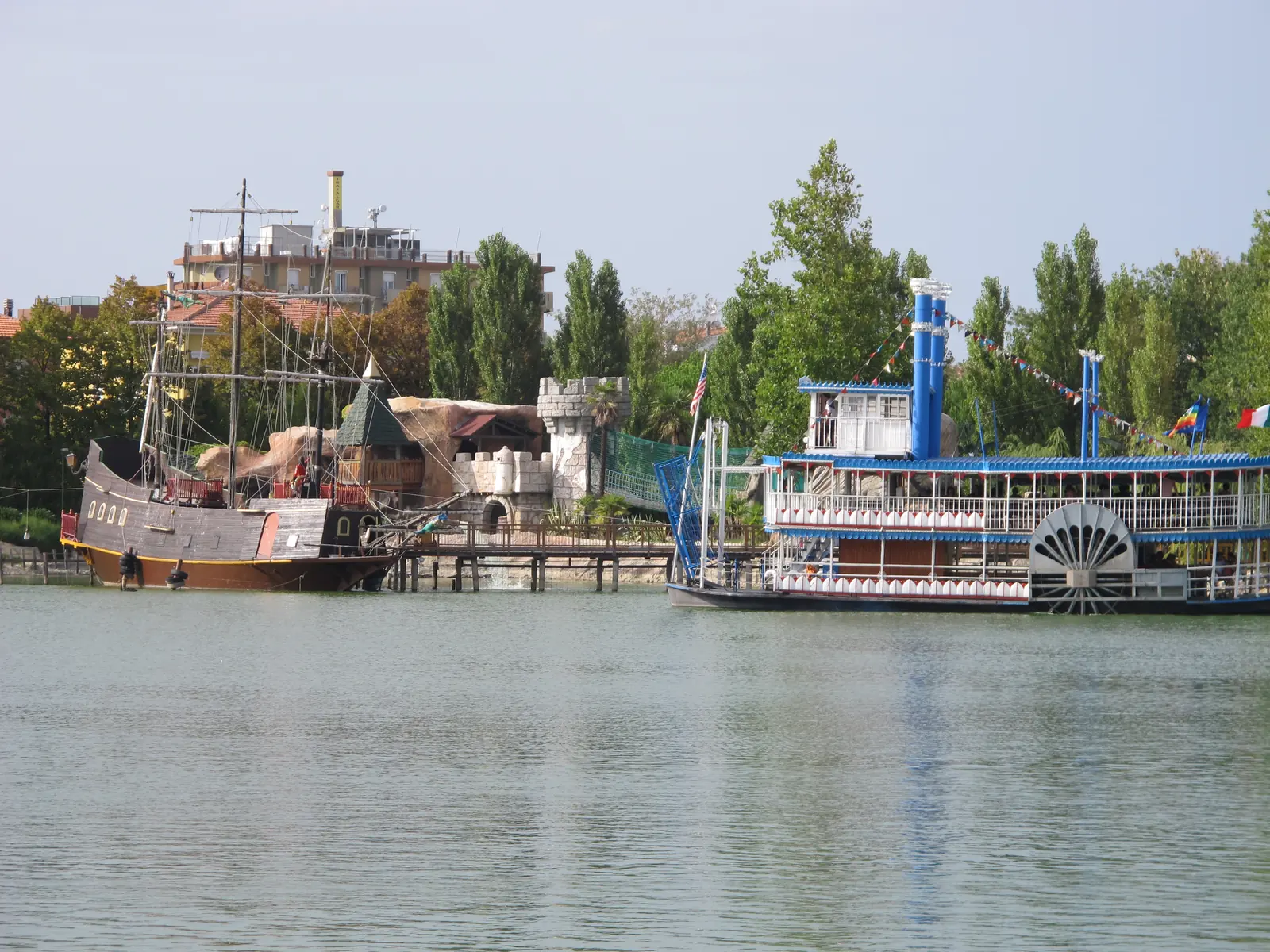
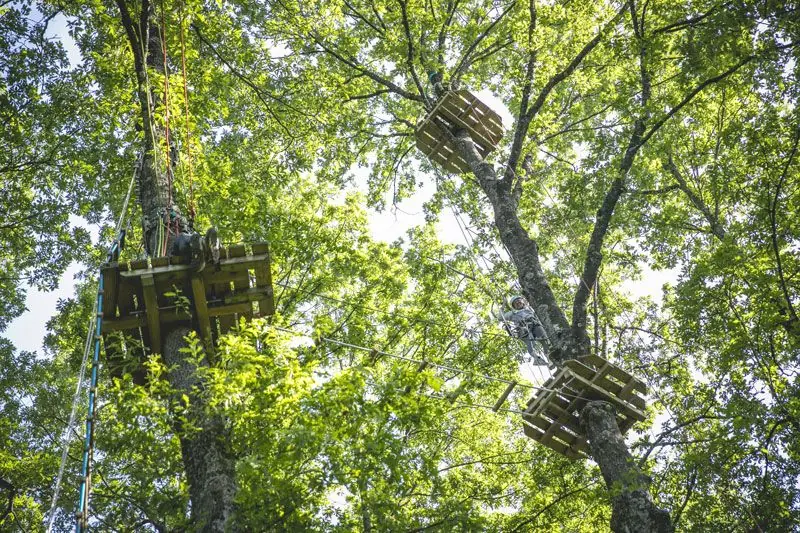
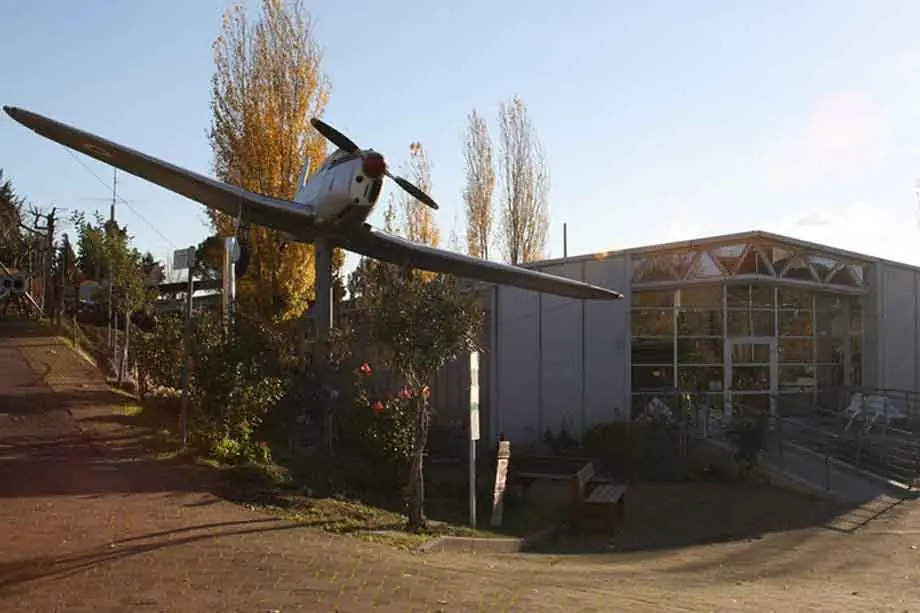
    Fiabilandia is in Rivazzurra and has a Metromare stop of the same name. Parco Tematico dell'Aviazione, meanwhile, offers a visit devoted to aircraft and their history. An adventure park requires a trip into the hinterland: Skypark is in Perticara di Novafeltria, outside the Comune di Rimini.

    The pirate galleon and the paddle steamer moored on the Fiabilandia lake, among trees and mock towers
  17. A break at Rimini Terme

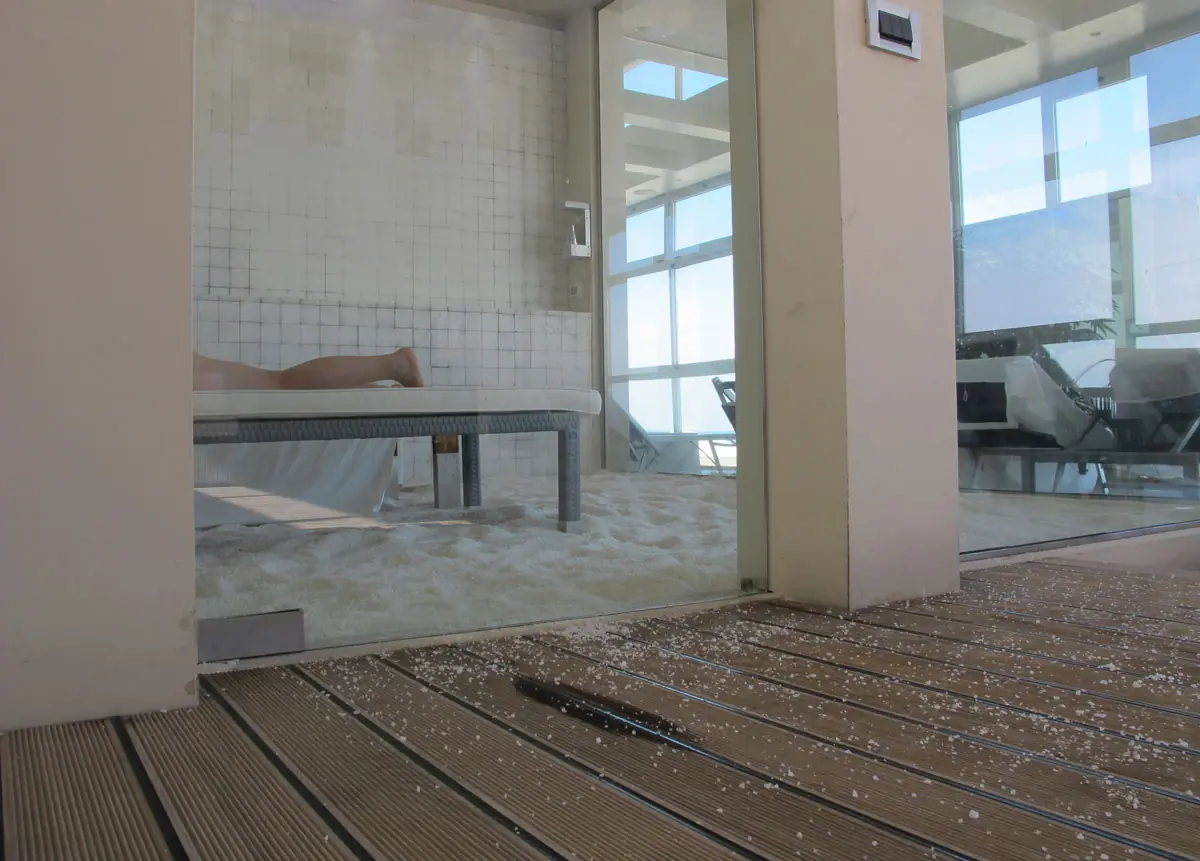
    Rimini Terme stands on the Miramare coast. The complex combines thermal spa activities and wellness services, with a saline bromide-iodide water called Miramare. Its location allows the break to be combined with a day on the southern coast. Thermal treatments and wellness routes have their own access arrangements, described in the listing.

  18. Planning an evening at the theatre or cinema

    Teatro Galli overlooks Piazza Cavour and offers drama, dance and music. Cinema Fulgor is on Corso d'Augusto, while Cineteca comunale is housed in Palazzo Gambalunga. In summer, Corte degli Agostiniani also hosts outdoor events. Seasons and programmes are gathered in the entertainment in Rimini guide.

    The Teatro Galli at the end of Piazza Cavour, with the statue of Paolo V and the Palazzo dell'Arengo and Palazzo del Podestà on the right
  19. A visit to Mercato Coperto

    Mercato Coperto, between Via Castelfidardo and Via Michele Rosa, is a stop for food shopping in central Rimini. The fish market stands alongside fruit and vegetable spaces, offering a tangible connection with the city's cuisine. The shopping in Rimini guide also gathers outdoor markets and their days.

  20. Trips to San Marino, Santarcangelo and Montebello

    Three different trips can be organised from Rimini: San Marino for the historic centre on Monte Titano, Santarcangelo di Romagna for its village and Montebello for the castle linked to the Azzurrina legend. San Marino has a bus connection from the station area; Santarcangelo is also accessible by train.

Sources: Comune di Rimini; Rimini Turismo, place listings and Il Faro e l'antico porto canale; Regione Emilia-Romagna; Ministero della Cultura; official attraction websites; Start Romagna, Metromare. Accessed between 2 and 10 October 2026.
Character

What makes Rimini different

Rimini preserves three recognisable histories within the same city: Roman, Malatesta and seaside tourism. The colony of Ariminum was founded in 268 BC at the mouth of the Marecchia valley. Corso d'Augusto retains the ancient decumanus axis; Arco di Augusto and Ponte di Tiberio reveal this past during an ordinary walk.

In the 15th century, Sigismondo Pandolfo Malatesta left two buildings that still guide visits: Castel Sismondo and Tempio Malatestiano. Their character differs from that of the Roman monuments: they express the power and cultural project of a ruling dynasty.

Seaside history took a new direction with the first bathing establishment in 1843. In the 20th century, Rimini also became the city associated with Federico Fellini, born here in 1920. The museum and places linked to the director follow this story beyond the beach.

The Rimini coast from above at dawn, with the long beach, the harbour and the observation wheel in the distance

Sources: Regione Emilia-Romagna; Comune di Rimini; Rimini Turismo. Accessed on 2 October 2026.

Things to see

Other places to see

To add a stop to the main route, the centre offers churches and ancient gateways, while parks allow a break away from the squares.

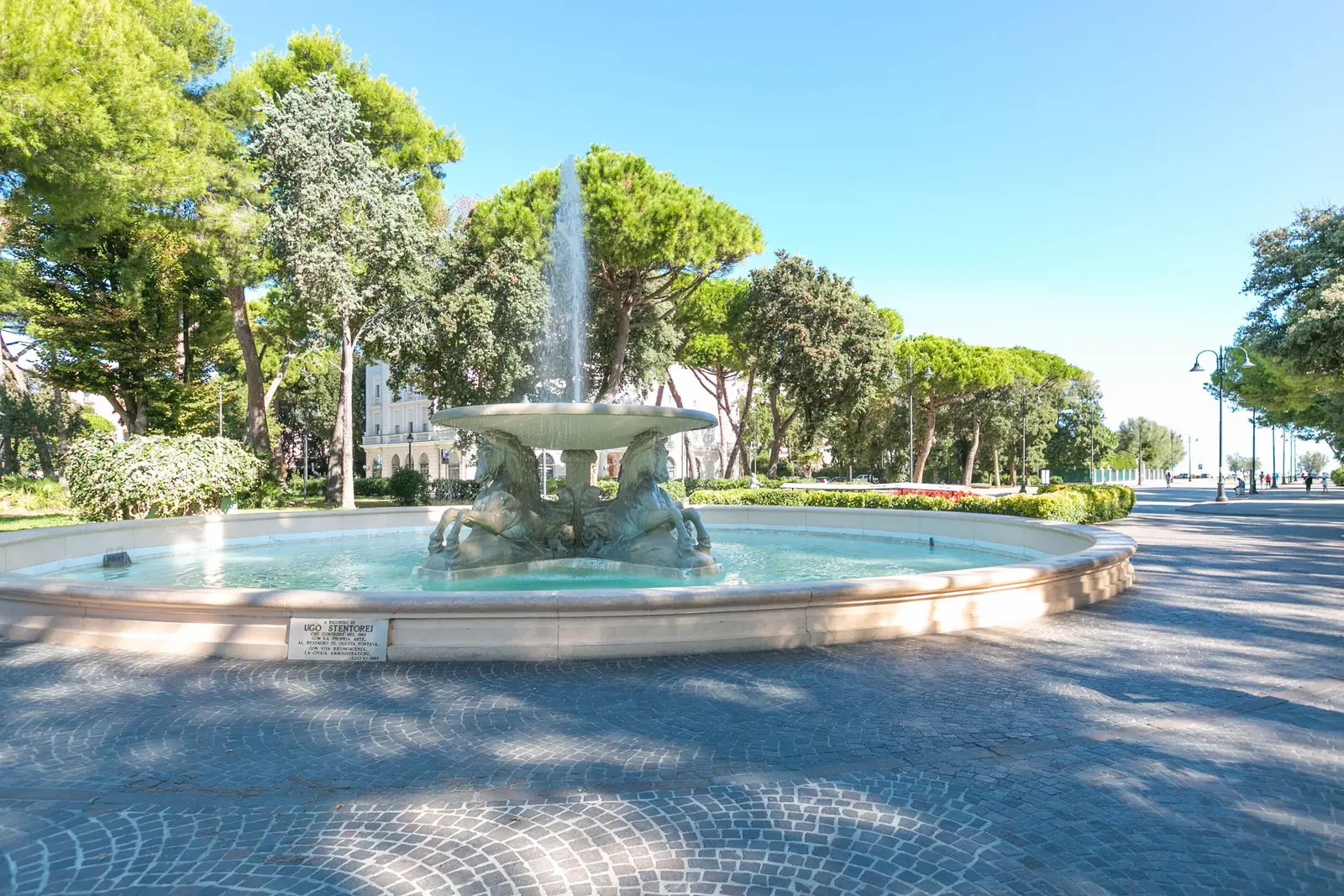
The Fontana dei Quattro Cavalli in Parco Fellini, with the jet of water, the pine trees and the avenue towards the seafront

Chiesa di Santa Maria in Corte

On Corso d'Augusto, also known as Chiesa dei Servi.

Chiesa di Sant'Agostino

On Via Cairoli, preserving frescoes of the 14th-century Rimini school.

Porta Montanara

A surviving Roman gateway, relocated to Via Garibaldi.

Palazzi dell'Arte

The Arengo and Podestà sites house the Palazzi dell'Arte route, including Giardino delle Sculture.

Parco Fellini

In Marina Centro, around Fontana dei Quattro Cavalli.

Parco XXV Aprile

Along the old Marecchia riverbed, near Ponte di Tiberio.

Parco Giovanni Paolo II, La Cava

An urban green space with a small lake formed from a clay quarry.

Lungofiume degli Artisti

In San Giuliano Mare, among murals and trabucchi fishing structures along the river.

Sources: Rimini Turismo and Comune di Rimini, place listings. Accessed on 2 October 2026.

The sea

The beach

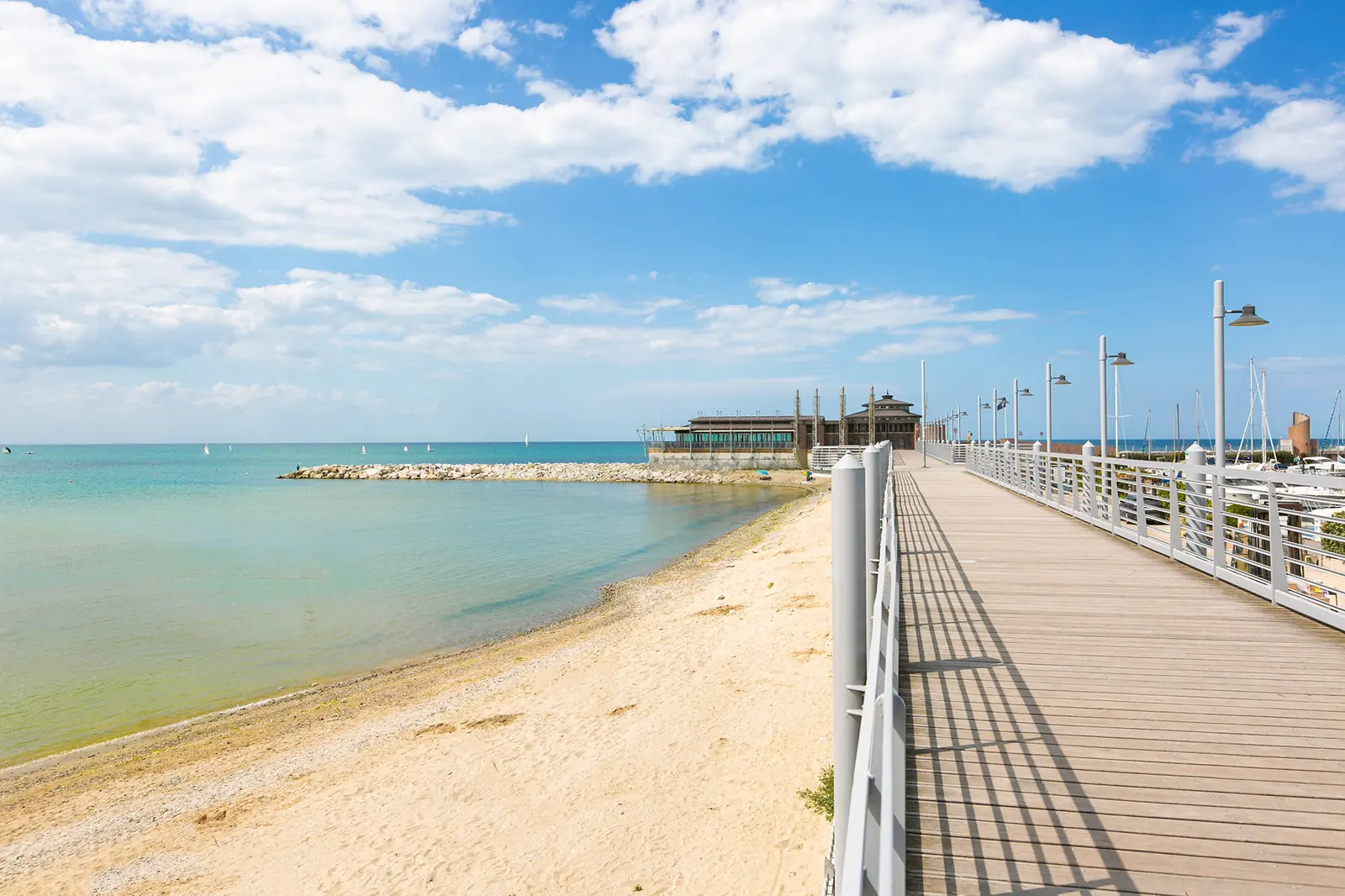
The walkway on the Rimini pier beside the beach, with the calm sea and the breakwater in the background

Around 15 kilometres of sandy beach stretch from Torre Pedrera to Miramare, split into three parts by the canal harbour and Deviatore del Marecchia: northern coast, San Giuliano Mare and southern coast.

To the north are Torre Pedrera, Viserbella, Viserba and Rivabella, with stretches protected by breakwaters. San Giuliano Mare occupies the area between the diversion channel and harbour. To the south, Marina Centro is followed by Bellariva, Marebello, Rivazzurra and Miramare towards Riccione. Metromare serves southern districts, route 4 the northern ones.

The 2026 regional classifications list 17 bathing waters in the municipality, 14 excellent and 3 good; that year, Blue Flag status also returned to Rimini beaches after fifteen years. Any temporary bathing bans are signposted on site.

Sources: Comune di Rimini, 2025 beach plan and Blue Flag news of 14 May 2026; Regione Emilia-Romagna, DGR n. 561/2026; Rimini Turismo. Accessed between 2 and 10 October 2026.
All about Rimini beach

Food

Where to eat

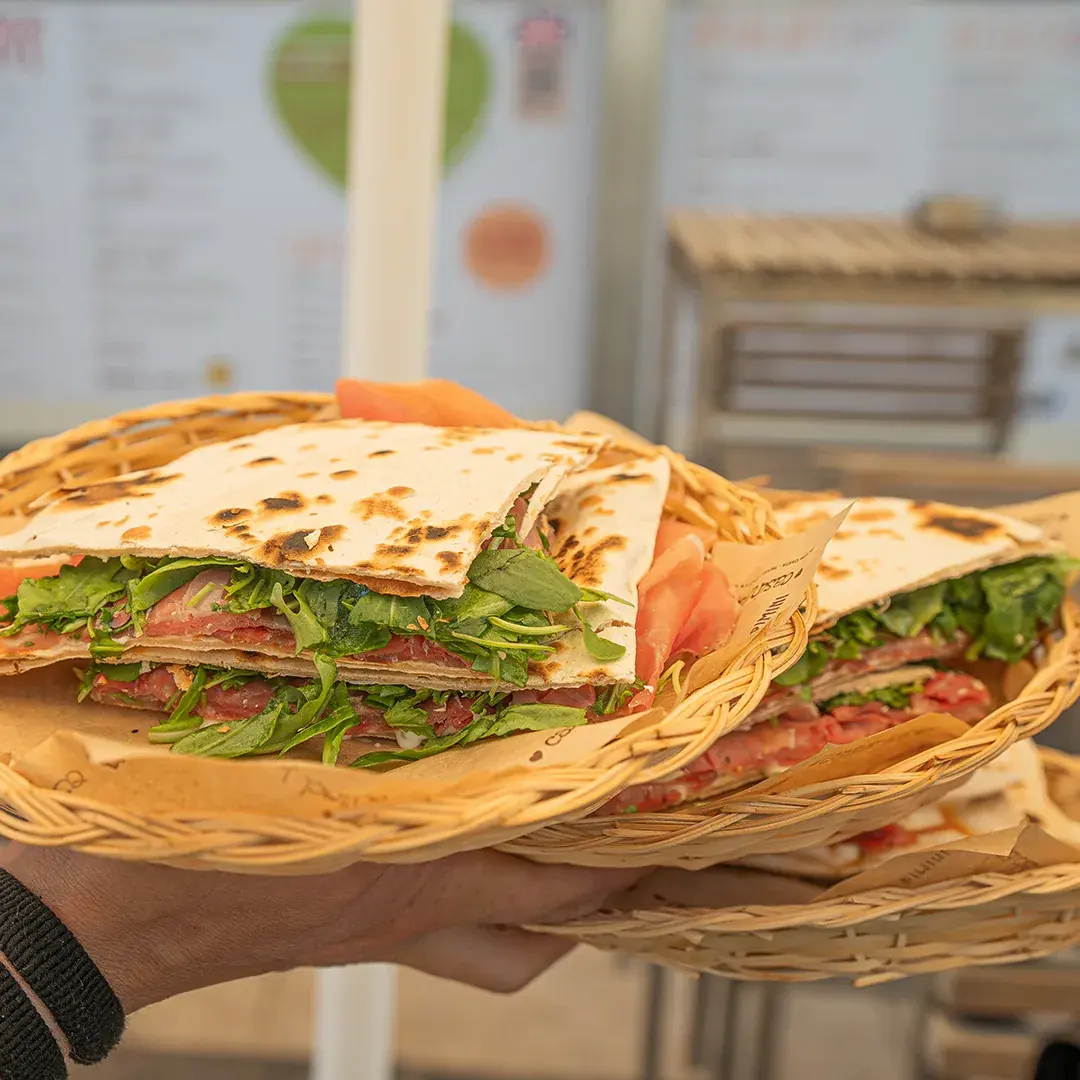
A piadina filled with prosciutto crudo and rocket, served in a wicker basket

Rimini-style piadina is the thin variant of Piadina Romagnola IGP. It is a starting point for a quick meal, with cheese, cured meat or vegetable fillings. Seafood cuisine, meanwhile, brings grilled oily fish, marinated anchovies and mussels au gratin to the table.

For apartment stays, Mercato Coperto offers a place to buy ingredients and fish. The what to eat in Rimini guide explores local dishes and products.

Sources: Piadina Romagnola IGP specification; Regione Emilia-Romagna, traditional food products. Accessed on 25 September and 2 October 2026.

Where to eat in Rimini

Place guides

Places in and around Rimini

Every place to visit has its own dedicated guide.

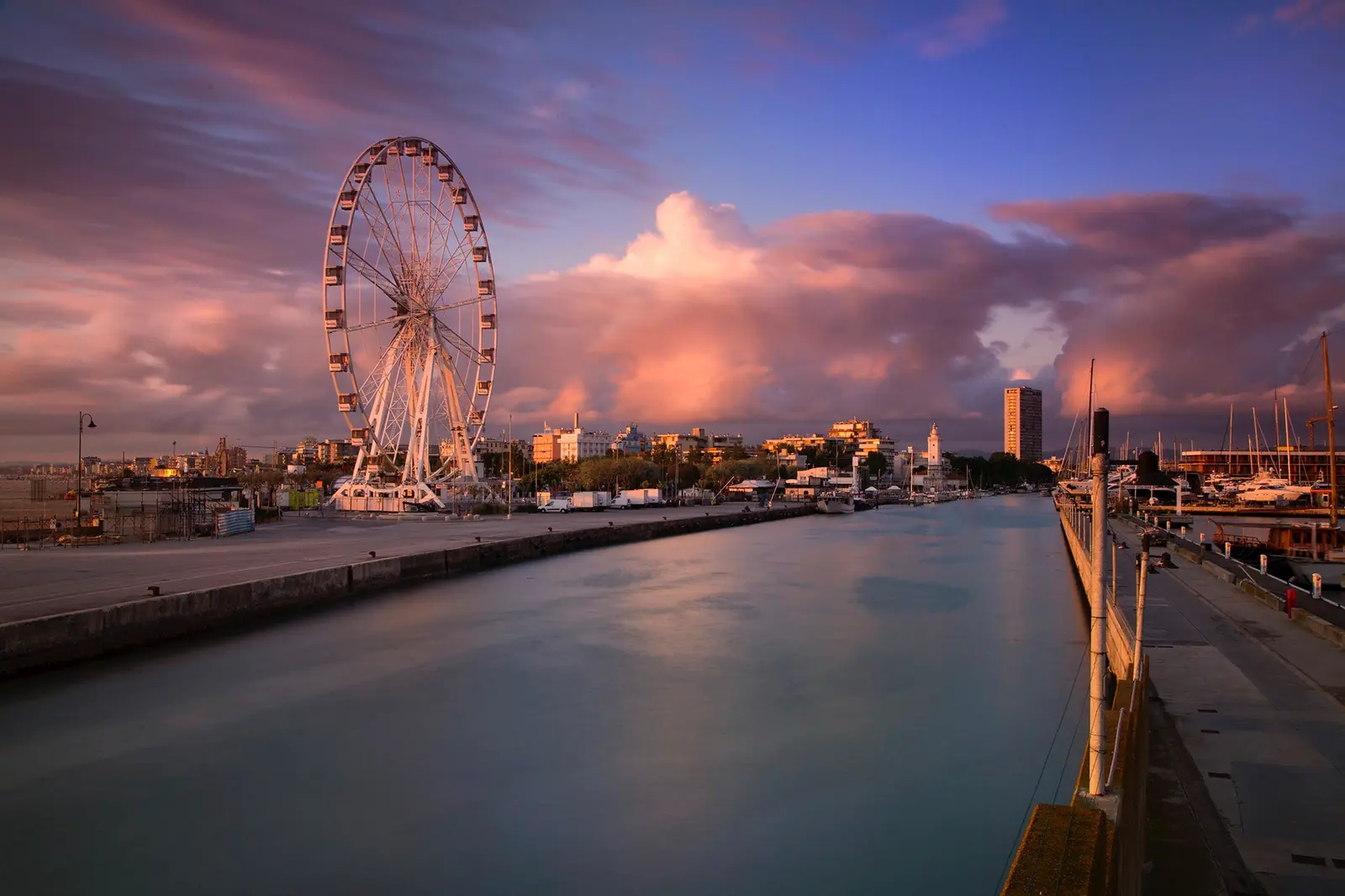
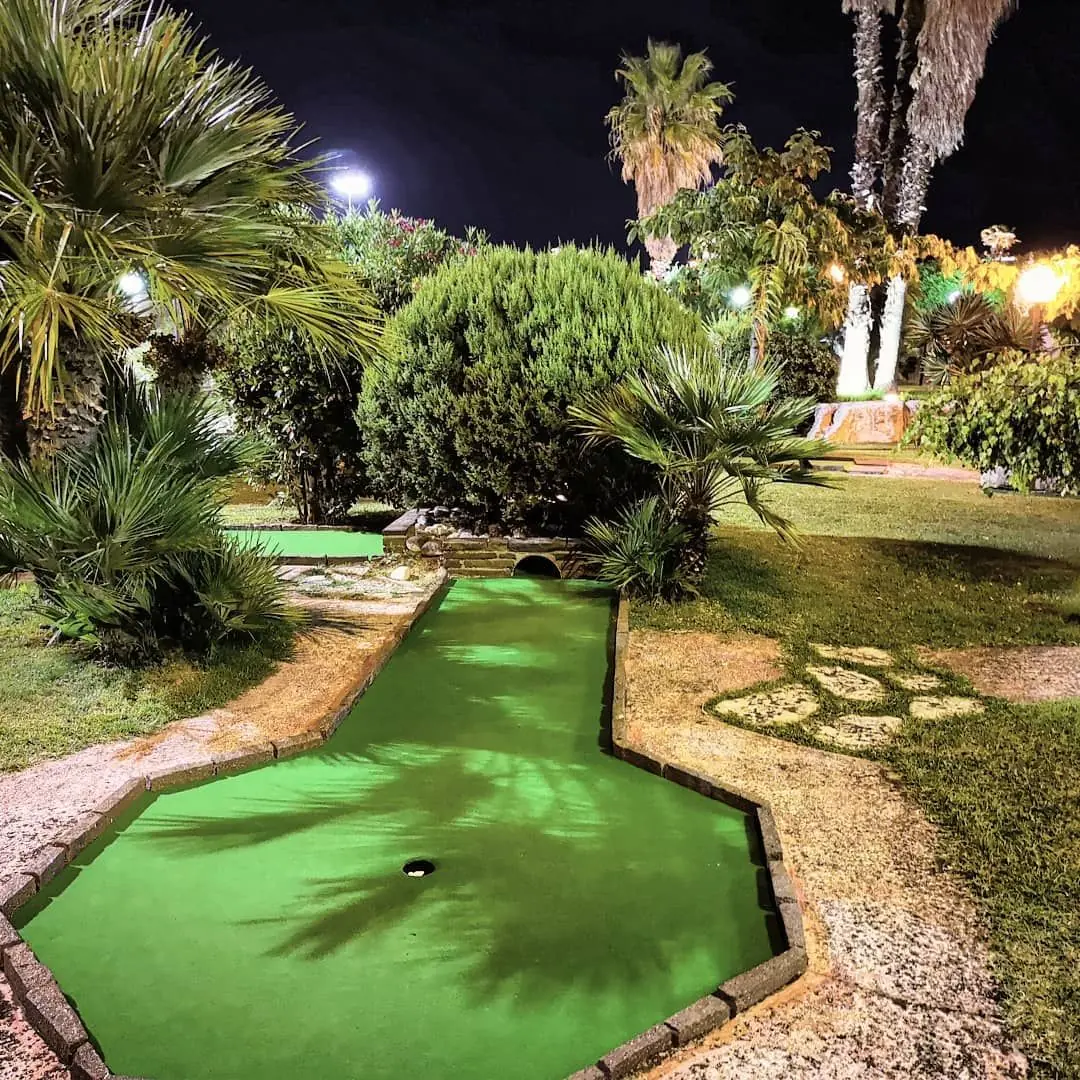
The Arco di Augusto under a blue sky, with the paved square in front and the remains of the medieval walls on either side Arco di Augusto The Roman gateway of 27 BC, at the entrance to Corso d'Augusto. Full listing Ponte di Tiberio in Rimini seen from the water, with its five white stone arches and the skyscraper in the background Ponte di Tiberio Five Roman arches from AD 14-21, towards Borgo San Giuliano. Full listing The white stone façade of the Tempio Malatestiano seen from the front, with the columns, the arches and the central portal Tempio Malatestiano The cathedral clad by Leon Battista Alberti, left unfinished. Full listing Castel Sismondo in Rimini by day, with its brick towers, the gateway and the lawns of the square in front Castel Sismondo The Malatesta fortress, now home to Fellini Museum. Full listing Castel Sismondo reflected in the water basin of Piazza Malatesta, under a blue sky Fellini Museum The museum devoted to the director, spread across three historic-centre sites. Full listing The Torre dell'Orologio in Piazza Tre Martiri, with its two dials, and the green dome of the small temple of Sant'Antonio Piazza Tre Martiri The old Roman forum, along Corso d'Augusto between arch and bridge. Full listing Fontana della Pigna in Piazza Cavour, Rimini, with Teatro Galli at the far end and Palazzo dell'Arengo on the right Fontana della Pigna In Piazza Cavour, with Leonardo's words engraved on the monument. Full listing Chiesa di Santa Maria dei Servi Built on property donated by the Malatesta to Servi di Maria in the 14th century. Full listing The cloister of Santuario delle Grazie in Covignano, with its arched colonnade and palms in the central garden Santuario di Santa Maria delle Grazie On Covignano hill, linked to a legend from 1286. Full listing Museo degli Sguardi Ethnographic collections on Covignano hill, with free admission, open on request. Full listing Italia in Miniatura from above, with the model of the peninsula in the lake and visitors on the route Italia in Miniatura Scale models of Italian and European monuments and a small Venezia by gondola. Full listing The pirate galleon and the paddle steamer moored on the Fiabilandia lake, among trees and mock towers Fiabilandia The fairy-tale park in Rivazzurra, for children and young people. Full listing The Parco del Mare in Rimini seen from above, with paths among the trees, the street lamps and the Ferris wheel Boabay Floating inflatables a hundred metres off the Marina Centro beach. Full listing The observation wheel on the Rimini canal harbour at sunset, with pink clouds and the empty quay Ruota Panoramica On the canal harbour, overlooking the Riviera and hinterland. Full listing Wooden platforms and cables at Skypark adventure park among the treetops, with a person on a zip wire Skypark Over three kilometres of treetop courses in Perticara. Full listing A Rivergreen Golf minigolf lane in Rimini lit in the evening, among palm trees and Mediterranean shrubs Rivergreen Golf Two 18-hole courses in the harbour area. Full listing Historic aircraft displayed outdoors at Parco Tematico dell'Aviazione in Rimini Parco Tematico dell'Aviazione Historic aircraft outdoors, on the hill towards San Marino. Full listing The Rimini Terme salt room, with coarse salt covering the floor, a lounger and bright windows in the background Rimini Terme Thermal spa, wellness centre and beach establishment on Miramare beach. Full listing

Connections

Getting there and getting around

By car

The A14 serves Rimini through the Rimini Nord and Rimini Sud exits. From San Marino, access is along SS72; from Ravenna, along SS16. The historic centre and Borgo San Giuliano are restricted traffic zones: drivers leave cars in car parks outside the ZTL or request a daily permit.

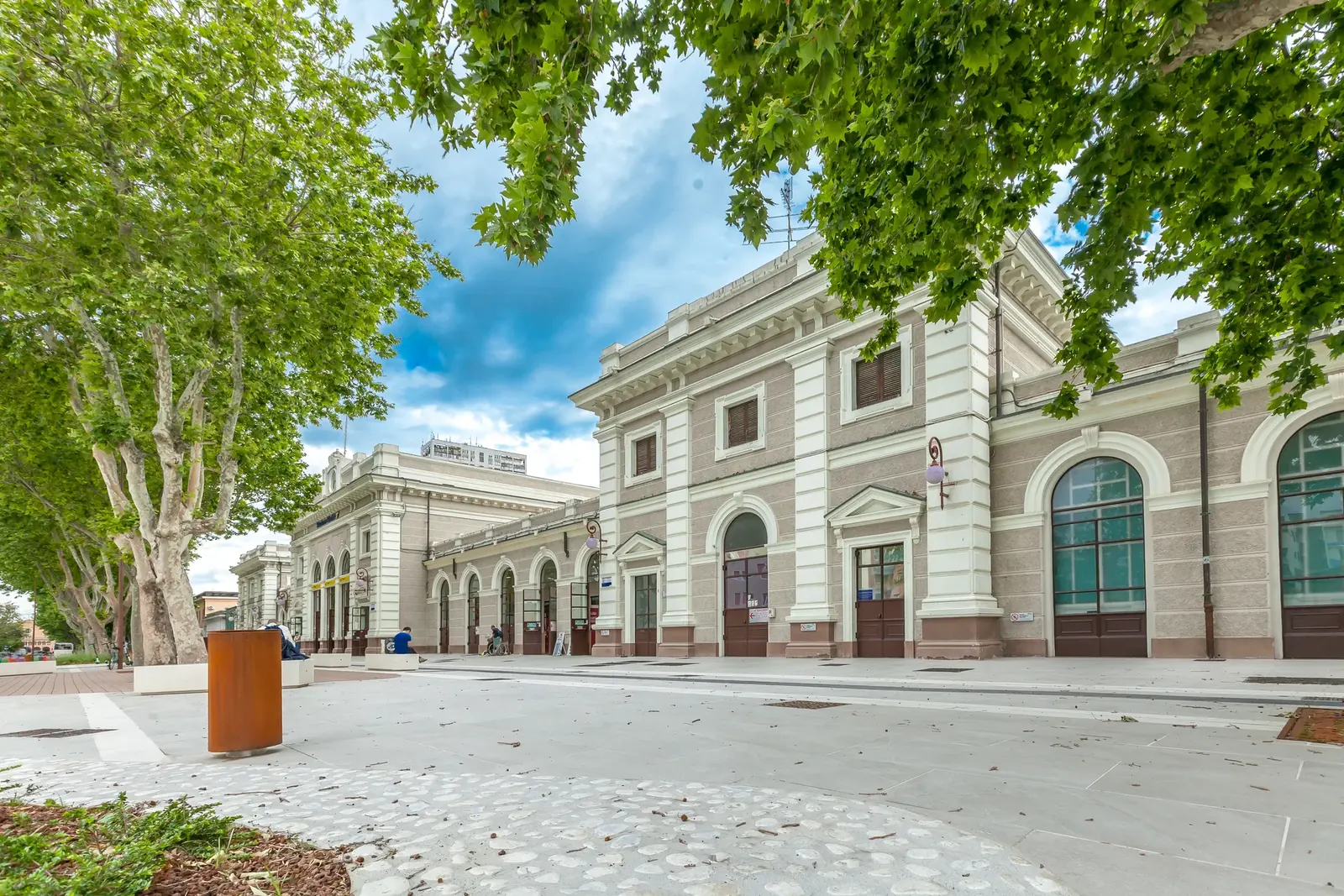
Rimini railway station, with its pale multi-section façade and the plane trees of the forecourt

By train and air

Rimini's main station serves the historic centre and offers connections to buses and Metromare for beach districts. Rimini Fiera station serves the exhibition district, with train stops linked to events. Aeroporto Federico Fellini is in Miramare, around 8 kilometres south of the historic centre. Route 9 stops in front of the terminal. From the Miramare Airport Metromare stop, however, the terminal is still around one kilometre on foot.

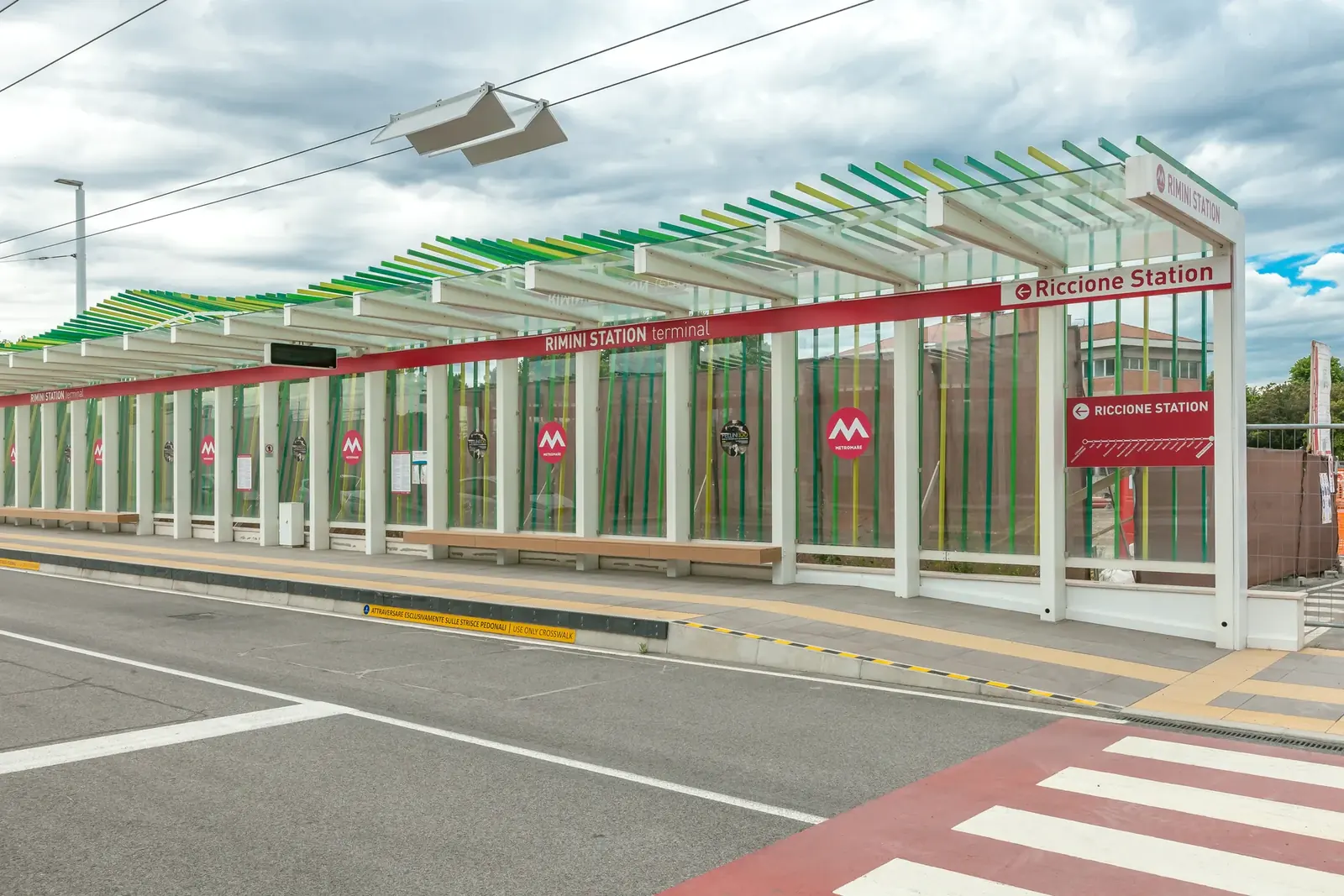
The Metromare stop in front of Rimini station, with the shelter of coloured slats and the pedestrian crossing

Getting around town

Metromare links Rimini and Riccione stations in around 23 minutes, with 15 intermediate stops. It serves the southern coast; districts north of the harbour are linked by Start Romagna route 4. Updated timetables and service notices are available on Start Romagna.

Sources: RFI; Comune di Rimini, restricted traffic zone; Start Romagna, Metromare and route 4; airport website. Accessed between 2 and 10 October 2026.
Seasons

When to visit

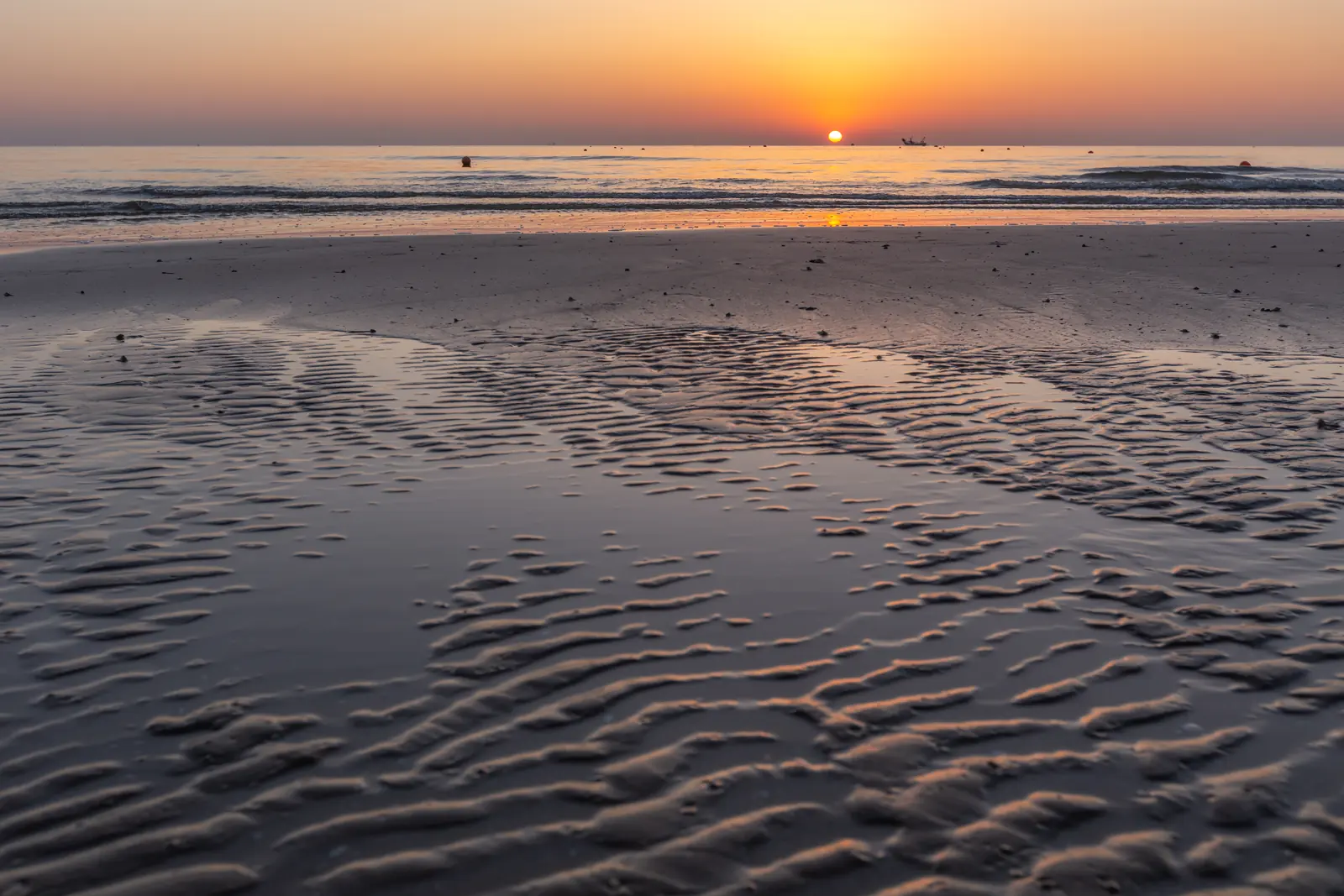
Sand rippled by the low tide on Rimini beach at dawn, with the sun low over the sea

Summer is the period for the sea and the highest visitor numbers. Spring and early autumn allow more time for the historic centre and trips; in winter, museums, cinema and theatre still offer reasons to visit. Trade fairs increase accommodation demand outside the beach months too.

The table compares Arpae's 1991-2020 climate averages with overnight stays recorded in 2025, meaning nights spent in accommodation.

MonthAverage minimum (°C)Average maximum (°C)Rainfall (mm)Overnight stays in 2025
January1.68.149.2215,216
February2.09.958.0151,604
March5.113.760.4222,392
April8.417.361.8377,620
May12.521.857.6515,462
June16.326.155.91,138,991
July18.428.541.41,548,248
August18.628.350.61,666,001
September14.823.986.1675,580
October11.319.086.0282,954
November7.313.688.9189,699
December2.89.174.6183,902

In 2025, Rimini recorded 7,167,669 overnight stays and 1,961,597 arrivals in accommodation. June to September accounts for 70.2% of annual overnight stays, calculated from regional data.

Recurring events include Paganello at Easter, Notte Rosa, Sagra Musicale Malatestiana and Festa de Borg in even-numbered years. Dates for recent editions are in the events in Rimini guide; areas and types of stay are described in the hotels in Rimini guide.

Sources: Arpae Emilia-Romagna, climate averages 1991-2020; Regione Emilia-Romagna, 2025 tourism demand, final data; Comune di Rimini, events calendars. Accessed on 2 October 2026.
Further information

All Rimini sections

Each topic has its own dedicated guide.