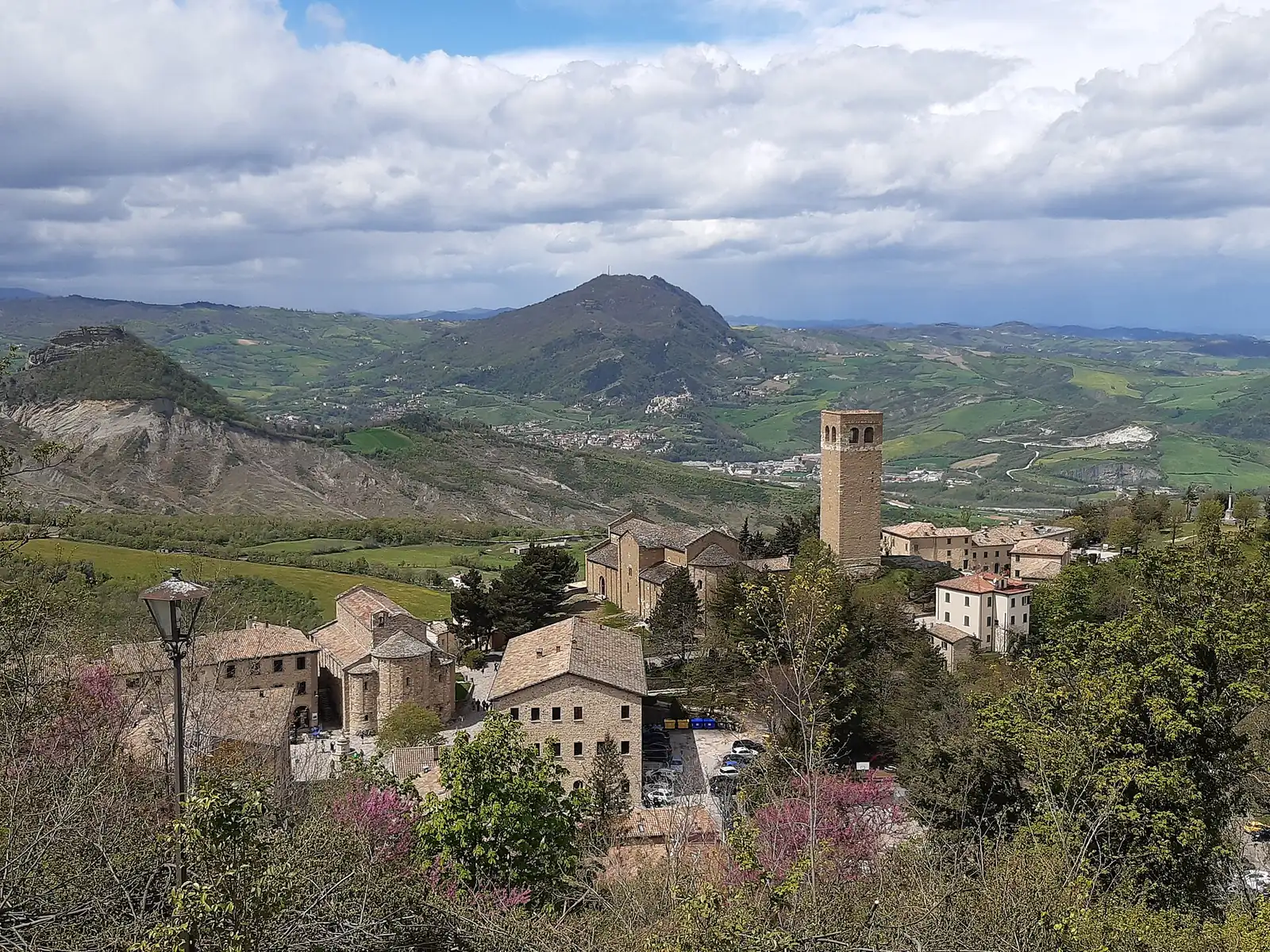
Photo by Dounamano, Wikimedia Commons, CC BY-SA 4.0
Beyond the beach
One-day itineraries from the Riviera Romagnola
From the Riviera Romagnola's nine resorts, one-day excursions lead in three directions: along river valleys towards villages and fortresses; north to the Po Delta's salt pan and pinewoods; and south to the San Bartolo headland. Regional trains and buses serve many destinations; the most convenient routes depend on the starting resort and the day of the visit.
Along the rivers, by bicycle and on foot
Almost every resort has a river to follow upstream. From Rimini, the Marecchia cycle path starts at Parco XXV Aprile and reaches Villa Verucchio after about twenty kilometres of gravel. From Bellaria Igea Marina, Sentieri per l'Uso reaches Villa Torlonia in San Mauro Pascoli in about 6 kilometres, with nine rest areas along the route. From Cesenatico, the Pisciatello cycle route leads to Cesena over 15 almost flat kilometres, and from Cervia the Savio embankment cycle route heads towards the same city. Further south, the Conca can be followed upstream from its mouth between Cattolica and Misano Adriatico, with a path on each bank as far as Morciano di Romagna and San Clemente.
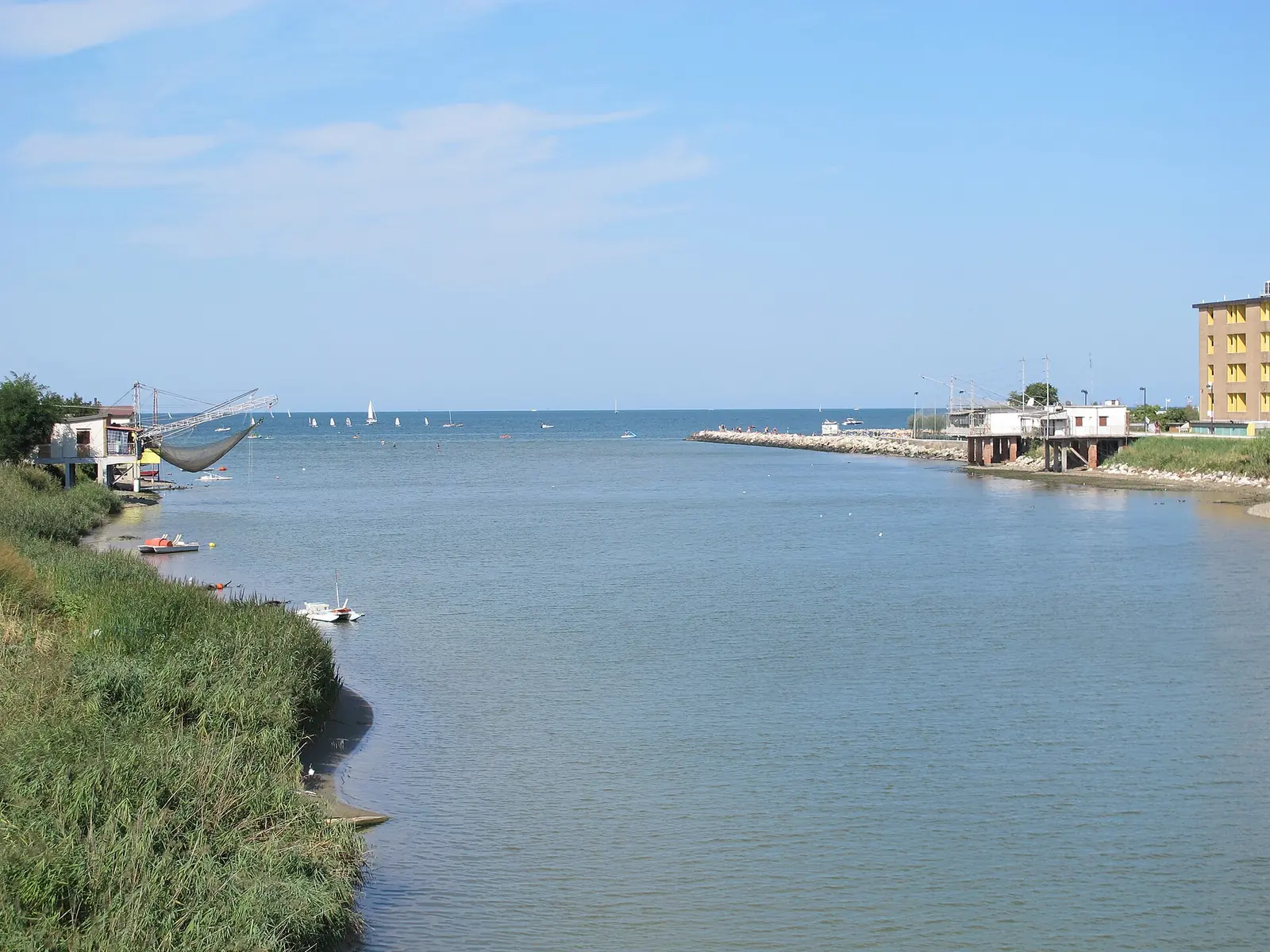
Ciclovia Adriatica runs along the coast, described by Regione Emilia-Romagna as a backbone of about a thousand kilometres from Chioggia to Gargano, through six regions, including 240 in Emilia-Romagna. It is not yet continuous: in Riccione, the stretch towards Misano, Lungomare del Sole, remains under construction until spring 2027, and north of Ravenna the bridge over the Reno is missing. Cycle routes already in use across the region exceed a thousand kilometres.
Natural areas
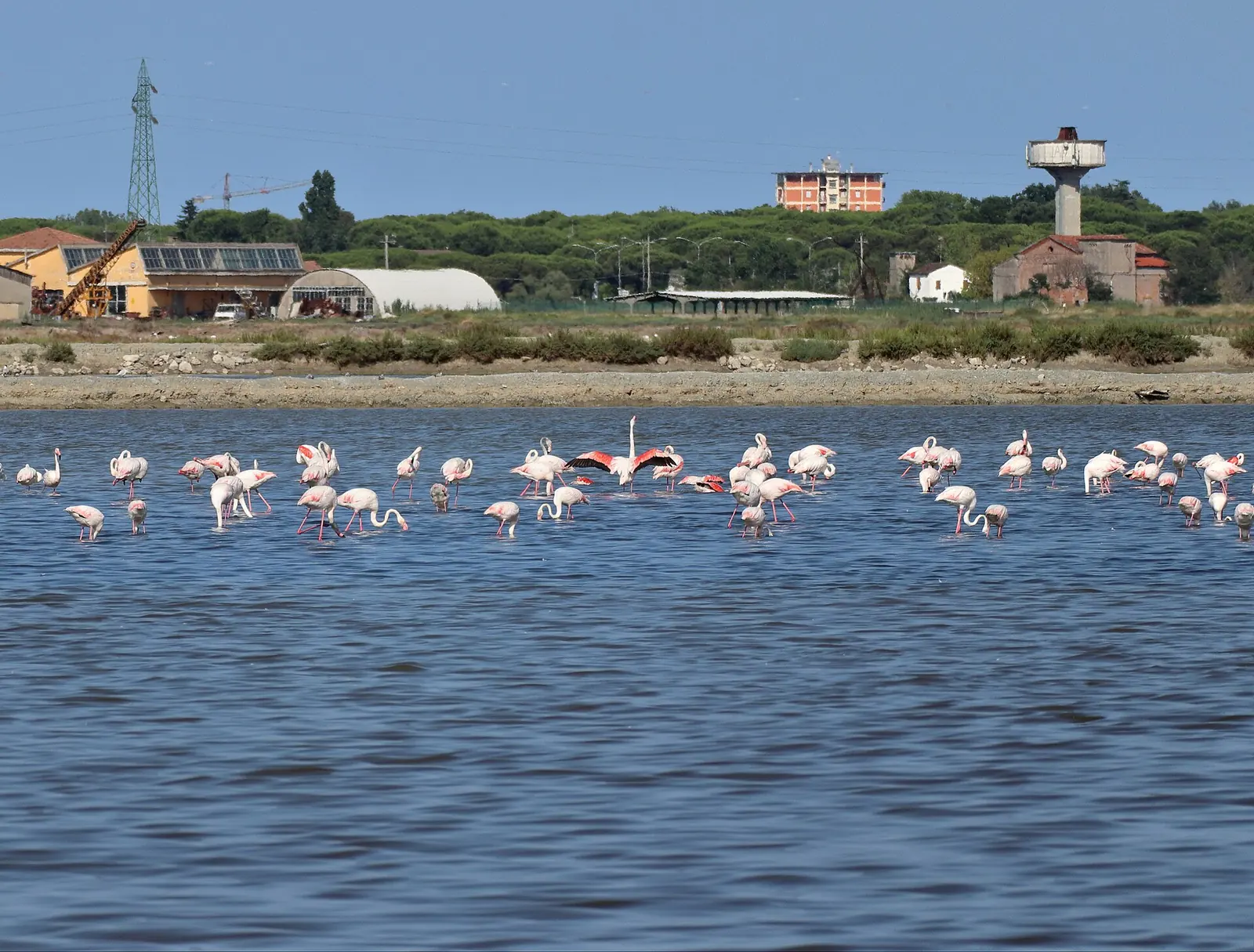
The Cervia salt pan, covering 827 hectares, is a state nature reserve and part of the southernmost section of Parco del Delta del Po. Entry is only with a guide, on foot, by bicycle or by electric boat, and flamingos live among the pans. North of Cervia is Milano Marittima's 210-hectare pinewood; further on, beyond Lido di Savio and Lido di Classe, are the Bevano mouth, the last upper Adriatic estuary still changing shape freely, with regulated access, and the 900-hectare Pineta di Classe.
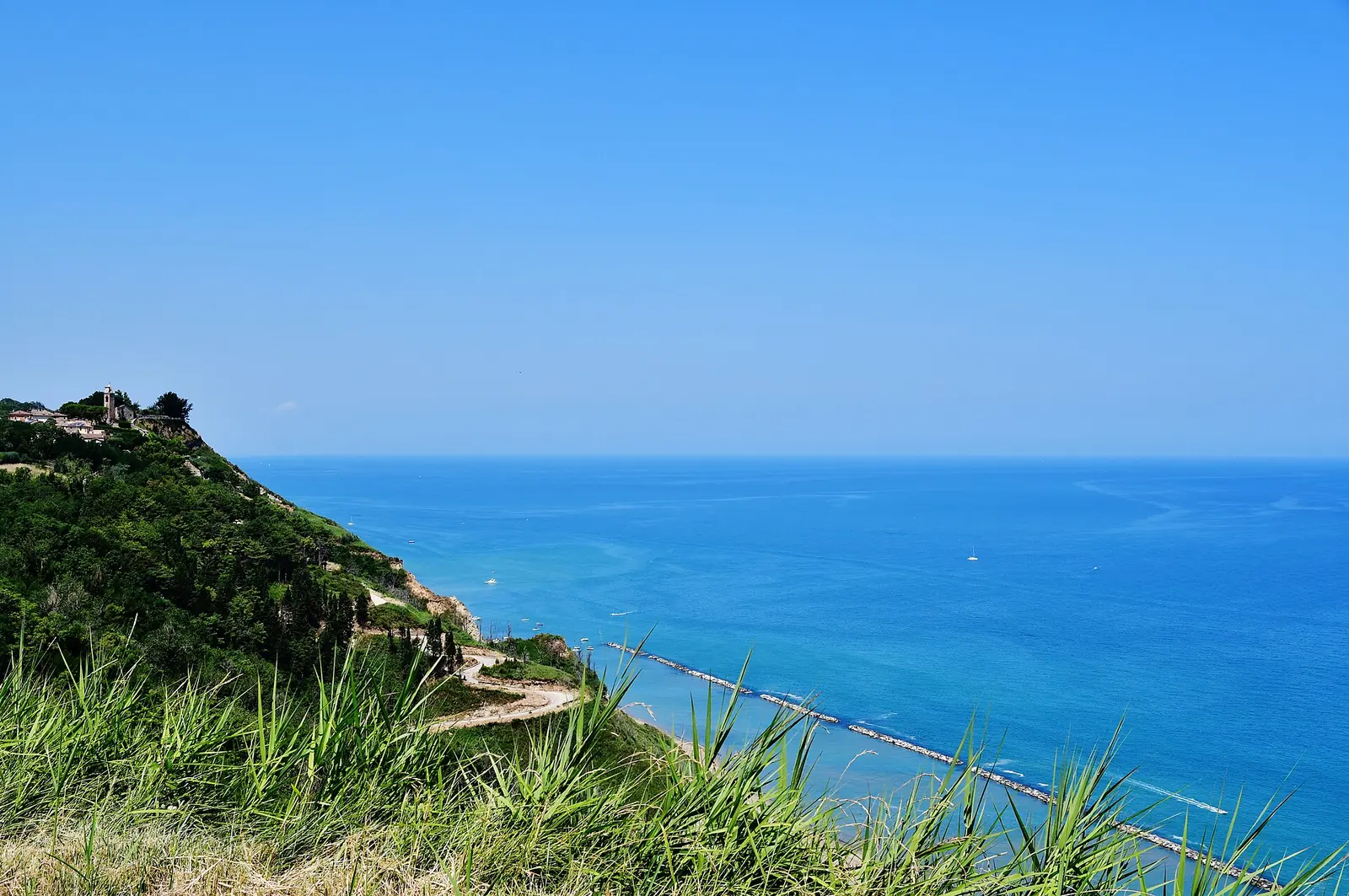
At the southern end, behind Gabicce Mare, Parco naturale regionale del Monte San Bartolo was established in 1994: about 1,600 hectares between Gabicce and Pesaro, with 12 kilometres of cliff coast, largely active cliffs. Ente Parco's 2026 map lists eighteen paths; among them, Sentiero San Bartolo runs from Gabicce Mare to Pesaro over 19 kilometres. The park contains four villages: Gabicce Monte, Casteldimezzo, Fiorenzuola di Focara and Santa Marina Alta.
In the hinterland, protected areas follow the rivers: the Marecchia, from Santa Giustina to the Novafeltria boundary, is a 2,486-hectare Natura 2000 site, while the Conca has been a protected landscape since 2011. In Valconca, at Gemmano, the Onferno reserve contains a 700-metre cave, of which 350 can be visited with a guide, and the region's most important bat colony.
Resort by resort
North of Rimini
From Cervia, the most typical excursion is the salt pan, while in town two signposted routes start at Torre San Michele; by bicycle, it is possible to reach Sant'Apollinare in Classe and Ravenna, which is 19 minutes away by train and has a separate guide, a day in Ravenna from Cervia. Details are in excursions from Cervia. Milano Marittima has its historic pinewood, Canalino with fishing huts, seafront with dunes and bunkers, and a park itinerary starting from town towards Ravenna's pinewoods: these are covered in excursions from Milano Marittima.
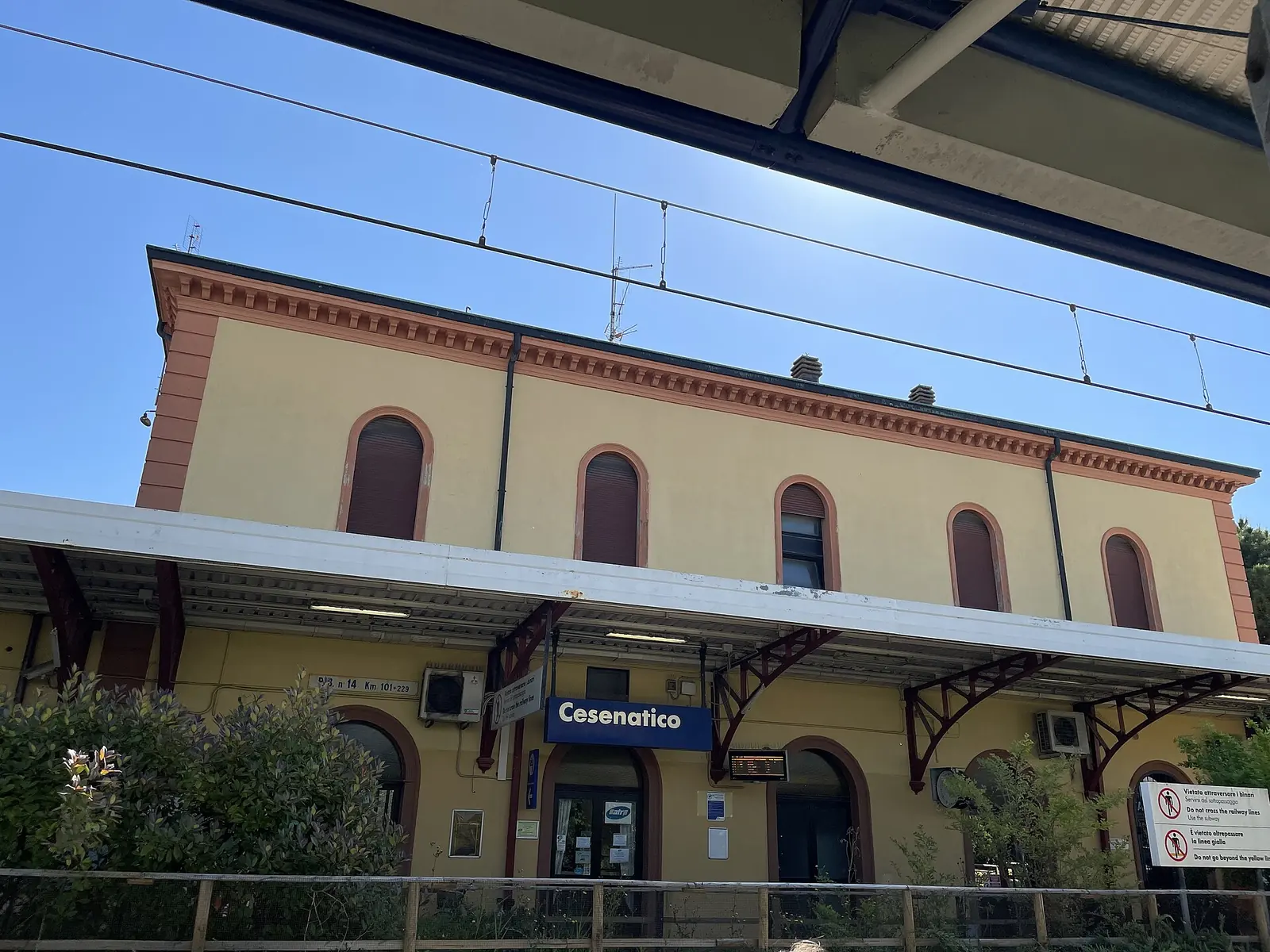
Cesenatico has a municipal map with eight cycle routes, from the Rubicone mouth to Nove Colli, and the canal harbour with the museum's historic boats; Cesena is 40 minutes away by bus, as explained in excursions from Cesenatico. From Bellaria Igea Marina, the Uso leads to Villa Torlonia, linked to Cavallina storna, and in summer the Torre Saracena and Casa Rossa museums can be visited in the evening: all in excursions from Bellaria Igea Marina.
Rimini and Riccione
From Rimini, in addition to the Marecchia, there is the circular path on Covignano hill, and in summer, according to the Comune portal, motorboats depart from beach jetties. San Marino is 55 minutes away by scheduled bus and Santarcangelo di Romagna 9 minutes by train; from Santarcangelo, Start Romagna route 166 climbs towards Castello di Montebello, associated with the Azzurrina legend. All this is in excursions from Rimini. From Riccione, a walk climbs from the harbour to Rio Melo parks and Riccione Paese, Metromare reaches Rimini in 23 minutes, and buses climb into Valconca and to Onferno: covered in excursions from Riccione.
South towards Marche
Misano Adriatico has three routes marked by the Comune, the EcoVie, along the sea, along the Conca and through the hills to Misano Monte, described in excursions from Misano Adriatico. From Cattolica, Gradara is 14 minutes away by bus, San Giovanni in Marignano just over ten, and in summer sailing boats head towards San Bartolo: these are excursions from Cattolica. Gabicce Mare is the gateway to San Bartolo, with the public tourist train climbing to Gabicce Monte and Gradara during the 2026 season from Easter to 20 September, as described in excursions from Gabicce Mare. Local fortresses, from San Leo to Gradara, are on the Romagna castles page.
Without a car
Two railway lines serve the coast. North of Rimini, the Rimini-Ravenna line stops at Viserba, Torre Pedrera, Igea Marina, Bellaria, Gatteo a Mare, Cesenatico, Cervia-Milano Marittima, Lido di Classe and Classe; to the south, the Bologna-Ancona line stops at Rimini Miramare, Riccione, Misano Adriatico and Cattolica-San Giovanni-Gabicce, and inland at Santarcangelo and Cesena. Bicycles can be taken on many regional trains, with some restrictions. These are journey times for common excursions without a car.
| Destination | Starting point | Transport | Time |
|---|---|---|---|
| Ravenna | Cervia | regional train | 19 minutes |
| Ravenna | Cesenatico | regional train | 25 minutes |
| Ravenna | Rimini | regional train | about an hour |
| Pesaro | Cattolica | regional train | 11 minutes |
| Santarcangelo di Romagna | Rimini | regional train | 9 minutes |
| Rimini | Riccione | Metromare | 23 minutes |
| San Marino | Rimini, station | scheduled bus | 55 minutes |
| Cesena | Cesenatico | bus | 40 minutes |
| Gradara | Cattolica | bus | 14 minutes |
From mid-September 2026 to 5 June 2027, Start Romagna and Adriabus buses follow the winter timetable: many hinterland routes have few services, especially on Sundays and public holidays, and summer services, from tourist trains to shuttles, stop in September. For a hinterland bus excursion, the last return departure time matters most.
Sources: Regione Emilia-Romagna, regional cycle route network and Ciclovia Adriatica news; Comune di Riccione, Lungomare del Sole works; Ente Parco del Monte San Bartolo, park pages and 2026 path map; Comune di Cervia and Ente Parchi Delta del Po, salt pan and pinewoods; resort Comuni, route maps and excursion pages; RFI; Trenitalia, 2026 Emilia-Romagna regional timetable; Start Romagna and Adriabus, winter 2026-2027 timetables and Metromare. Accessed between 25 September and 10 October 2026.