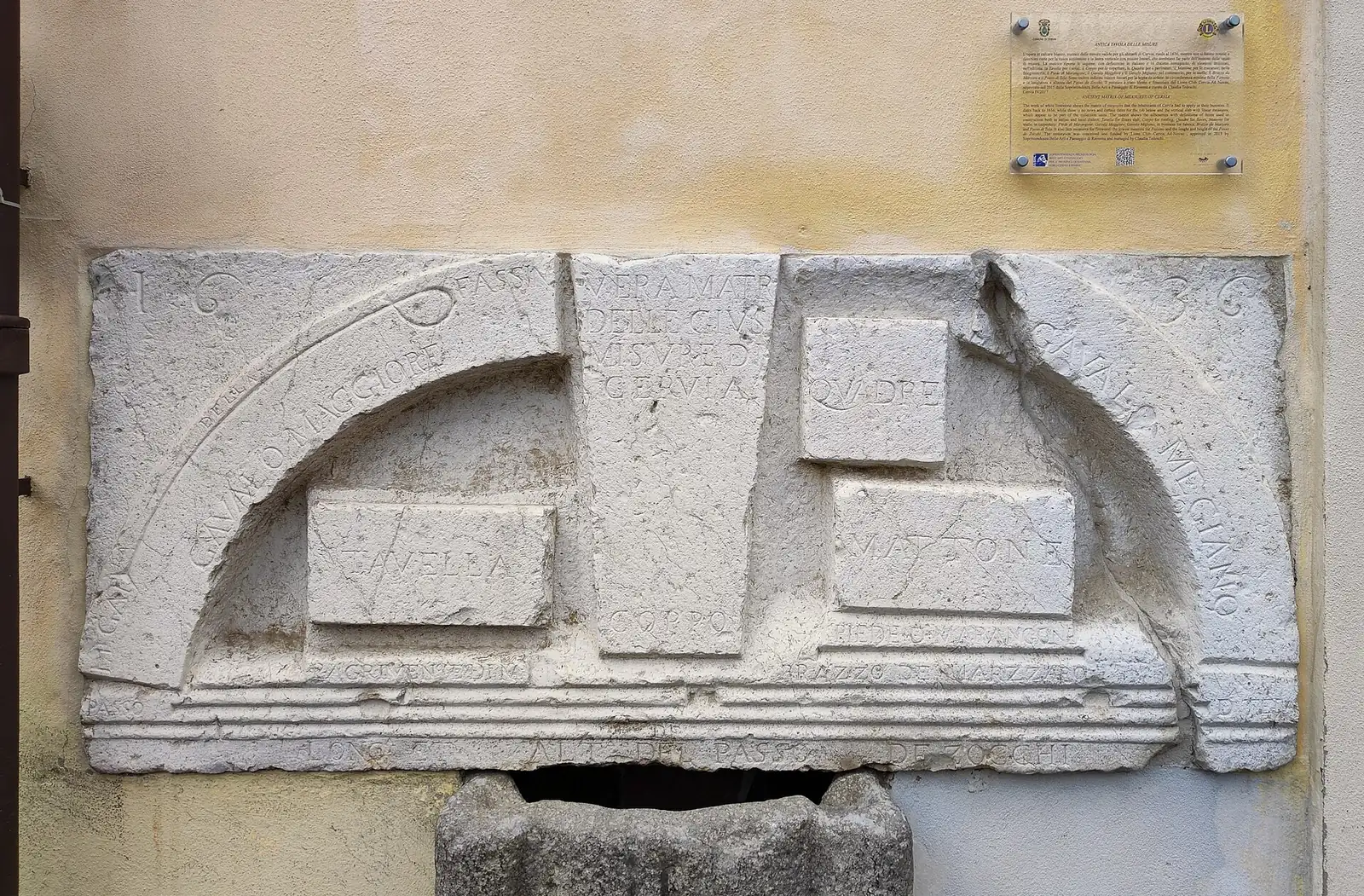
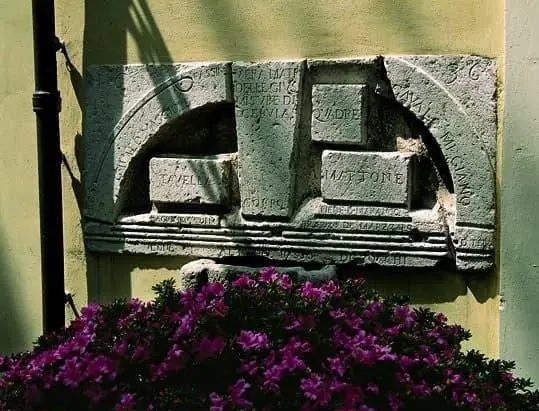
Cervia's Pietra delle misure is the stone measurement table of 1636 preserved in Piazza Carlo Pisacane, also known as Piazza delle Erbe. Its carvings indicated the measurements residents and outsiders had to use in trade. It can be seen outdoors during a walk through the historic centre.
The carved measurements
The monolith comes from Cervia Vecchia, the settlement in the salt pan before the new town was built. An inscription at the top identifies it as the standard for Cervia's measurements: a shared reference for trade.
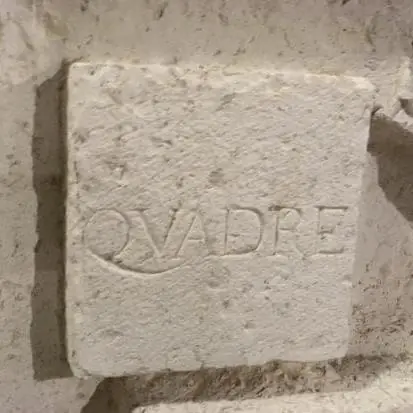
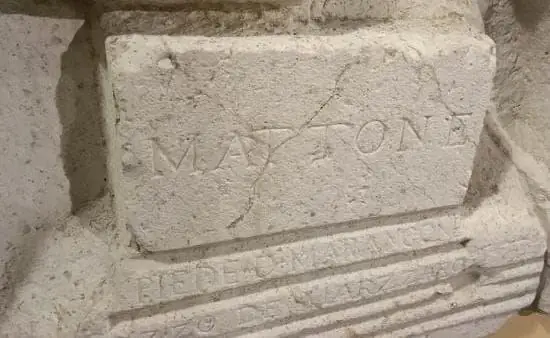
Readable units include Passo, used for fabrics, and Quadrè, relating to floor tiles. The names are carved in Italian and the Romagna dialect. Not all the carved measurements have been interpreted.
The trading square
Piazza Pisacane was designed as an internal courtyard of the Palazzo comunale. Instead, it became a space for exchange and trade, giving rise to the name Piazza delle Erbe.
The stone was restored in 2015. The relationship between the town and salt production is explored in the guide to Cervia's salt and salt pans.
Images
Images without credits come from the site's previous version.