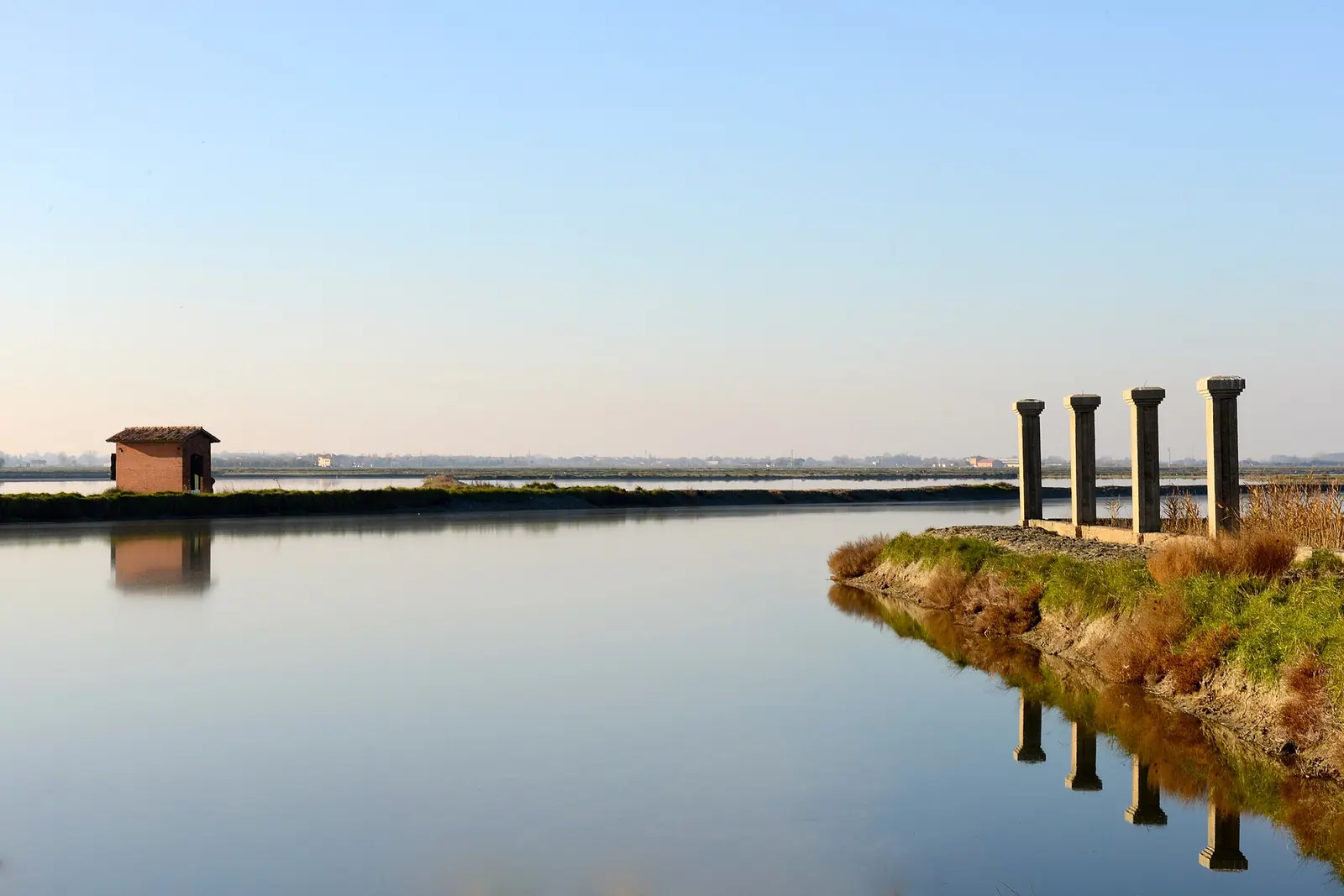
From Cervia, options include a guided salt pan visit, walking among salt-related places in town or cycling through pinewoods and countryside. Classe and Ravenna offer a day devoted to mosaics, with a train journey or a longer cycle route. The salt pan is entered only on Centro Visite tours; the other routes can be followed independently.
The salt pan with guides
Centro Visite at 61 Via Bova is the reference point for entering the salt pan with authorised staff. Options change with the calendar and include walks, cycle rides and electric boat trips. Visits require booking.
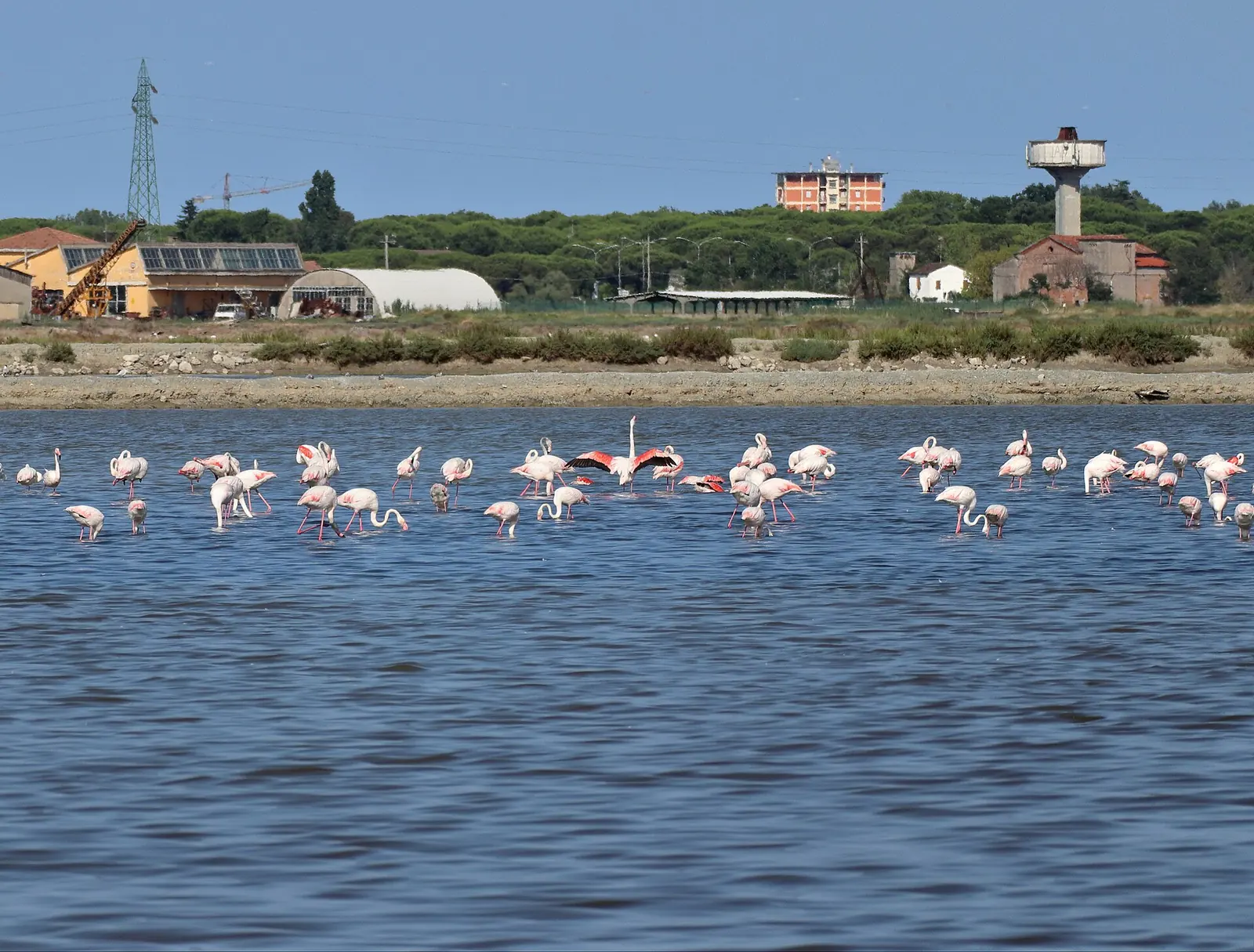
The boat trip along the salt route lasts about an hour and a half: the canal section is followed by a walk along embankments beside the basins. Booking is compulsory. It is a warm-season activity: in 2026, departures were daily from 1 July to 13 September and at weekends until 24 October.
The boat, with wooden benches, carries about twenty people through shallow canals around the salt pan; accessibility needs are arranged with Centro Visite. Waterbirds, including flamingos, live in the basins, with numbers varying by season.
Salina Camillone preserves manual salt harvesting, distinct from mechanised harvesting in the rest of the complex. The Cervia salt and salt pans page explores history and production.
CerviaSale and CerviaMare on foot
Both signposted routes start at Torre San Michele. CerviaSale links places in the town founded in the late seventeenth century after the settlement moved from the salt pan towards the sea. It crosses the Quadrilatero, Piazza Pisacane and Piazza Garibaldi, passing salt workers' houses and warehouses on the canal.
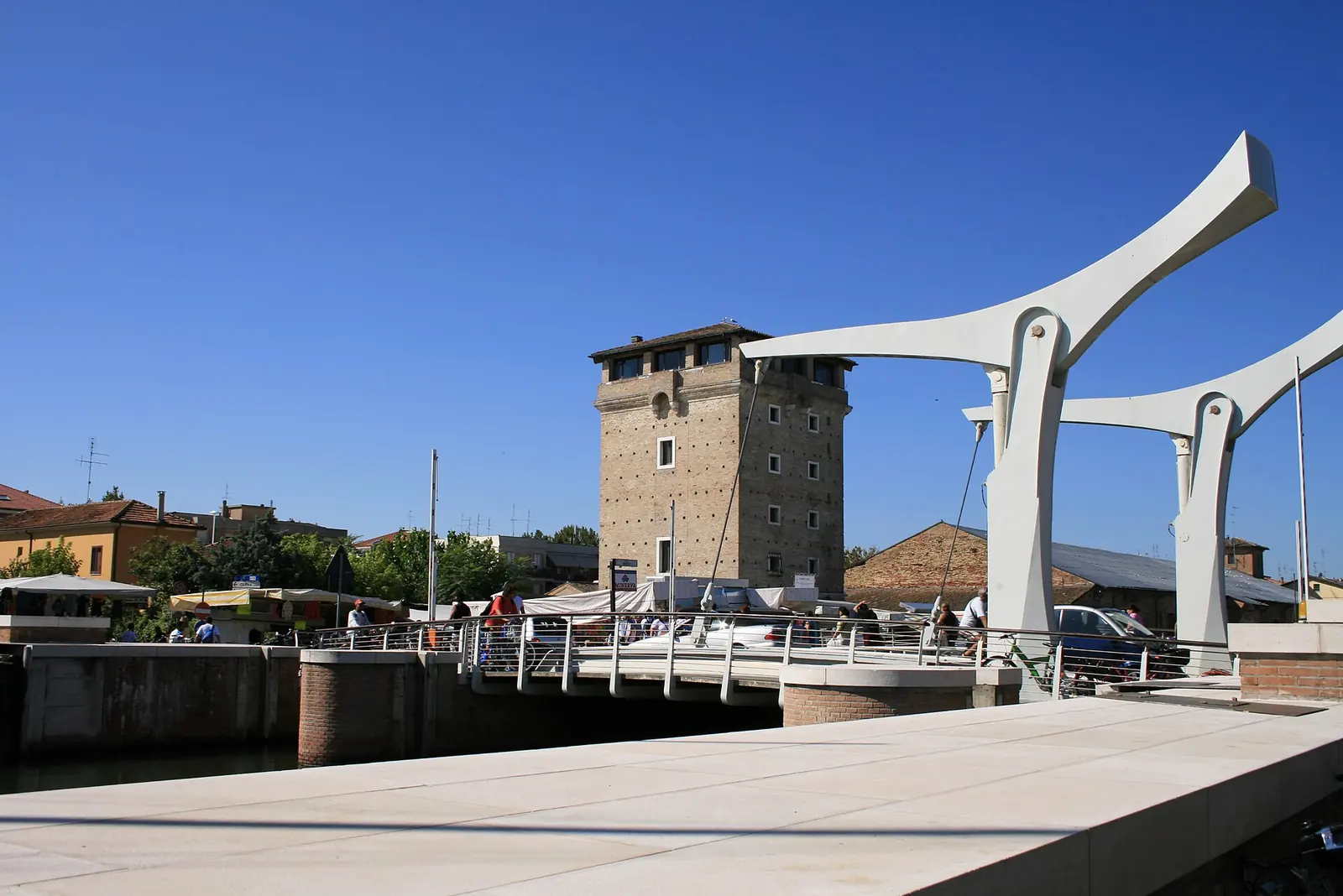
Pietra delle misure tells the story of trading rules in the square; Magazzini del Sale makes visible the harbour's role in storing and transporting the product. MUSA, Museo del Sale completes the walk with an indoor visit.
CerviaMare follows Borgo Marina, the lighthouse and harbour towards the coast, continuing towards Pinarella. It explores the connection between the canal, maritime activities and seaside development. Stops can be divided among several walks.
Cycle itineraries
The Comune publishes itineraries with GPX tracks, varying in length and surface.
| Itinerary | Published length | Excursion theme |
|---|---|---|
| Cervia Blu | 18 km | Salt-related places and the town |
| Cervia Verde | 24 km | Milano Marittima and Pinarella pinewoods |
| Cervia Storica | 31 km | Countryside, Castiglione and Pisignano |
| Cervia-Classe | 40 km, return trip | Pinewoods, wetlands and basilica |
These are flat routes with dirt and gravel road sections: a suitable bicycle and total distance matter more than elevation gain.
Pinarella, Tagliata and hinterland woodland
The Pinarella and Tagliata pinewood extends between the settlements and beach, with access along Viale Italia. A state nature reserve since 1977, it offers short stretches in green surroundings with no need to plan an excursion as far as Ravenna. Routes in the historic pinewood north of the harbour are covered in excursions from Milano Marittima.
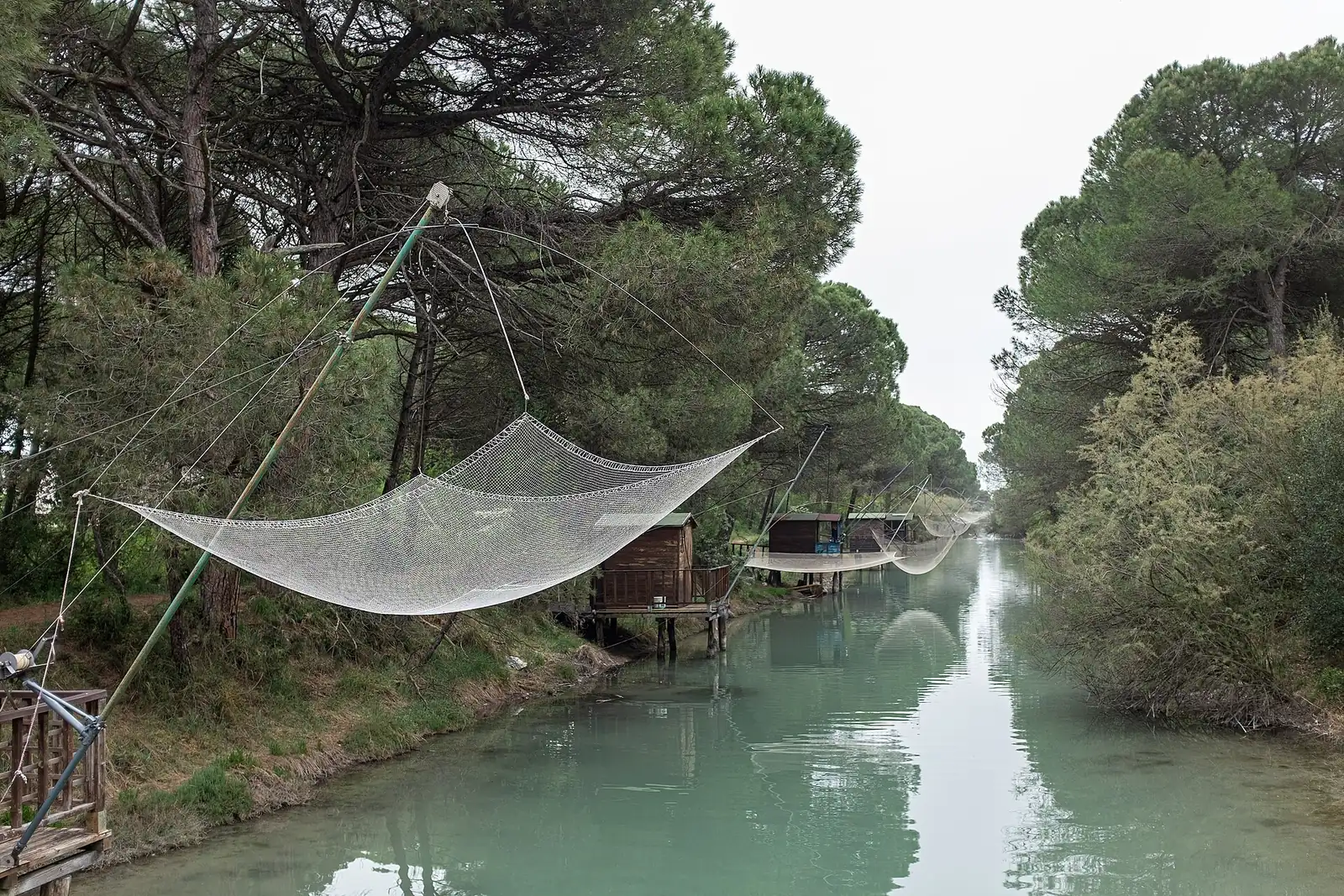
In the hinterland, Bosco del Duca d'Altemps, between Castiglione di Cervia and Savio, follows a drainage canal and preserves large pedunculate oaks. Parco fluviale di Cannuzzo is a reference point for routes along the Savio. A woodland visit combines well with a countryside cycle outing.
Classe and Ravenna: nature and mosaics
The cycle route from Cervia to Sant'Apollinare in Classe measures 40 kilometres in total. It crosses pinewoods and the Ortazzo and Ortazzino area, alternating tarmac, cycle paths, trails and dirt tracks. A basilica visit must be added to cycling time.
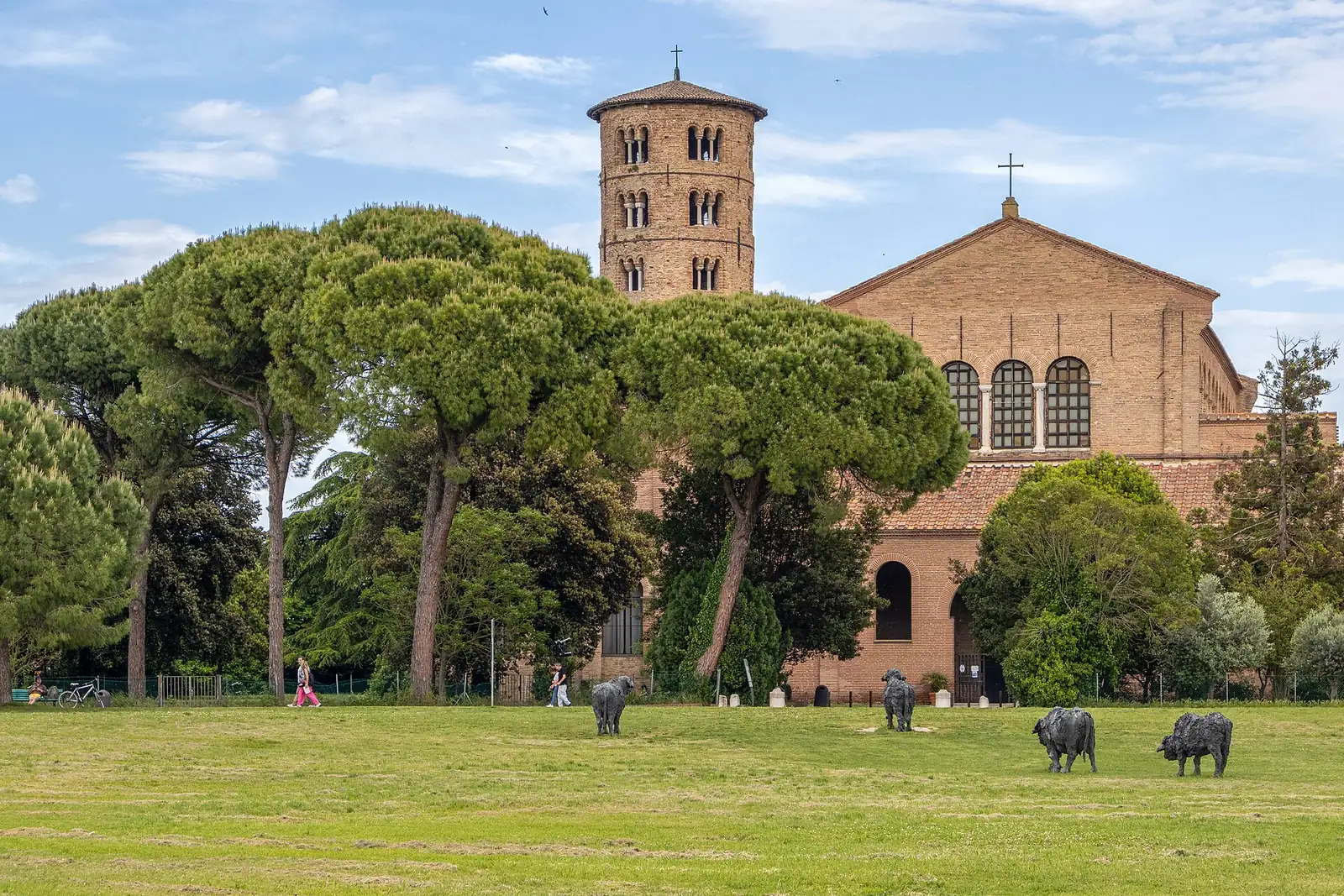
To shorten the route, the return can be made by train from Classe station on a service carrying bicycles.
Ravenna offers a day devoted to early Christian and Byzantine monuments recognised by UNESCO in 1996. Classe is a stop outside central Ravenna: visiting the basilica and then the city mosaics requires a further journey. The Ravenna from Cervia page helps choose monuments to combine.
The 58-kilometre Cervia Oro route reaches Ravenna through natural areas; a day ending in Ravenna can be followed by a train return.
Trains and buses for planning the return
The reference station is Cervia-Milano Marittima, on the Rimini-Ravenna line; travel with a bicycle requires a service carrying bicycles.
By bus, route 176 links Cervia and Milano Marittima with Ravenna; route 201 connects Lido di Classe, Milano Marittima, the Terme, Cervia station, Pinarella and Tagliata. Start Romagna timetables distinguish periods, weekdays, Sundays and public holidays.
The Cervia guide collects visits and areas to stay; the Riviera Romagnola itineraries allow nature excursions to be compared with trips to villages.