Photo by Lamberto Zannotti, Wikimedia Commons, CC BY-SA 3.0
Valmarecchia, Rimini hinterland
Castello di Montebello and the legend of Azzurrina
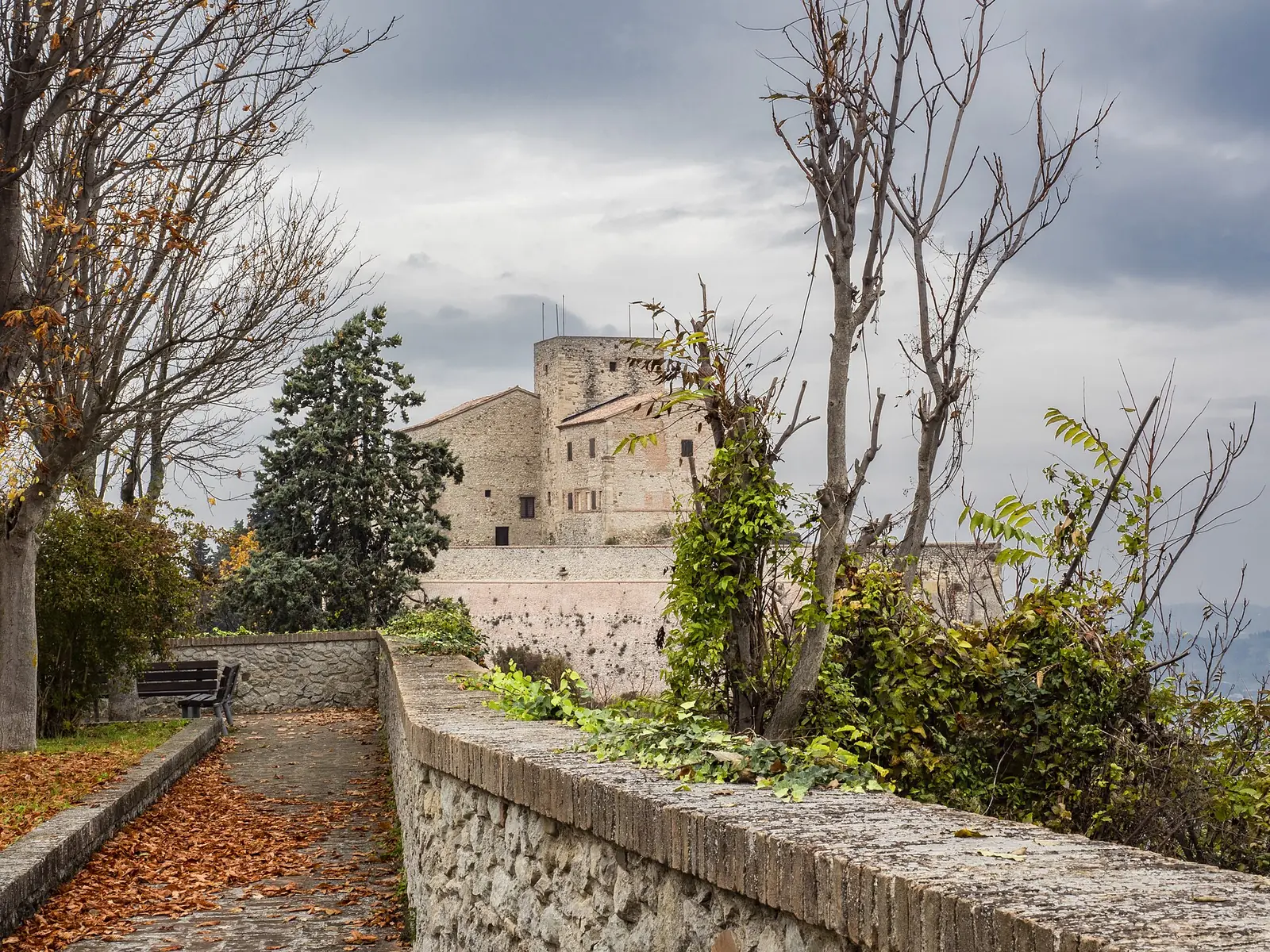
Castello di Azzurrina is Castello di Montebello, in Comune di Poggio Torriana, Valmarecchia: from the A14 Rimini Nord exit, it is 14 kilometres to Torriana and another 3 to Montebello. Daytime visits require no booking; night visits require booking and are open from age 11. Its name comes from the legend of Azzurrina, the girl said to have disappeared in the castle in 1375: the Regione Emilia-Romagna heritage catalogue identifies it as a legendary tale.
The legend of Azzurrina
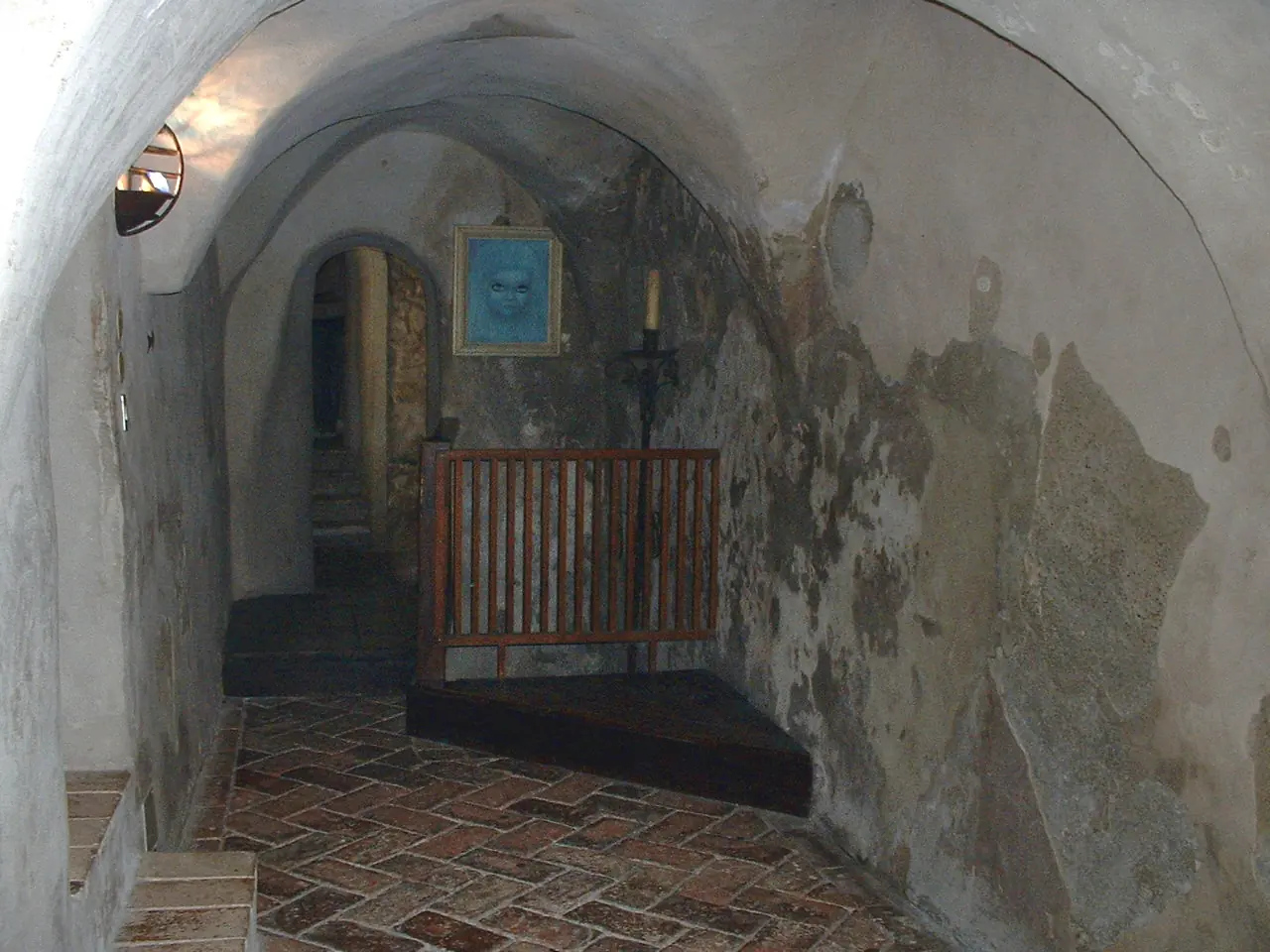
According to the story, on 21 June 1375, Guendalina, the feudal lord's daughter, vanished in the fortress and was never found. The operator explains the nickname as follows: the girl had albinism, her parents dyed her hair to conceal it, and the dye turned blue against the white. A castle corridor now bears her name.
The castle has been open as a museum since 1989. The following year, on 21 June 1990, sound technicians made the first recordings in the rooms: those sounds, attributed by the legend to the girl's voice, are played during the visit. The story and recordings are the same by day and night; daytime visits also include all the castle rooms and historic furniture.
The history of the castle
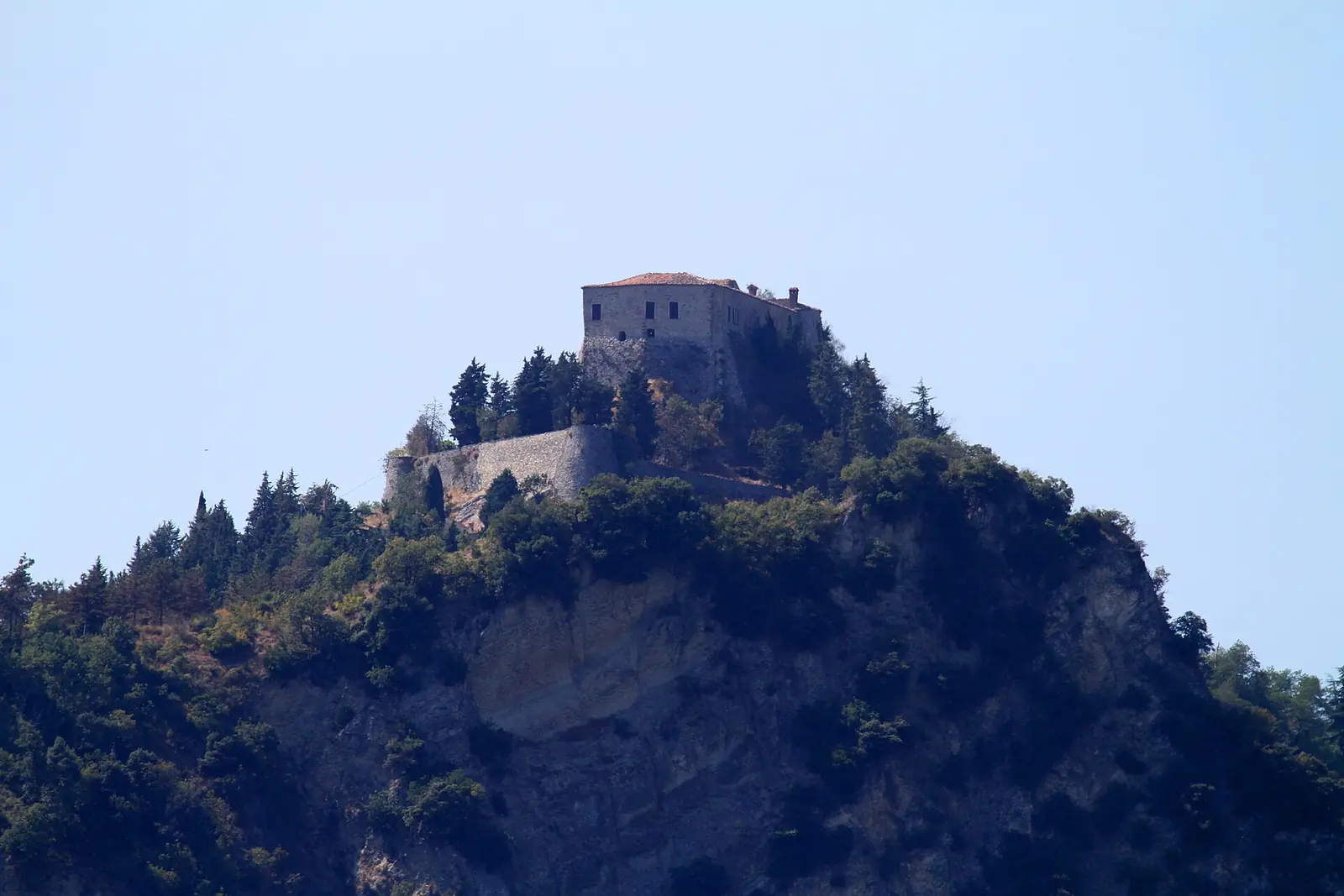
Castrum Montisbelli, the “mountain of war”, probably originated around the year 1000 on a rocky spur overlooking the Marecchia and Uso valleys at 436 metres. In 1186, Ugo Maltalone sold it to the Malatesta alongside Scorticata, present-day Torriana. In 1462, Sigismondo Pandolfo Malatesta was defeated by the pope's army led by Federico da Montefeltro; two years later, the pope granted Montebello as a fief to Gianfrancesco Guidi di Bagno.
The castle has belonged to the Guidi di Bagno ever since; they transformed it from fortress to residence and still own it. Damaged by Second World War bombing, it was restored between 1968 and 1973 and again in 1989 before opening to the public.
The rooms display furniture from the 14th to 17th centuries, furnishings, paintings and the Guidi family tree; military structures survive alongside the residence, including the armoury, altered in the 18th century.
Visiting days and arrangements
| Period | Daytime visit | Night visit |
|---|---|---|
| 14 September to 31 May | Saturdays, Sundays and public holidays, without booking (closed on 25 December) | Saturday evening, on reservation only |
| June | daily except Mondays | Fridays, Saturdays and Sundays, on reservation |
| July | daily except Mondays | every evening except Mondays, on reservation |
| August | daily | every evening, on reservation |
| 1 to 13 September | daily except Mondays | Fridays, Saturdays and Sundays, on reservation |
Daytime visits suit all ages; children are admitted to night visits from age 11. The castle remains closed in snow. Hours, tickets and bookings are on the Castello di Montebello opening times and prices page.
Getting to Montebello
The castle is at 25 Via Castello di Montebello. By car, the route leaves the A14 at Rimini Nord towards Santarcangelo, follows signs for Torriana and continues to Montebello. The operator warns against following signs for “Castello di Torriana”, which is a different place.
Without a car, the first stage is Santarcangelo di Romagna station, reached by regional train or bus 9 from Rimini station. From there, Start Romagna route 166 climbs towards Torriana and Montebello; for night visits, starting in the evening, the last return service is especially important.
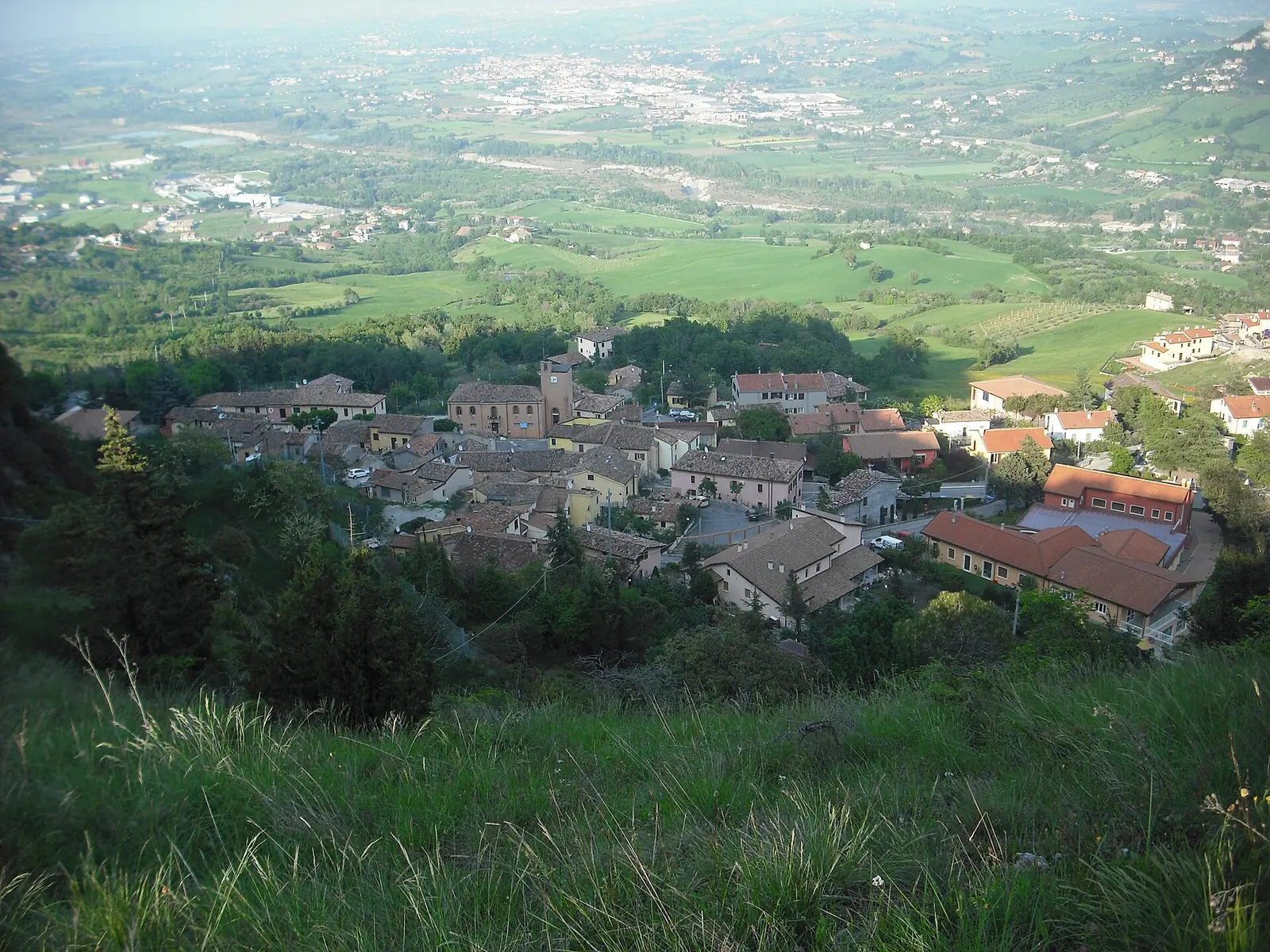
The village of Montebello
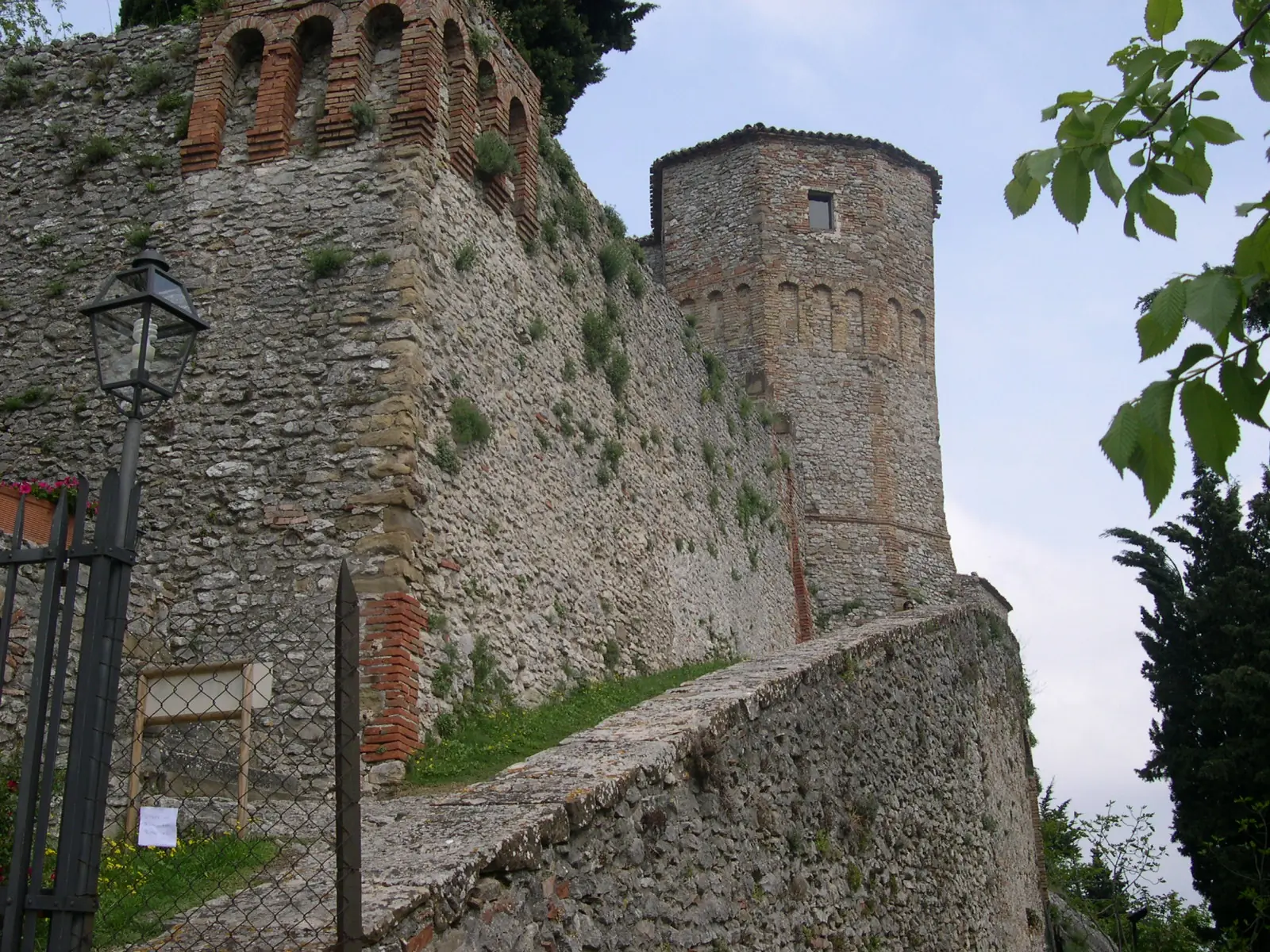
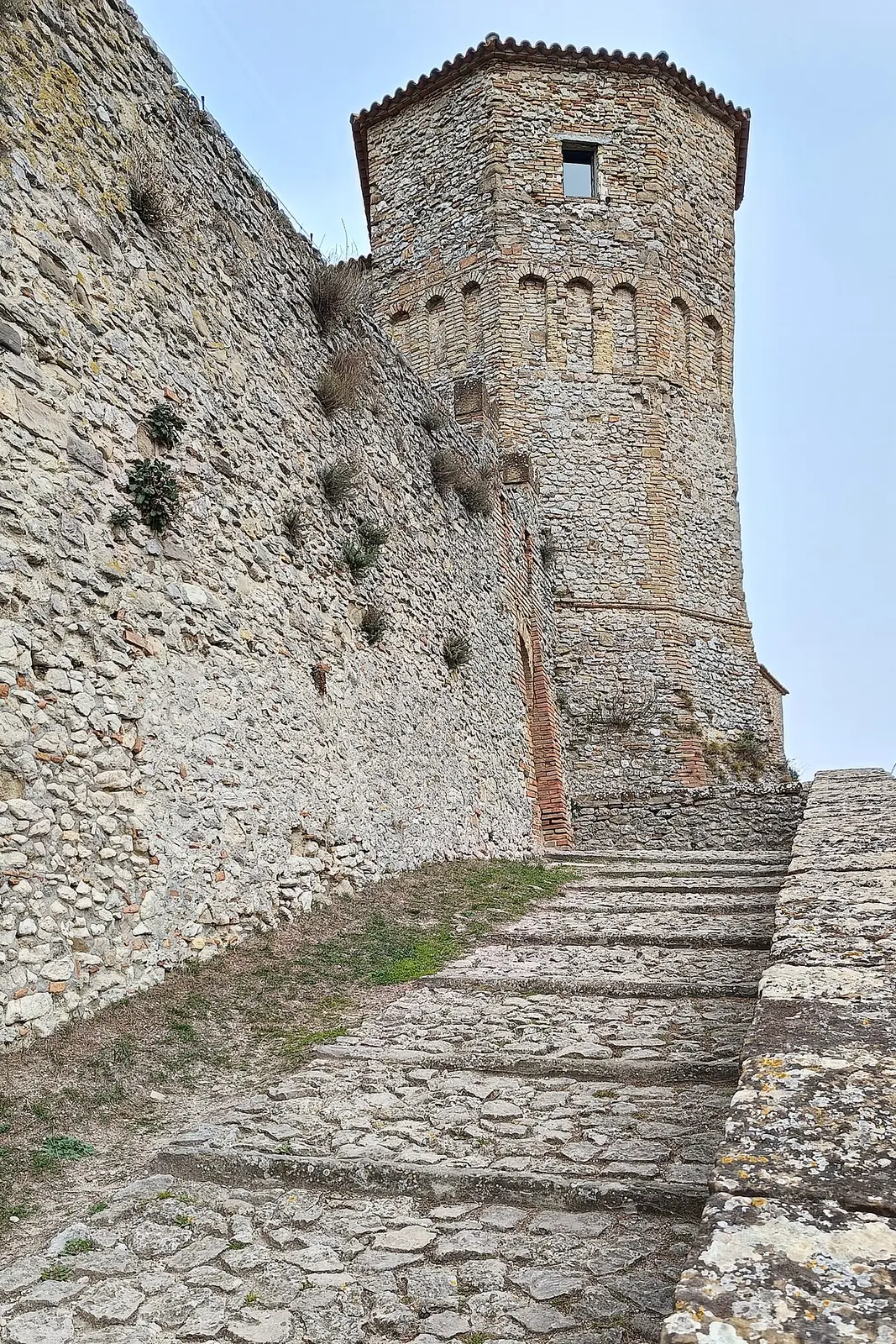
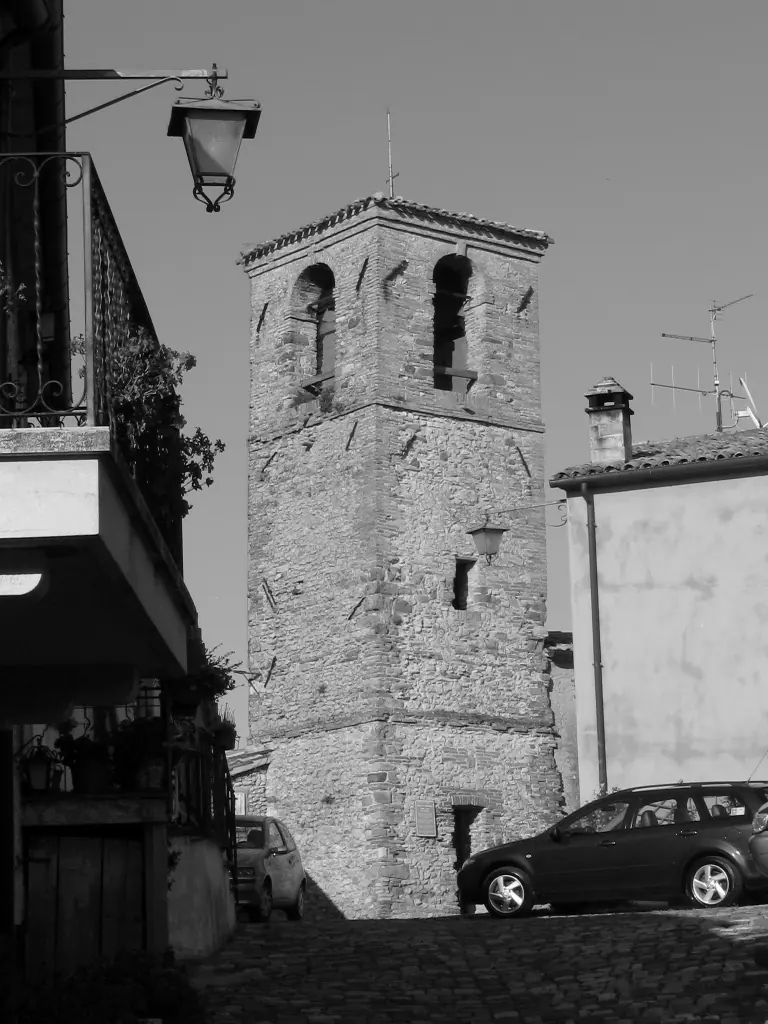
The village clusters around the fortress inside stone walls with two polygonal towers. Entry is through an arched gateway bearing the 16th-century stone coat of arms of the Guidi and Colonna di Zagarolo; inside are a few houses, the church and the castle on the rocky peak.
Other Valmarecchia castles
Montebello combines well with a walk in Santarcangelo di Romagna on the same road, or with Rocca di Verucchio. Further up the valley stands Fortezza di San Leo, the prison where Cagliostro was held; towards the Marche is Rocca di Gradara, traditionally linked to the story of Paolo and Francesca told by Dante. All are described in the Romagna castles guide.
Sources: Castello di Montebello, “Orari e prezzi”, “La storia”, “La leggenda”, “Domande frequenti” and “Contatti” pages; Regione Emilia-Romagna, PatER catalogue, “Castello di Montebello o dei Guidi di Bagno” listing; Start Romagna, route 166; accessed on 10 October 2026.