Photo by Irene Buda, Wikimedia Commons, CC BY-SA 4.0
From the coast to the hinterland
Castles and fortresses in Romagna
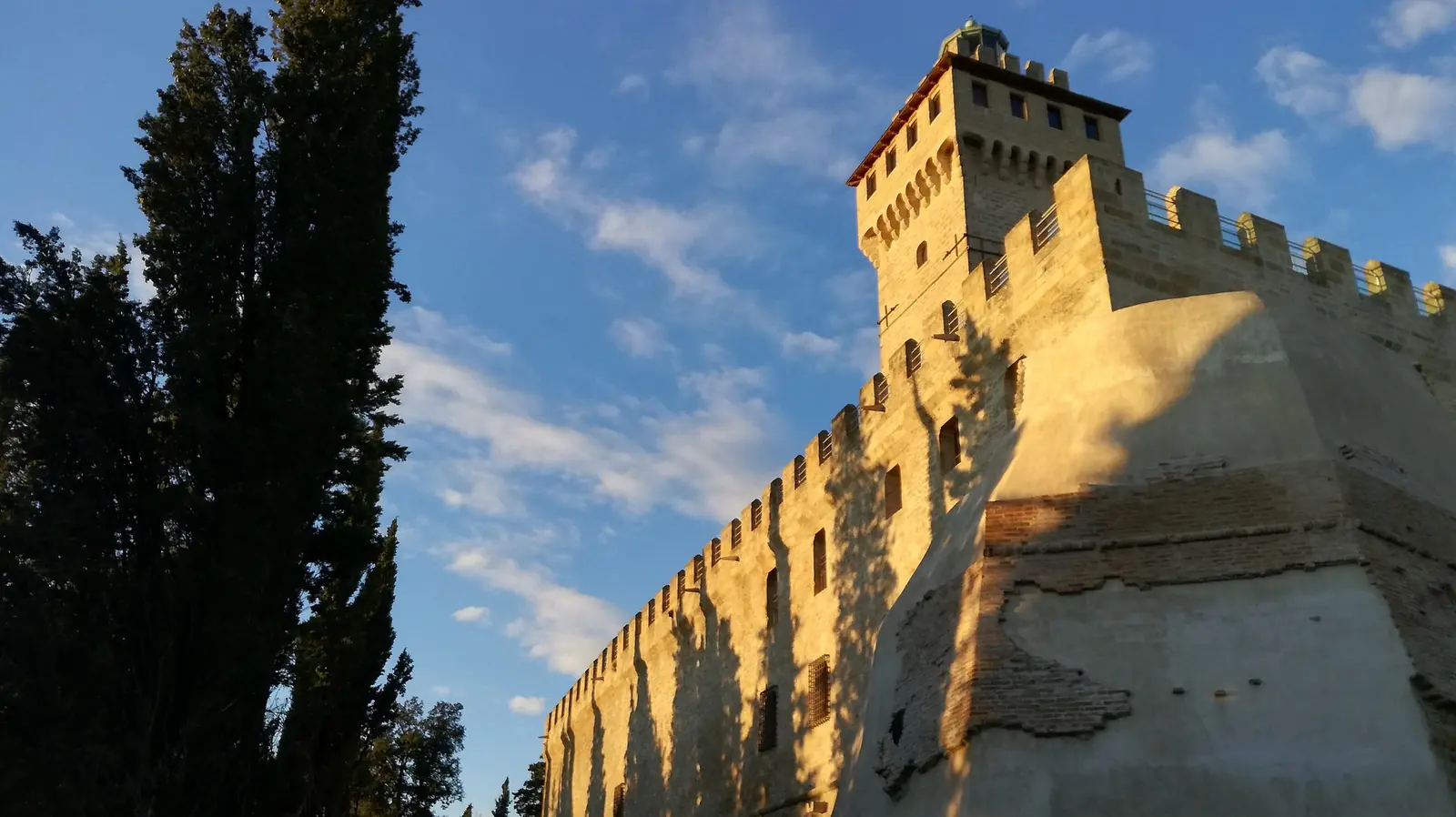
Thirteen castles and fortresses are within a day trip of the Riviera: Castel Sismondo in central Rimini, Valmarecchia fortresses such as San Leo and Verucchio, the fortresses of Montefiore Conca, Cesena and Bertinoro, and Gradara, just across the Marche border. Ten were held for a time by the Malatesta, lords of Rimini from 1295.
The thirteen castles at a glance
Twelve can also be visited inside, almost always as museums or on guided tours. Privately owned Rocca Malatestiana di Santarcangelo can currently only be viewed from outside.
| Castle | What can be visited |
|---|---|
| Castel Sismondo (Rimini) | Fellini Museum rooms; guided castle visit on the first Sunday of the month |
| Fortezza di San Leo | state museum with weapons, furnishings, art gallery and Cagliostro's cell |
| Rocca Malatestiana di Verucchio | the entire fortress, on guided visits |
| Castello di Montebello (Poggio Torriana) | the castle on guided visits, by day and night |
| Rocca Fregoso (Sant'Agata Feltria) | the Rocca delle Fiabe museum |
| Rocca Malatestiana di Santarcangelo | outside only: privately owned and closed to visits |
| Castello Malatestiano di Coriano | gateway, walls and exhibition of finds, with free entry |
| Rocca Malatestiana di Montefiore Conca | Sala dell'Imperatore, excavation finds and a multimedia route |
| Rocca Malatestiana di Cesena | walkways, towers and Museo di Storia dell'Agricoltura, on guided visits |
| Castello Malatestiano di Longiano | Fondazione Tito Balestra art collection |
| Rocca di Bertinoro | Museo Interreligioso |
| Rocca delle Caminate (Meldola) | historical route with audio guide, at weekends |
| Rocca di Gradara (Marche) | state museum in the castle rooms |
In central Rimini
Castel Sismondo
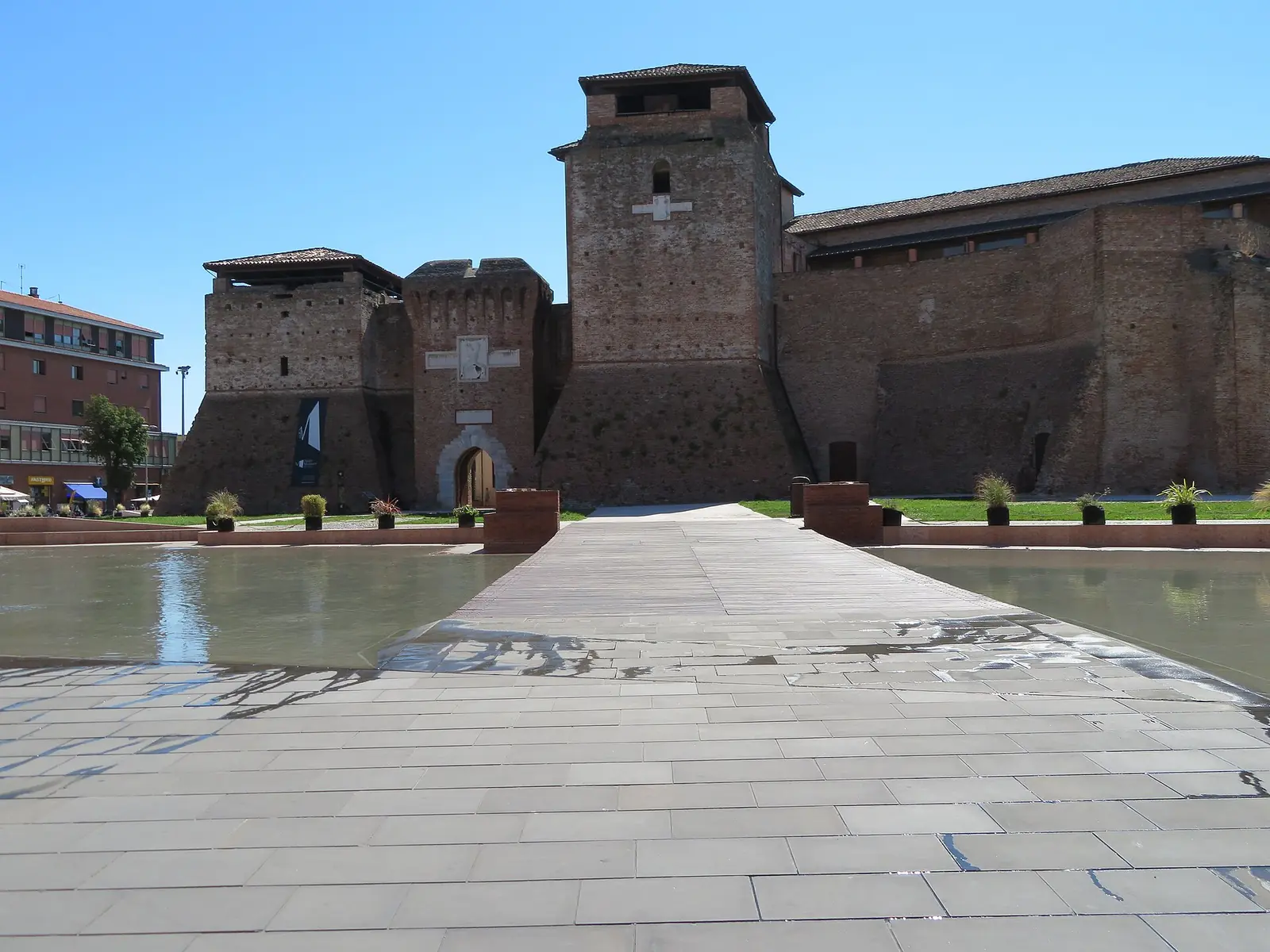
Castel Sismondo stands on Piazza Malatesta, in Rimini's historic centre. Sigismondo Pandolfo Malatesta began construction on 20 March 1437 and consulted Filippo Brunelleschi on its design; Brunelleschi was in Rimini in 1438. From the 17th century, the castle was a papal fortress; it later became a prison, remaining so until 1967.
Since 2021, the castle has been one of the Fellini Museum sites, with the museum occupying its sixteen rooms. In 2026, the museum is open Tuesday to Sunday, morning and afternoon, and closes on non-holiday Mondays; on the first Sunday of the month at 11am, there is also a guided visit devoted to the castle. History and practical information are gathered in the Castel Sismondo listing.
In Valmarecchia
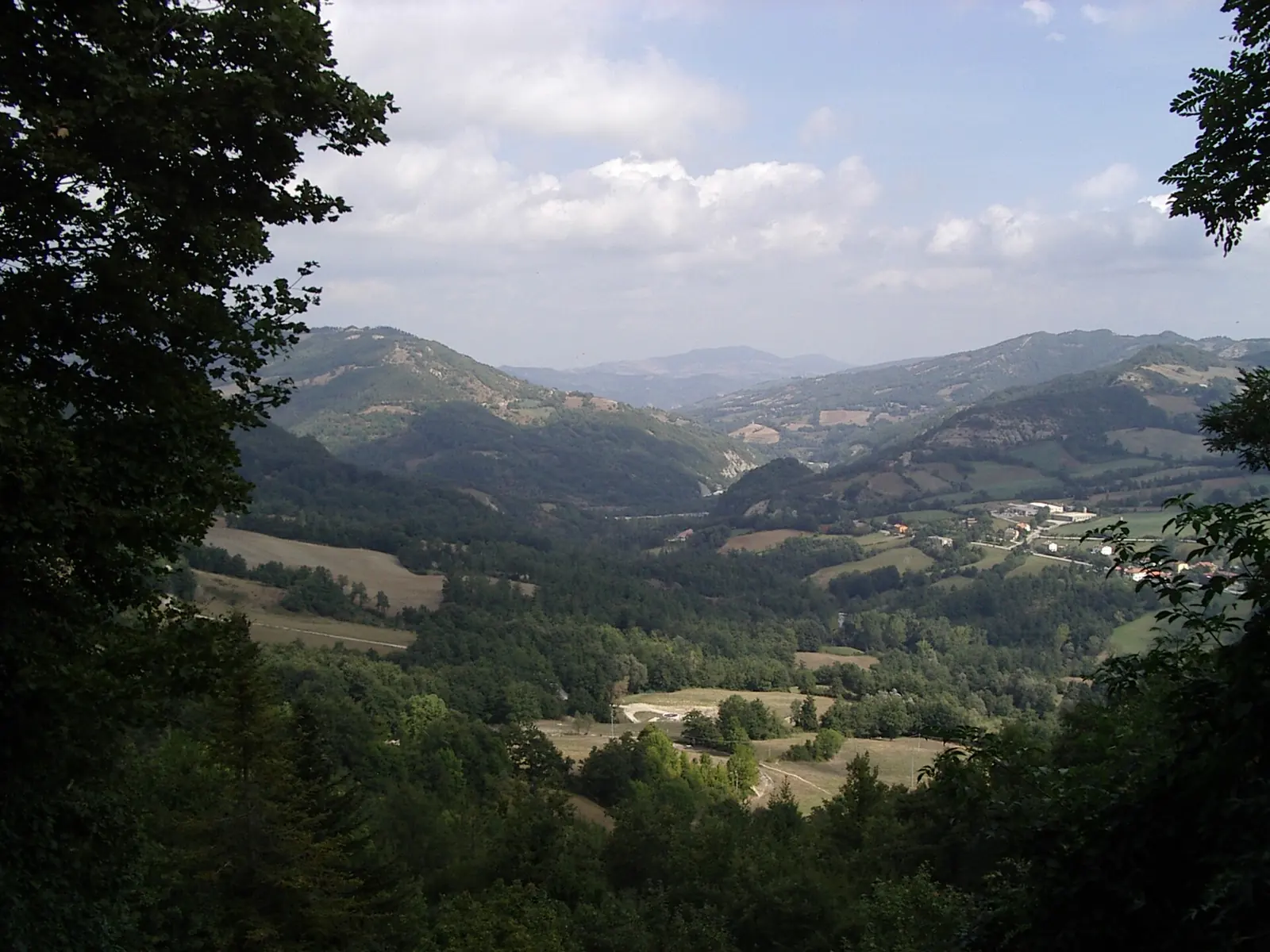
Five of the thirteen castles are in the Marecchia valley, which climbs from Rimini towards Montefeltro. San Leo and Sant'Agata Feltria have been part of Emilia-Romagna only since 2009: previously they were in the province of Pesaro e Urbino.
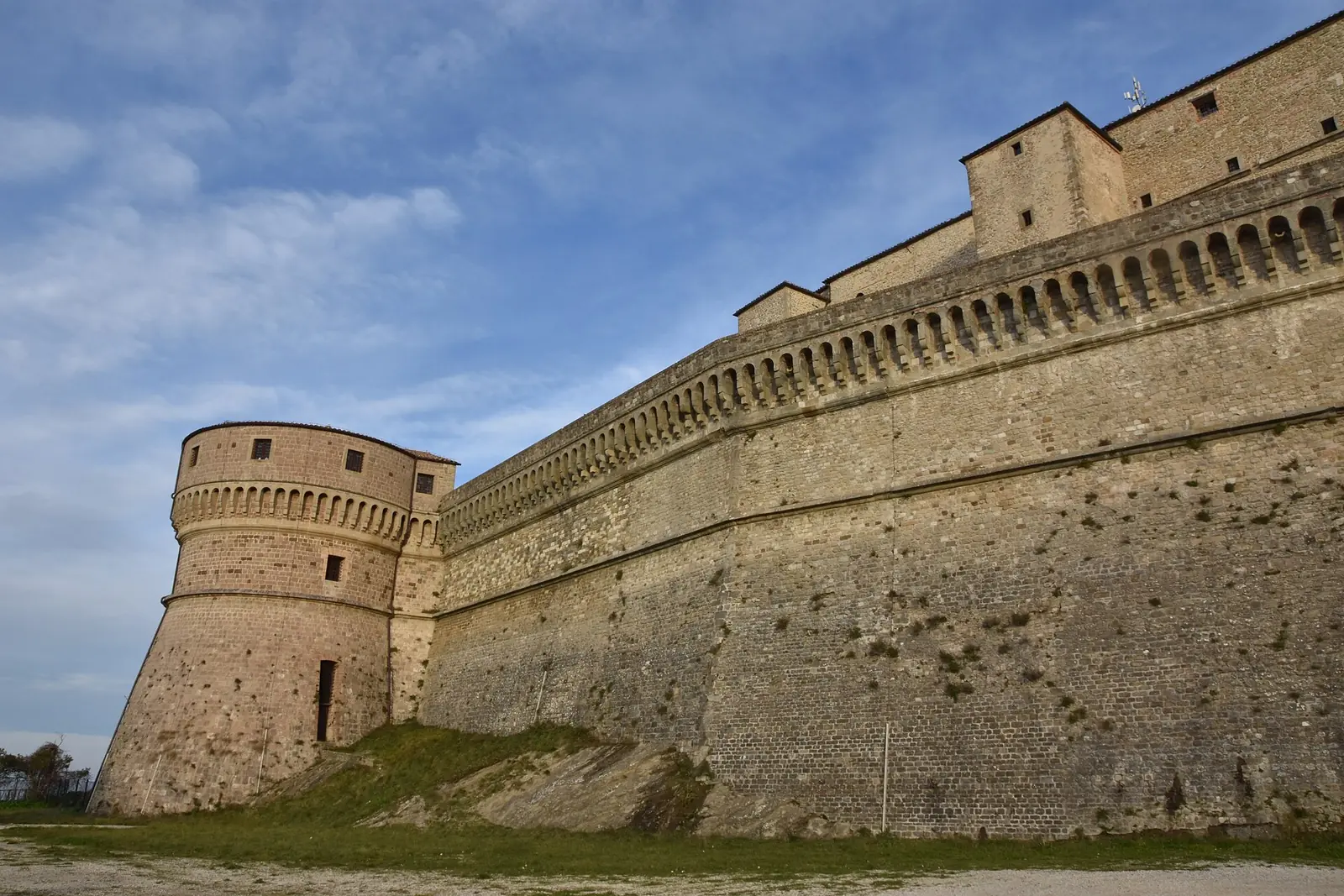
Fortezza di San Leo
Fortezza di San Leo stands on a cliff above the village. In 963, Ottone I captured it after a siege against Berengario II; in 1441, Federico da Montefeltro took it by scaling the rock face, and in the 1470s Francesco di Giorgio Martini rebuilt it. From 1631, it was used as a prison: Cagliostro was held here between 1791 and 1795, and the prison remained in operation until 1906.
Today it is a state museum with weapons, furnishings, an art gallery and Cagliostro's cell.
Rocca Malatestiana di Verucchio
Rocca Malatestiana di Verucchio, known as Rocca del Sasso, already belonged to the Malatesta by the mid-12th century. Malatesta da Verucchio, who became de facto lord of Rimini in 1295, strengthened its defences; Sigismondo Pandolfo Malatesta refurbished it between 1442 and 1449. In 1462, Federico da Montefeltro captured it by following a path cut into the cliff.
The entire fortress can be explored on guided visits. At weekends, a joint ticket combines it with Fortezza di San Leo and the Gradara wall walk.
Castello di Montebello
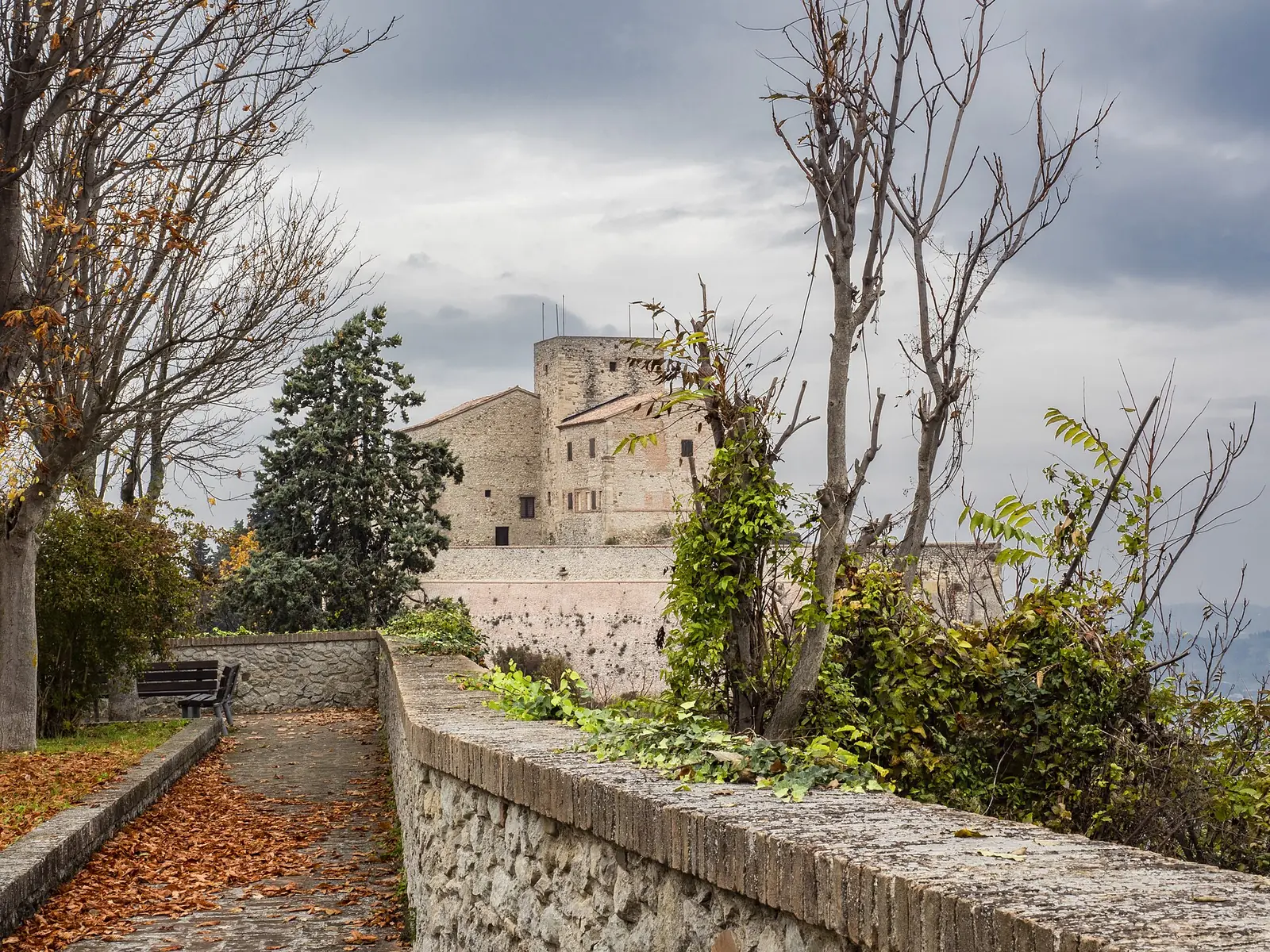
Castello di Montebello overlooks lower Valmarecchia from 436 metres above sea level, in Montebello, Comune di Poggio Torriana. In 1186, Ugo Maltalone sold it to the Malatesta; in 1464, it passed to the Guidi di Bagno, who still own it. Open to the public since 1989, it can only be visited with a guide: daytime visits for all ages, night visits from age 11 and on reservation. Without a car, Santarcangelo can be reached by train or bus, followed by Start Romagna route 166.
Its fame comes from the legend of Azzurrina, the girl said to have disappeared in the castle in 1375: the Regione's cultural heritage catalogue describes it as a legendary tale. Story and visit are covered on the Castello di Azzurrina page.
Rocca Fregoso
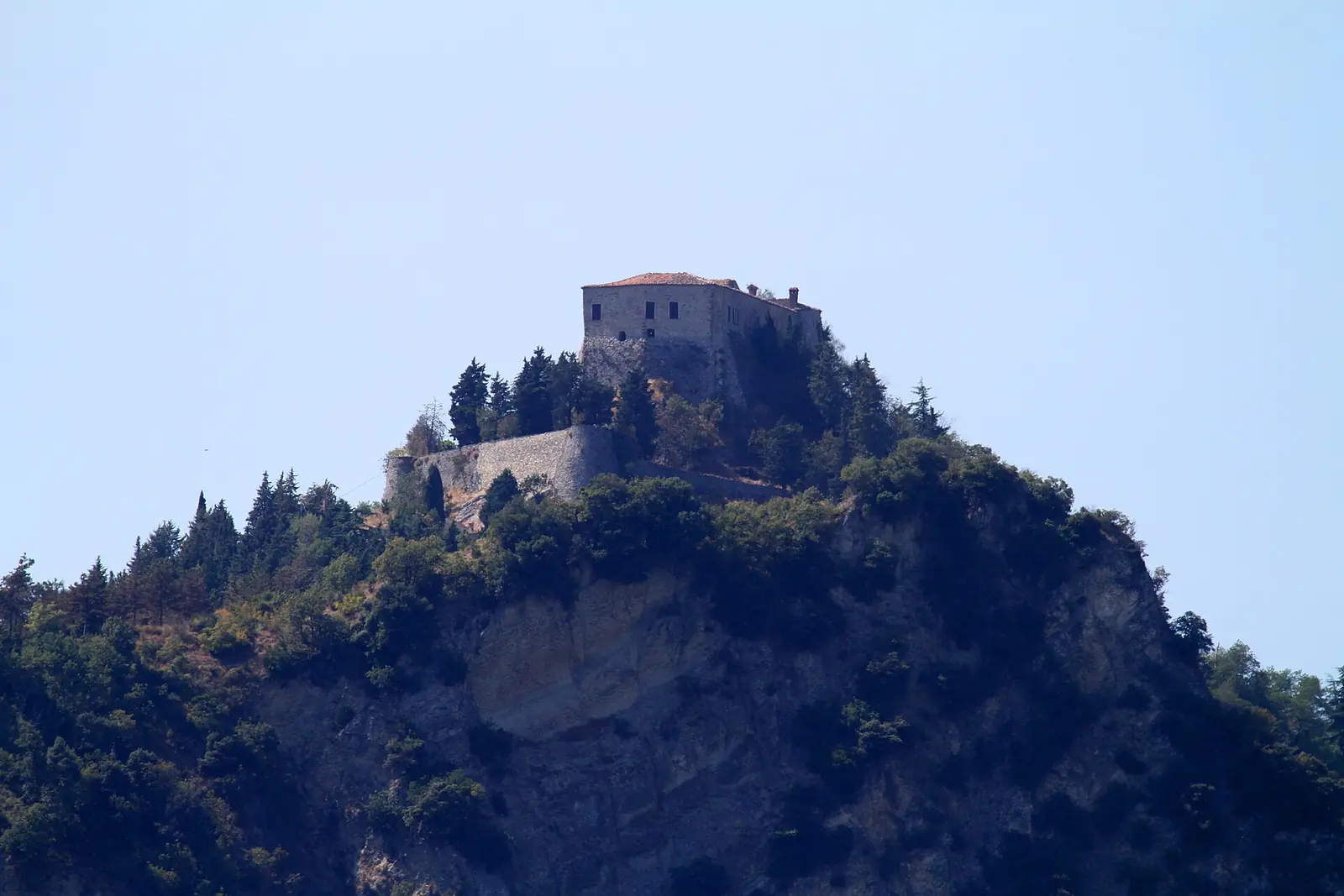
Rocca Fregoso stands in Sant'Agata Feltria, in upper Valmarecchia. It was probably built around the year 1000 by the Cavalca, counts of Bertinoro, and appears in a papal bull of Onorio II from 1125; Francesco di Giorgio Martini refurbished it in the second half of the 15th century. Its name comes from the Fregoso, who acquired it through the marriage of Agostino Fregoso and Gentile Feltria.
Since 1974, it has housed Rocca delle Fiabe, a museum conceived by Antonio Faeti. The fortress belongs to the Comune and is managed by Pro Loco; in 2026, it remained closed from 1 January to 17 March.
Rocca Malatestiana di Santarcangelo
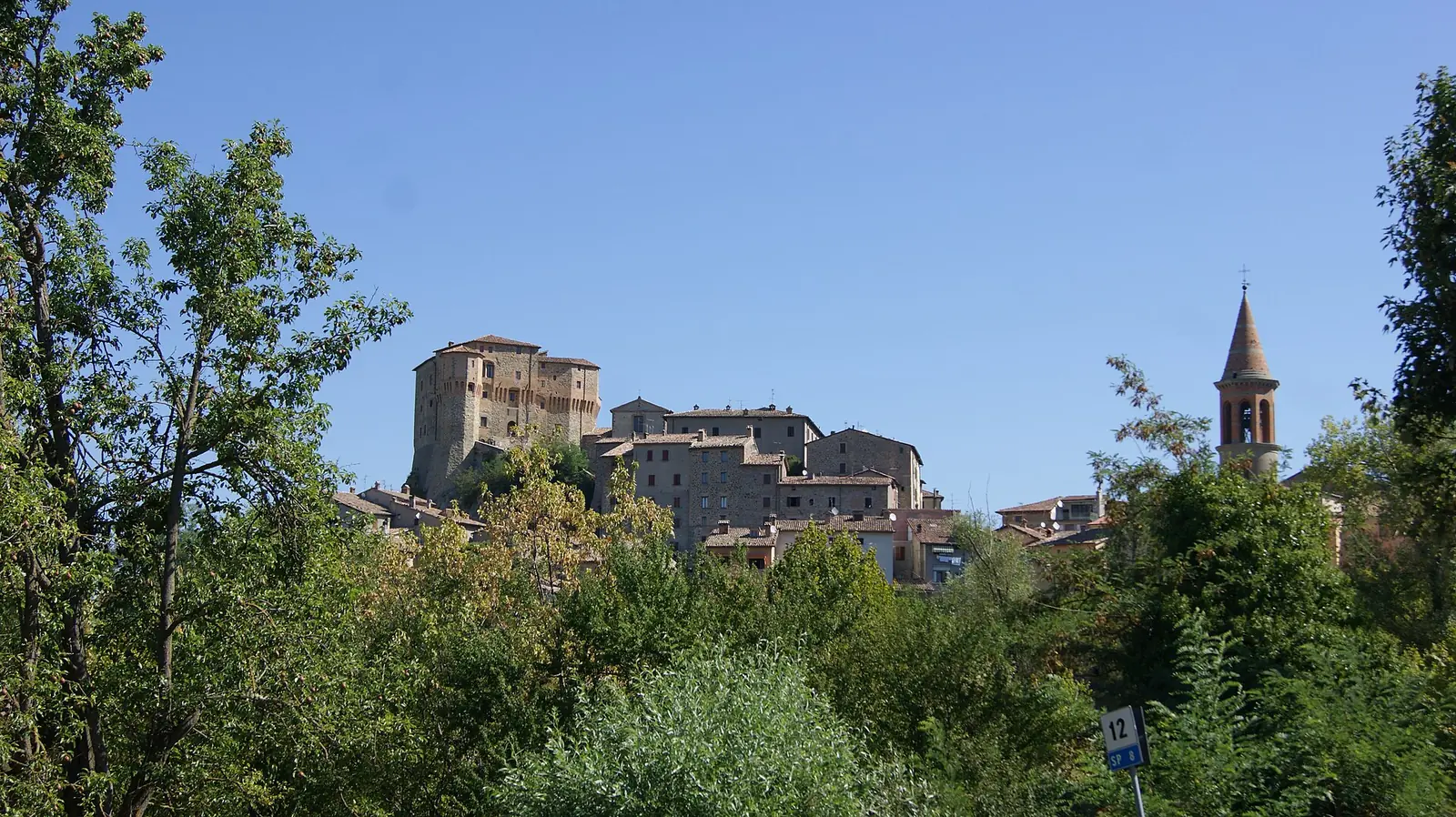
Rocca Malatestiana di Santarcangelo di Romagna was rebuilt in 1386 by Carlo Malatesta; in 1447, Sigismondo Pandolfo Malatesta lowered the keep and added three polygonal towers. The Rasponi counts bought it in 1903, then it passed to the Spalletti and the Colonna di Paliano, the family that owns it today.
It is privately owned and inhabited, and can only be viewed from outside. The rest of the village is described on the visiting Santarcangelo di Romagna page.
Between Rimini and Valconca
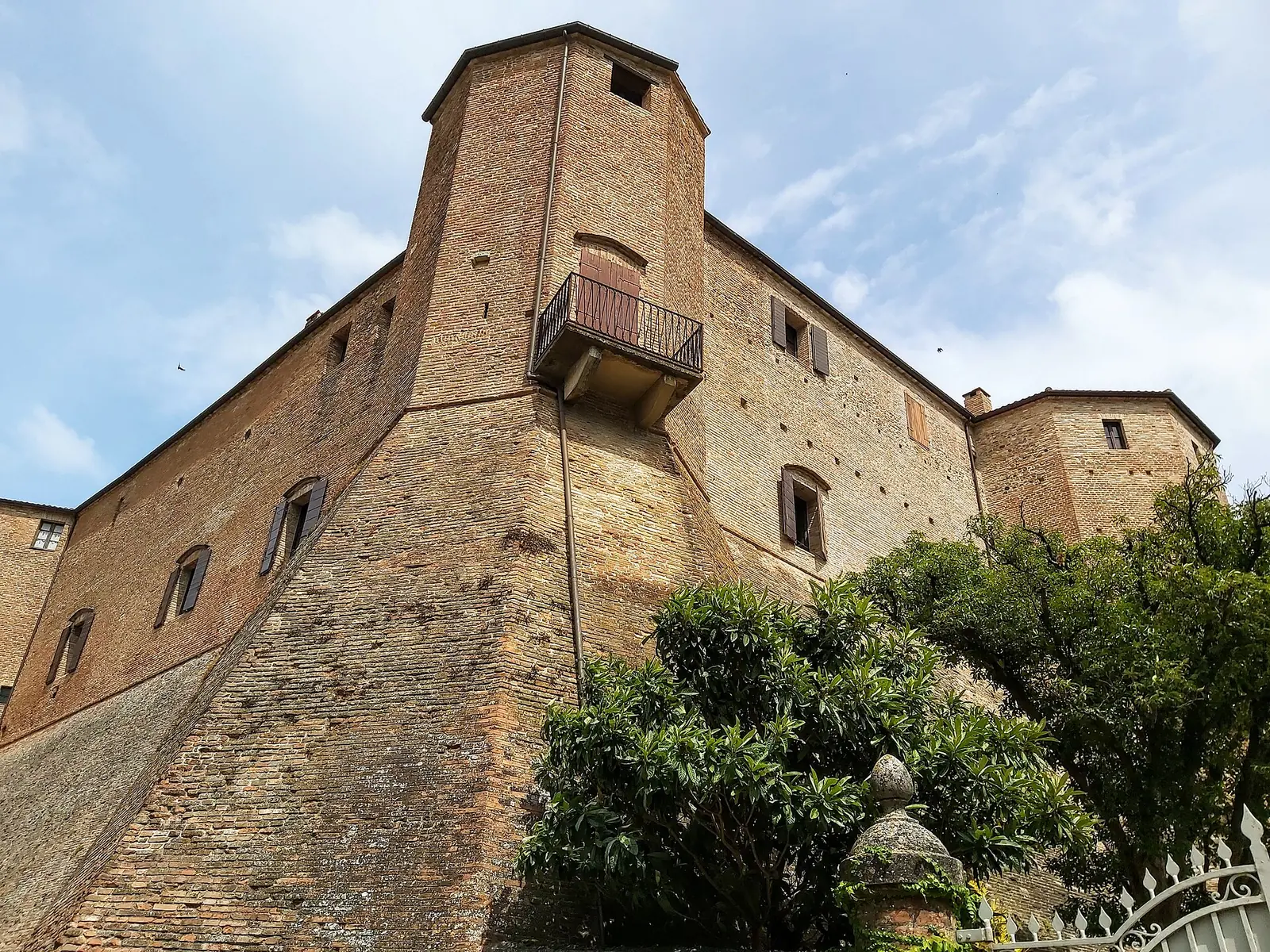
Castello di Coriano and Rocca di Montefiore Conca stand in the hills behind Riccione and Cattolica.
Castello Malatestiano di Coriano
Castello Malatestiano di Coriano stands on a hill at 102 metres, outside the modern village centre. Until 1209, it belonged to the Carpegna, then to Chiesa di Ravenna, which leased it to the Malatesta in 1356. The fortress whose structures survive today dates from the mid-15th century and was enlarged by Roberto Malatesta. From 1528 to 1580, the castle belonged to the Sassatelli of Imola: their coat of arms, set above the gateway, is still the Comune's.
In 1944, during the breakthrough of the Linea Gotica, Coriano was razed to the ground. Following restoration in 1999-2000, visits cover the gateway and tower, parts of the walls and, in a castle house, an exhibition of excavation finds, from pottery to coins. Entry is free.
Rocca Malatestiana di Montefiore Conca
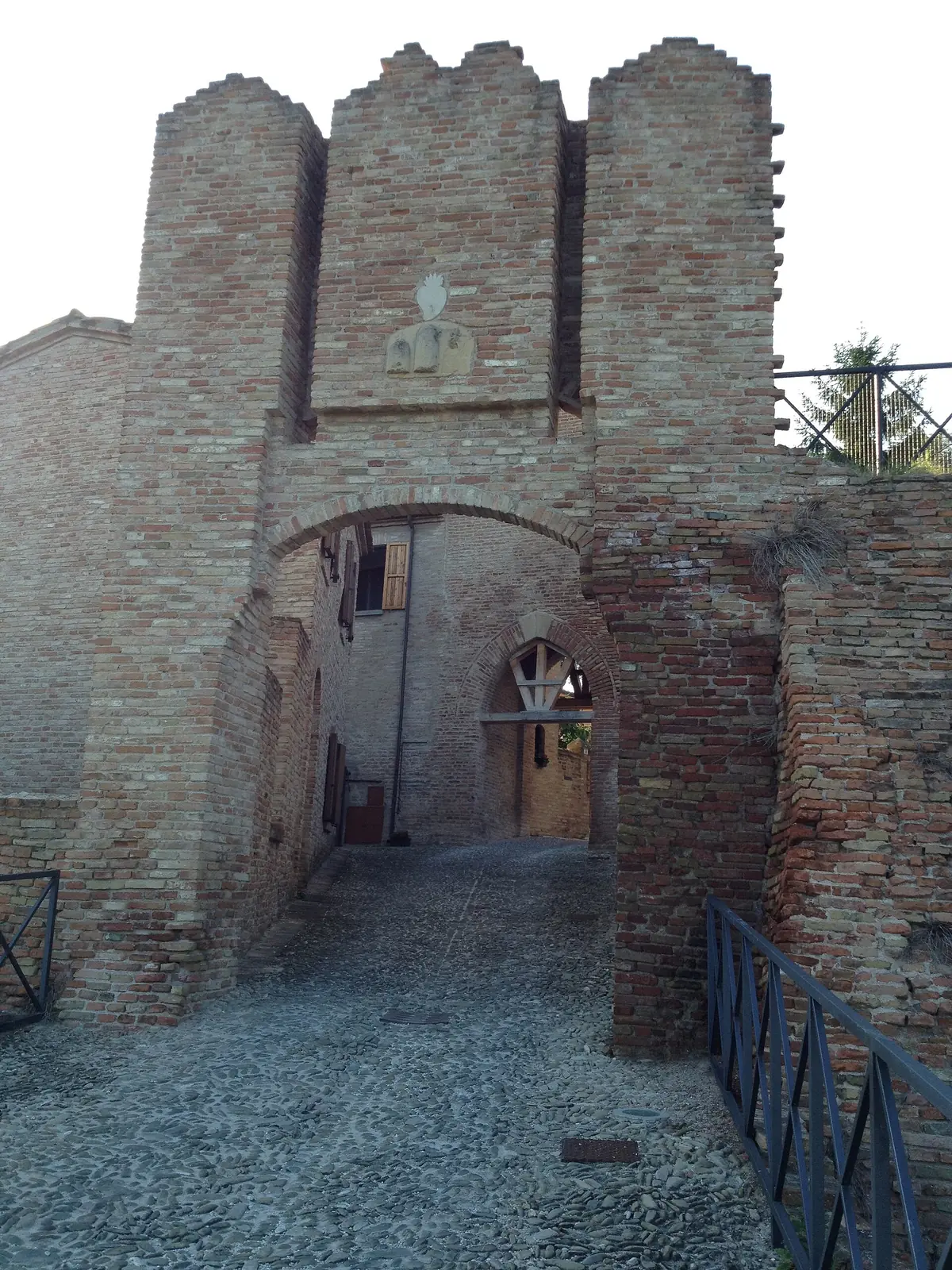
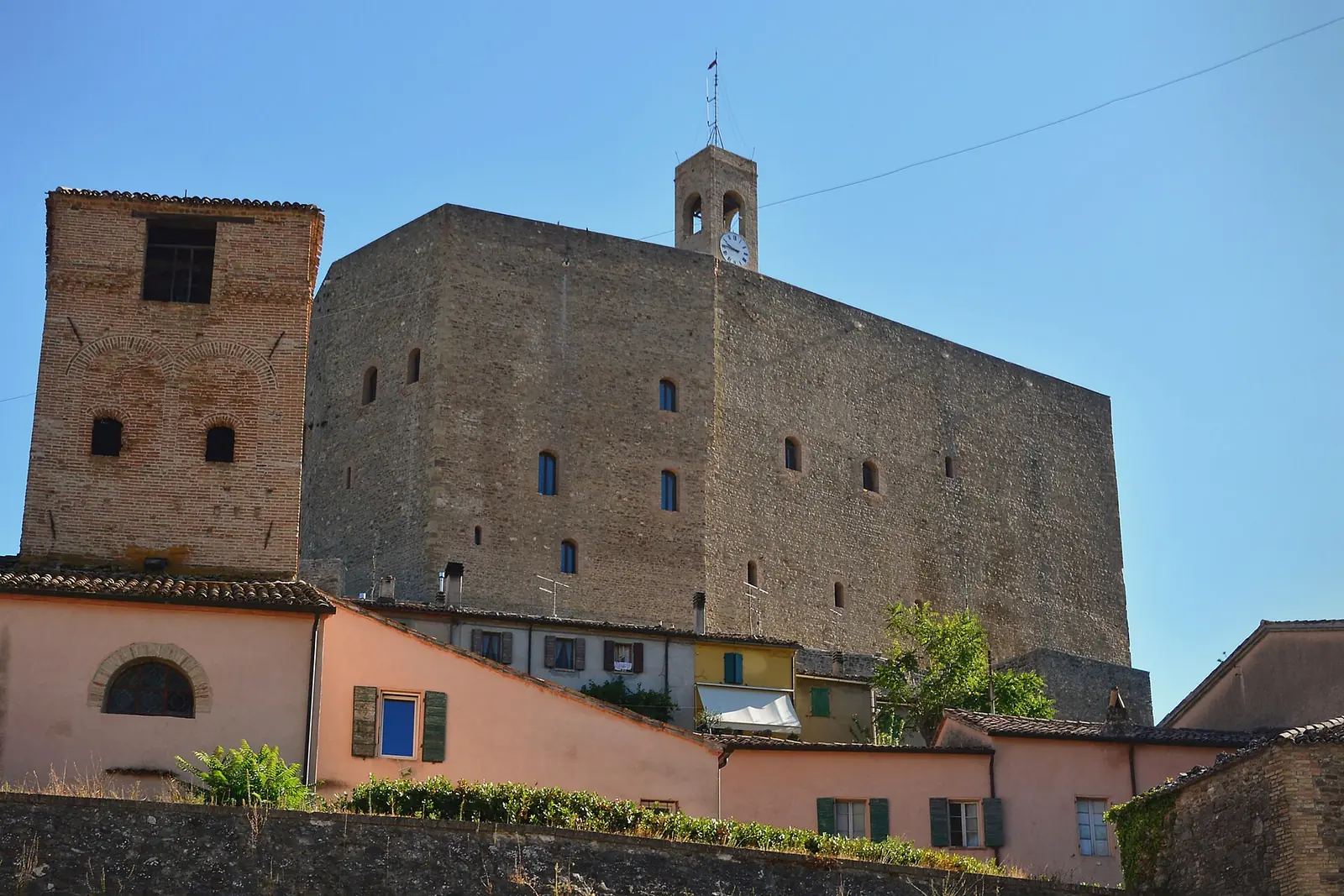
Rocca Malatestiana di Montefiore Conca was already mentioned as castrum Montis Floris in 1170 and belonged entirely to the Malatesta from 1322. Malatesta Guastafamiglia rebuilt it between 1337 and 1347; in the latter year, it hosted the king and queen of Hungary. Sala dell'Imperatore preserves 14th-century paintings attributed to Jacopo Avanzi.
The Comune has owned it since 2002, and restoration and excavation have taken place since 2006. The visitor route, renewed with PNRR funding, is multimedia, accessible and displays excavation finds.
In the Cesena and Forlì areas
The last four castles are in the province of Forlì-Cesena, on the hills between the Rubicone and Bidente valleys.
Rocca Malatestiana di Cesena
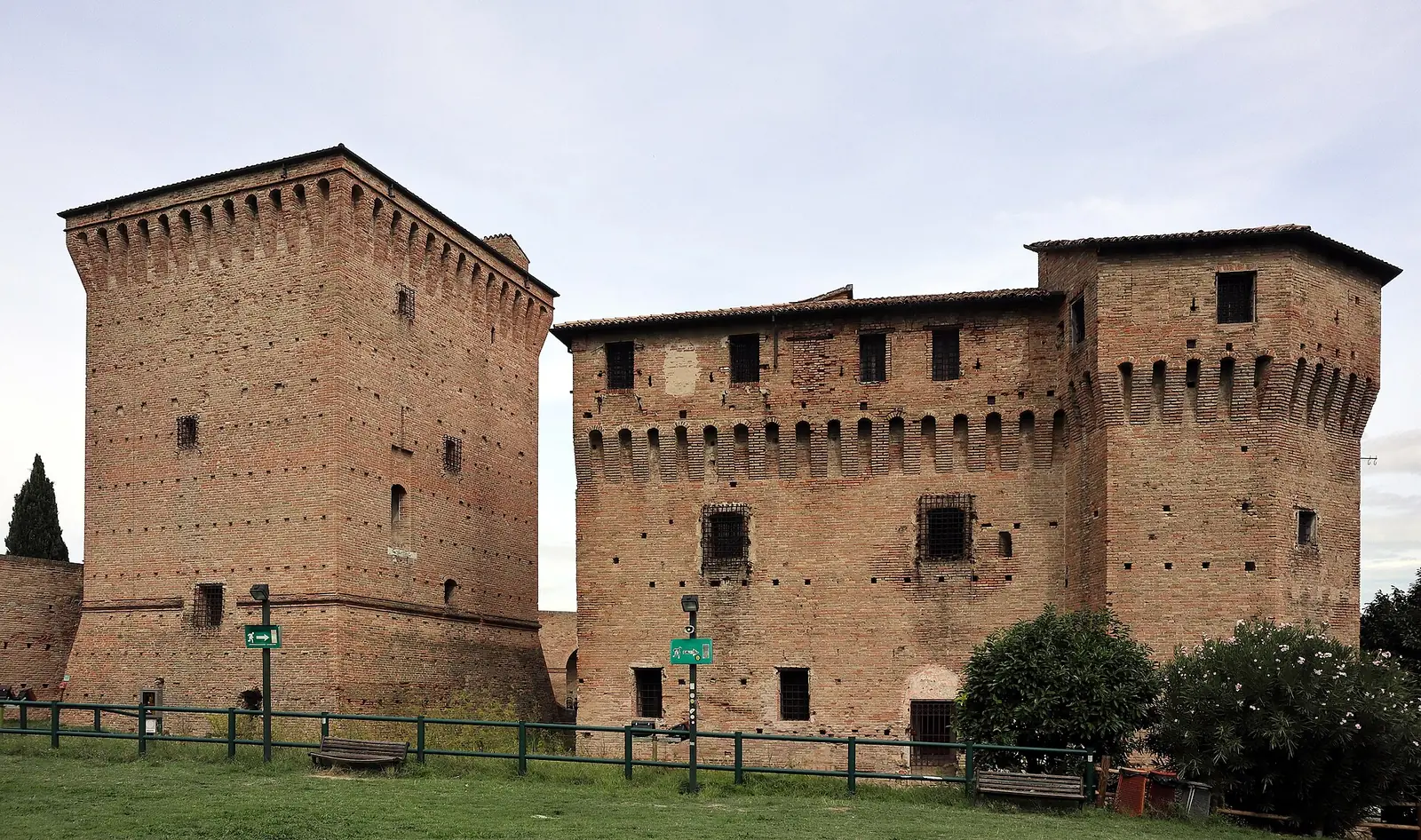
Rocca Malatestiana di Cesena stands on Colle Garampo above the city centre, in the hinterland of Cesenatico. The regional catalogue attributes the start of the so-called Rocca Nuova in 1380 to Galeotto Malatesta or, more probably, a successor; work finished only in the late 1470s, when Cesena had returned to papal rule. In 1502, Leonardo da Vinci, accompanying Cesare Borgia, studied and drew its defences. Part of the fortress remained a prison until 1969.
Today the walkways and towers can be explored; the inner palace houses Museo di Storia dell'Agricoltura. From 2024 to 2029, it is managed by the JazzLife association, with guided visits on Saturdays and Sundays and on reservation on other days. The area around the fortress is a restricted traffic zone: access is on foot from Piazza del Popolo.
Castello Malatestiano di Longiano
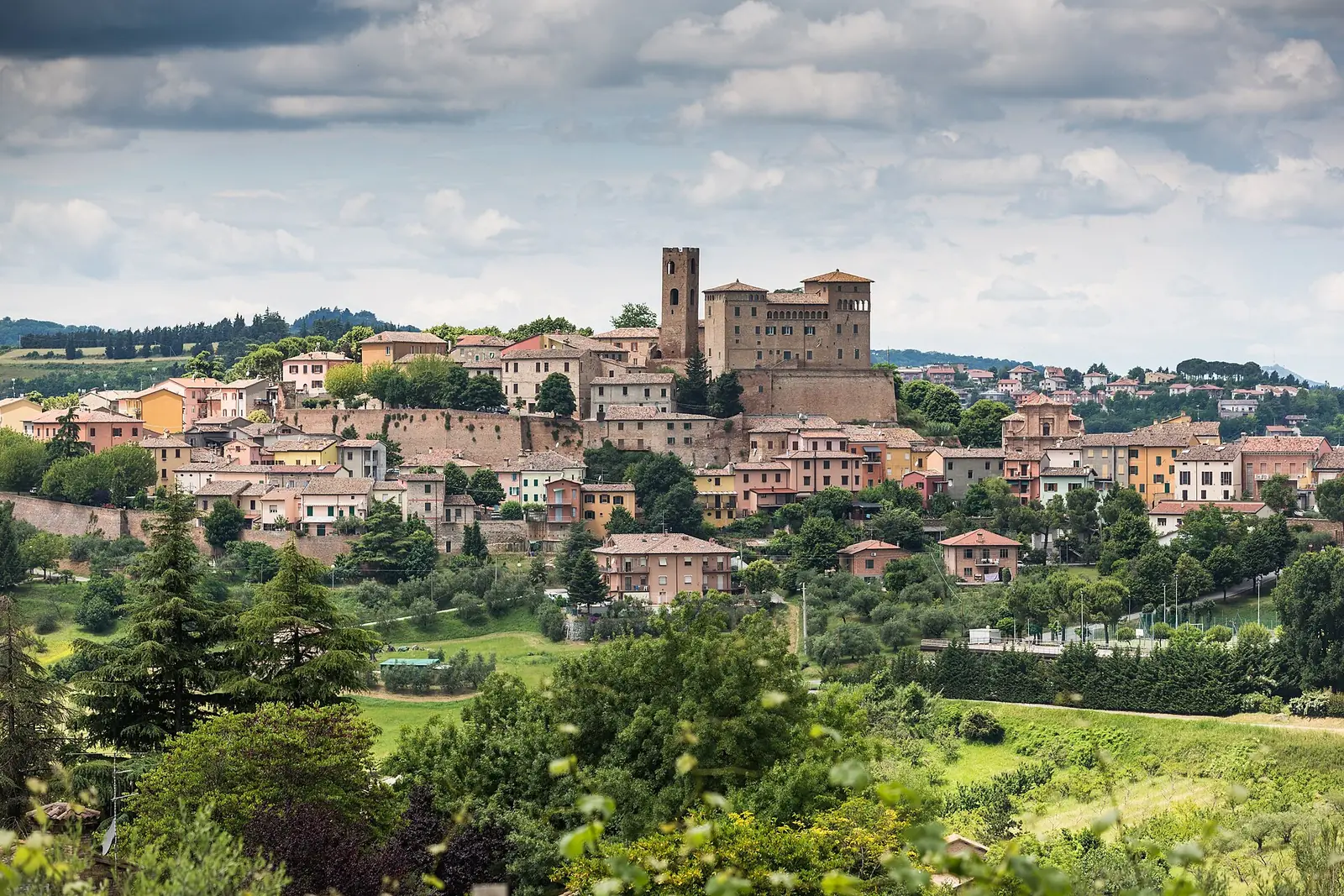
In Longiano, Castello Malatestiano occupies the village summit at 179 metres, overlooking the plain between Cesena and Rimini. Castrum Lonzano appears in documents in 1059; the Malatesta held it for more than a hundred and fifty years, and Carlo Malatesta retired here to die in 1429. From 1519, it was a fief of Guido Rangoni, who turned it into a residence; after Italian Unification, it became the town hall, remaining so until 1989.
Today it houses Fondazione Tito Balestra, a modern and contemporary art gallery with over two thousand works, mainly from the 20th century. It opens Tuesday to Sunday and on public holidays.
Rocca di Bertinoro
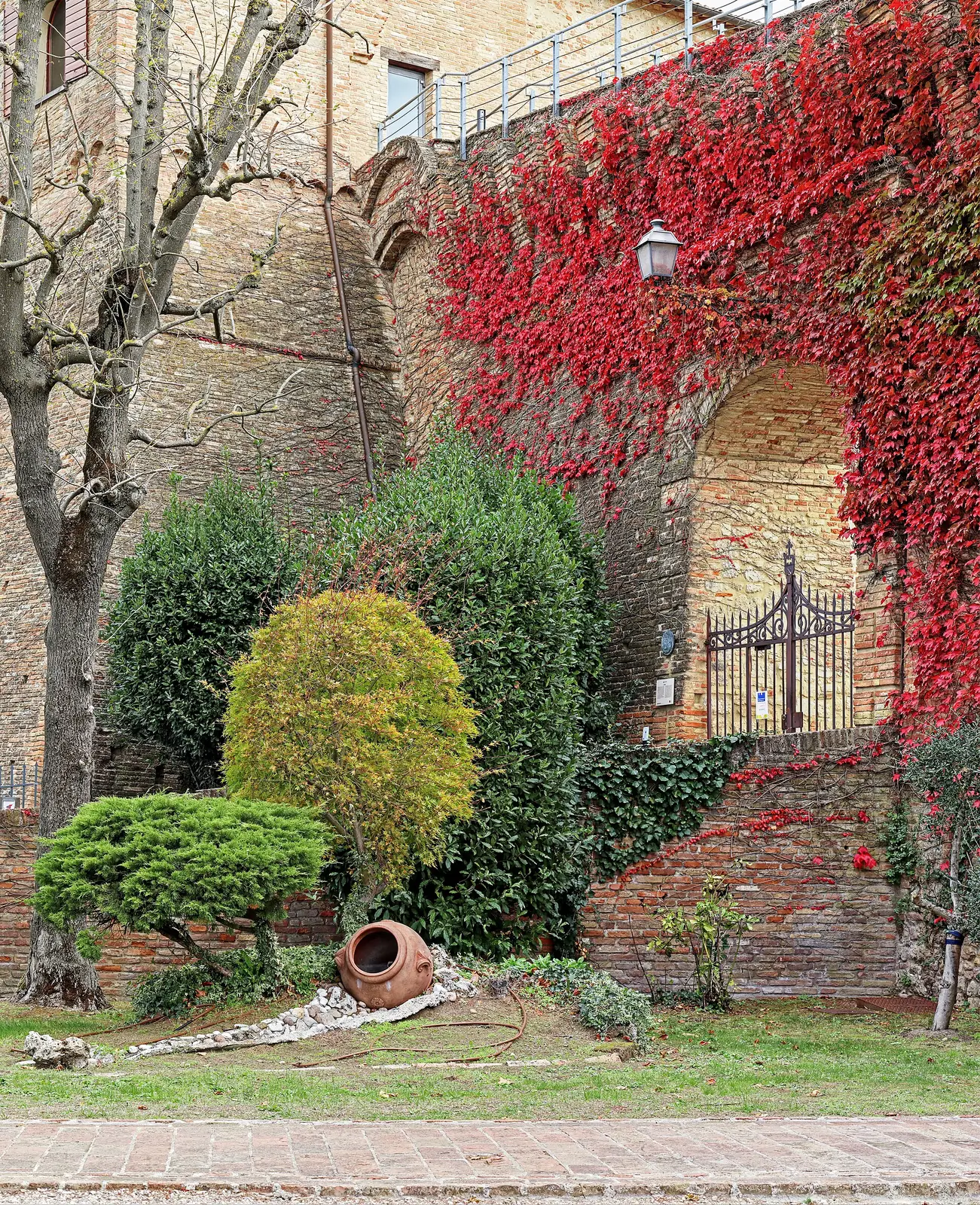
Rocca di Bertinoro overlooks the plain from a 247-metre hill separating the Bidente and Savio valleys. A fortified site is documented here from the mid-10th century. In the late 14th century, the fortress passed to the Malatesta, and Malatesta Novello made it a seasonal residence for his court; from 1584, it was the residence of the bishops of Bertinoro.
After restoration completed in 2002, it houses Centro Residenziale Universitario di Bertinoro and Museo Interreligioso, whose route covers Judaism, Christianity and Islam and the relationships between the three faiths. The museum opens Friday, Saturday and Sunday afternoons; from 15 June to 15 September, Tuesday to Sunday.
Rocca delle Caminate
Rocca delle Caminate, at 356 metres above sea level, is within Meldola, 4 kilometres from Predappio. Founded around the year 1000 as an outpost on the ridge route towards Firenze, it was demolished and rebuilt in neo-medieval style between 1924 and 1927: two bastions survive from the old fortress. In 1927, it was given to Benito Mussolini, then head of government, who made it his summer residence; on 28 September 1943, Consiglio dei ministri della Repubblica Sociale Italiana met here for the first time.
The fortress belongs to Provincia di Forlì-Cesena, which has entrusted its management to Ser.In.Ar. since 2017; it also now houses Tecnopolo di Forlì-Cesena. Visits take place on Saturdays and Sundays along a route of twenty-three information points, with an app serving as audio guide or a guide on request.
Beyond Romagna
Just outside Romagna's administrative boundaries are two other fortified destinations. Repubblica di San Marino, an independent state, preserves the three towers on Monte Titano: visiting details are on the visiting San Marino page. Rocca di Gradara, meanwhile, is in the province of Pesaro e Urbino.
Rocca di Gradara
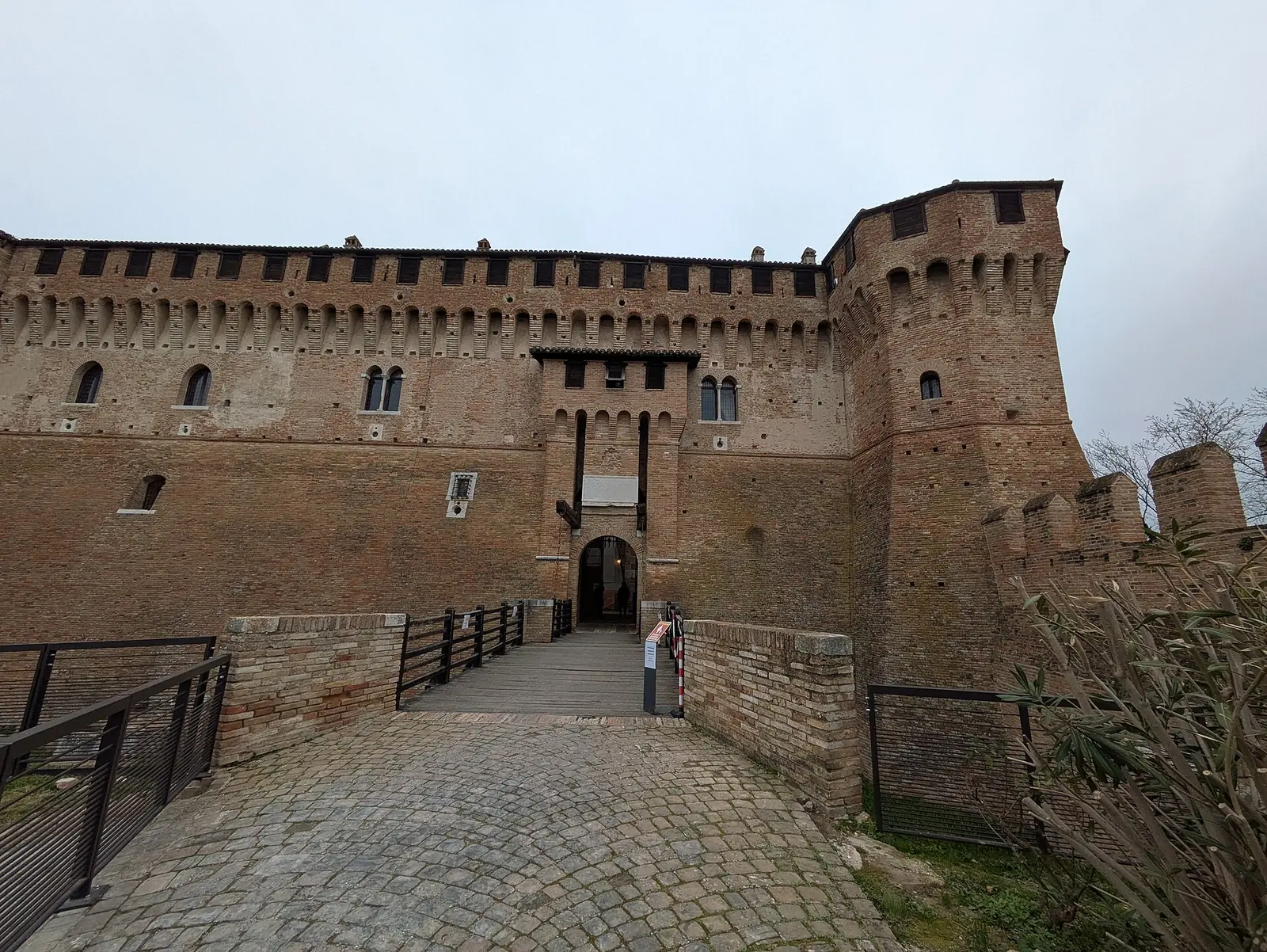
Rocca di Gradara, commonly called Castello di Gradara, lies in the hinterland of Gabicce Mare and Cattolica, but is administratively in the Marche. Its oldest core dates from the 12th century. A papal bull of Bonifacio VIII assigned it to the Malatesta; in 1446, Francesco Sforza besieged it unsuccessfully, and in 1463 Federico da Montefeltro entered it; it later passed to the Sforza. Engineer Umberto Zanvettori restored it between 1921 and 1923.
It is a state museum, with free entry on the first Sunday of the month. The story of Paolo and Francesca, often set here, is identified by Ministero della Cultura as a hypothesis linked to legend, rather than a documented fact.
Planning a visit
The castles are best visited by area, one area per day. From Rimini and Santarcangelo, routes climb Valmarecchia towards Verucchio, Montebello, San Leo and Sant'Agata Feltria; Coriano, Montefiore Conca and Gradara are the most convenient destinations for stays between Riccione and Cattolica; Cesena, Longiano, Bertinoro and Rocca delle Caminate for stays in Cesenatico or Cervia.
The day of the week matters too. Rocca delle Caminate opens to the public on Saturdays and Sundays, receiving only booked groups on other days; guided Rocca di Cesena visits are also at weekends. Outside summer, Museo Interreligioso in Bertinoro opens Friday to Sunday. Fellini Museum at Castel Sismondo and Castello di Longiano are closed on Mondays.
Eleven of the thirteen sites belong to Circuito dei Castelli dell'Emilia-Romagna, promoted by the Regione. Hours and tickets change seasonally and are published by each castle's operator.
Other destinations for a day in the hinterland, from the Cervia salt pans to Monte San Bartolo, are listed in the one-day itineraries.
Sources: Regione Emilia-Romagna, PatER cultural heritage catalogue, Rocche e castelli, and Circuito dei Castelli dell'Emilia-Romagna; Ministero della Cultura, Direzione regionale Musei Emilia-Romagna and Catalogo generale dei beni culturali; Rocca di Gradara, official website; Emilia-Romagna Turismo, Castelli; websites of the Comuni and individual castle operators. Accessed on 25 September 2026.